The sunflower is one of the most recognizable flowering plants in the world. Its scientific name is Helianthus annuus L., and it belongs to the Asteraceae family. The name comes from Greek and Latin roots: Helianthus means “sun flower,” while annuus means “annual,” showing that most common sunflowers complete their life cycle within one growing season. Kew lists Helianthus annuus as an accepted species and describes it as an annual plant native to the southwestern United States and Mexico.
A sunflower is not just one large flower. The big, round head is actually a capitulum, made of many small flowers. The outer yellow parts are called ray florets, and the inner fertile flowers are called disc florets. Over time, these disc florets develop into sunflower seeds. Kew notes that cultivated sunflowers are mainly grown for their seeds, oil, and ornamental beauty.
Q: What is the life cycle of a sunflower?
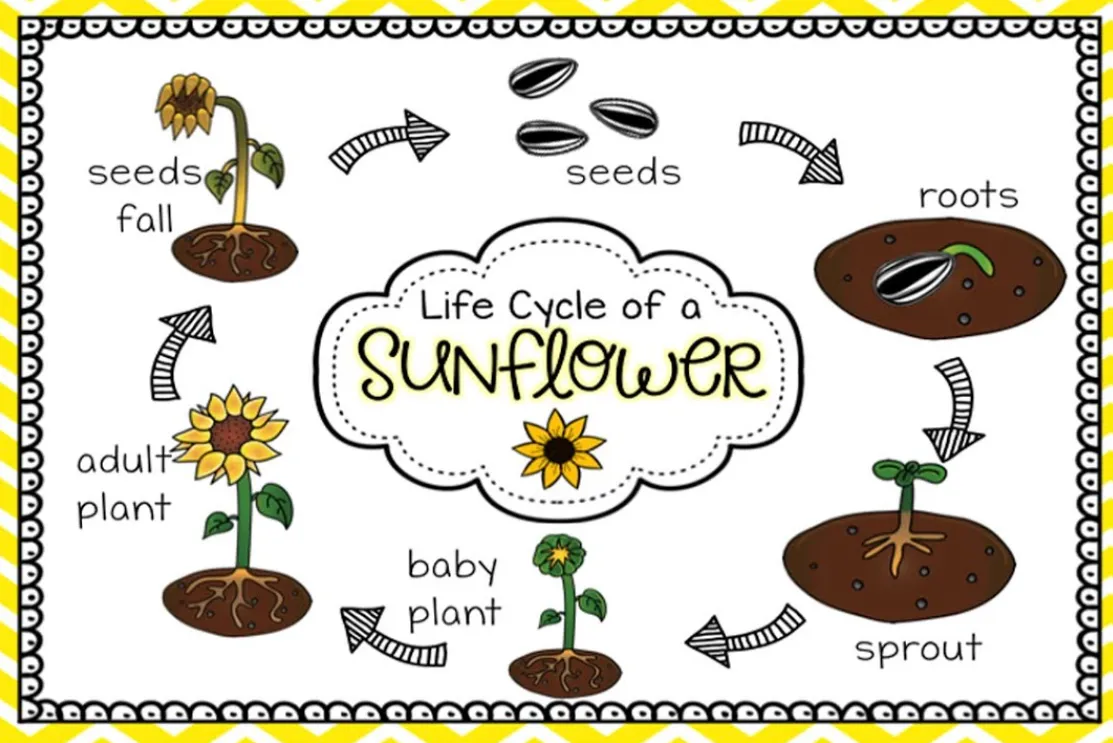
A: The life cycle of a sunflower moves from seed to germination, seedling growth, flowering, pollination, seed formation, and maturity.
Q: How long does a sunflower take to grow?
A: Many sunflower hybrids mature in about 80 to 100 days, depending on variety, weather, soil, and care.
Q: Why do sunflowers face the sun?
A: Young sunflower buds can move with the sun, but mature sunflower heads usually stay facing east.
Quick Life Cycle Table
| Stage | What Happens | Approx. Time |
| Seed | A dry sunflower seed waits for warmth, moisture, and oxygen. | Day 0 |
| Germination | The root breaks out first, then the shoot rises above the soil. | A few days after planting |
| Seedling | Cotyledons appear, then true leaves form. | Early growth |
| Vegetative Growth | Stem, leaves, and roots develop strongly. | Several weeks |
| Bud Formation | A small terminal bud appears at the top of the stem. | R1 stage |
| Flowering | Yellow ray petals open and disc flowers bloom. | R5 stage |
| Pollination | Bees and other pollinators move pollen between flowers. | During bloom |
| Seed Development | Disc flowers mature into sunflower seeds. | After flowering |
| Maturity | Back of the head turns yellow to brown; seeds dry. | Around 80–100 days |

The History Of Their Scientific Naming, Evolution, and Their Origin
Scientific Naming
The scientific name Helianthus annuus L. was first published in Species Plantarum in 1753. The genus name Helianthus is linked to the words for “sun” and “flower,” while annuus means annual. This name fits the plant because the common sunflower normally grows, flowers, produces seed, and dies in one season.
Evolution and Its Origin
The sunflower is native mainly to the Americas. Britannica explains that the genus Helianthus includes nearly 70 herbaceous species in the Asteraceae family, many of which are native to North and South America.
Early Domestication
The common sunflower has a long history with Indigenous peoples of North America. The National Sunflower Association reports that American Indian communities domesticated sunflowers into single-headed forms with different seed colors. Evidence suggests cultivation in present-day Arizona and New Mexico around 3000 BC.
Global Spread
After European contact, the sunflower was taken to Europe, where it first became popular as an ornamental plant. Later, Russia and parts of Eastern Europe became major centers for sunflower oil production. Kew also notes that by the 19th century, sunflowers were widely cultivated in Russia, Ukraine, and nearby regions for edible vegetable oil.
Important Things That You Need To Know
The life cycle of a sunflower connects many popular search topics, including sunflower, sunflower seeds, sunflower oil, sunflower lecithin, and even sunflower drawing. Each term shows a different way people learn about or use this plant.
Sunflower seeds are the final product of the plant’s reproductive stage. Botanically, the fruit is called an achene, and each achene contains one seed. Kew describes sunflower fruits as white, brown, black, or striped, depending on the variety.
Sunflower oil is pressed from sunflower seeds and is one of the most common uses of the crop. The plant is mainly cultivated for its seeds and versatile oil. However, the question “Is sunflower oil bad for you?” needs a balanced answer. Sunflower oil is not inherently bad; its effects depend on the type of oil, cooking temperature, portion size, and overall diet. For health decisions, readers should follow professional nutrition guidance, especially if they have medical conditions.
Sunflower lecithin is another seed-based ingredient. It is a phospholipid mixture derived from sunflower seeds and is often obtained during the degumming stage of sunflower oil processing. It is used in food, cosmetics, supplements, and other products as an emulsifier or stabilizer.
Terms like “smackin sunflower seeds” usually refer to flavored snack-style sunflower seeds, while “sunflower drawing” is common in education, art, and botanical learning. All these topics begin with the same simple process: one seed grows into a tall plant, blooms, and produces new seeds.
Their Reproductive Process, Giving Birth, And Rising Their Children
Sunflowers Do Not Give Birth Like Animals
A sunflower does not give birth. Instead, it reproduces by forming flowers, producing pollen, being pollinated, and developing seeds. This is the plant version of creating the next generation.
Flower Head Formation
The reproductive process begins when the plant shifts from leaf and stem growth to bud formation. SDSU Extension explains that the reproductive stage starts at R1, when the terminal bud forms at the top of the stalk. As the bud develops, it moves through later reproductive stages until the flower begins to open.
Pollination
When the sunflower reaches the flowering stage, its yellow ray petals open, attracting pollinators. The fertile disc florets in the center produce pollen and later form seeds. Kew describes the flower head as having outer ray florets that help attract pollinators and inner fertile disc florets arranged in spiral whorls.
Raising Their Children Through Seeds
After pollination, each fertile disc flower can develop into an achene, commonly called a sunflower seed. The plant “raises” its next generation by using sunlight, water, and nutrients to fill those seeds with stored energy. When the head matures and dries, the seeds can fall naturally, feed wildlife, or be harvested and planted again.
Stages of Sunflower Life Cycle
Stage 1: Seed and Germination
The life cycle of a sunflower starts with a seed. A healthy sunflower seed contains an embryo and stored food. When placed in warm, moist soil, the seed absorbs water. This process is called imbibition. The seed coat softens, and the first root begins to grow downward to anchor the plant.
SDSU Extension notes that sunflowers require soil temperatures around 50°F to germinate, and the cotyledon leaves appear above ground within a few days after planting.
Stage 2: Seedling and Vegetative Growth
After germination, the young sunflower seedling develops cotyledons and then true leaves. True leaves are important because they begin serious photosynthesis. The plant uses sunlight, carbon dioxide, and water to make sugars that fuel growth.
During the vegetative stage, the sunflower builds its stem, leaves, and root system. SDSU explains that the number of true leaves present counts vegetative stages. For example, V1 means the first true leaf has reached the required size, and V2 means the second true leaf has developed.
Stage 3: Bud, Flowering, and Pollination
The next major stage is bud formation. A small bud appears at the top of the stem, marking the beginning of the reproductive phase. The bud enlarges and eventually opens.
The flowering stage begins at R5, when the yellow ray petals open. SDSU explains that flowering is divided into substages based on the percentage of disc flowers that are flowering. For example, R5.5 means about 50% of the disc flowers are open.
Stage 4: Seed Development and Maturity
After flowering, the ray petals wilt, and the plant enters seed development. The back of the flower head changes color as the seeds mature. SDSU notes that R7 begins when the back of the head turns pale yellow, R8 when it is yellow but the bracts remain green, and R9 when the head and bracts turn yellow to brown. At R9, the plant reaches physiological maturity.
This final stage completes the cycle. The mature seeds can be used for food, oil, bird feed, or to grow new plants.

Their main diet, food sources, and collection process are explained
Sunflowers Make Their Own Food
The sunflower is a plant, so it does not eat food like animals. Its “diet” comes from sunlight, water, carbon dioxide, and soil nutrients. Through photosynthesis, the leaves capture sunlight and turn carbon dioxide and water into sugar.
Sunlight as the Main Energy Source
Sunlight is the sunflower’s main energy source. The broad leaves act like solar panels. They collect light and help the plant build stems, roots, flowers, and seeds.
Water Collection Through Roots
The root system collects water from the soil. Kew describes Helianthus annuus as having a well-developed taproot that can extend deep into the soil. This helps the plant reach moisture and stay upright, especially in open fields.
Mineral Collection From Soil
Sunflowers also need minerals such as nitrogen, phosphorus, and potassium. These nutrients help with leaf growth, root strength, flowering, and seed filling. Deep, well-drained soil supports stronger growth, while poor drainage can stress roots.
Carbon Dioxide Collection Through Leaves
The leaves collect carbon dioxide through tiny pores called stomata. Inside the leaf, carbon dioxide combines with water using sunlight energy. This produces sugars, which move through the plant and support flower and seed development.
How Long Does A Sunflower Live
The sunflower is usually an annual plant. That means it completes its full life cycle in one season. It begins as a seed, grows into a seedling, develops leaves and roots, flowers, produces seeds, and then dies after seed maturity.
SDSU Extension reports that many sunflower hybrids planted in South Dakota mature in 80 to 100 days, although timing varies by variety and growing conditions.
- Most common sunflowers live for one growing season. They do not usually come back from the same root system the next year.
- The full life cycle often takes about 3 to 4 months. Some quick varieties bloom earlier, while large-seeded varieties may need more time.
- Germination is the shortest stage. With warm soil and enough moisture, seedlings can emerge within a few days after planting.
- Vegetative growth is the building stage. The plant invests energy in leaves, stems, and roots before allocating it to flowers.
- Flowering is the most visible stage. The large head opens, pollinators visit, and disc flowers develop.
- Seed maturity is the final stage. The head turns yellow to brown, the bracts dry, and the seeds become ready for harvest or natural dispersal.
- Weather affects lifespan. Warm temperatures, enough sunlight, and suitable soil moisture can support healthy growth.
- Stress can shorten the life cycle. Drought, disease, poor soil, pests, and storm damage may delay flowering or reduce seed quality.
- Garden sunflowers may seem to live longer. Branching ornamental varieties can produce several flowers over time, but the plant is still usually annual.
- Perennial sunflowers exist, but they are not the same as the common sunflower. The keyword life cycle of a sunflower normally refers to Helianthus annuus, the common annual sunflower.
Sunflower Lifespan in the Wild vs. in Captivity
Lifespan in the Wild
In the wild, a sunflower grows under natural conditions. It must compete with other plants for sunlight, water, and nutrients. It may also be affected by insects, grazing animals, drought, strong winds, and plant diseases.
Wild sunflowers often have more branching and smaller heads than wide cultivated varieties. Their main survival goal is seed production. Once seeds mature and disperse, the parent plant usually dries and dies.
Lifespan in Captivity
For plants, “captivity” means controlled growing conditions such as gardens, pots, farms, greenhouses, or school science projects. In these places, people can improve soil, water regularly, reduce weeds, and protect the plants from pests.
A garden sunflower may grow stronger and produce a larger head if conditions are good. However, it still follows the annual life cycle. Even with good care, the common sunflower normally dies after flowering and seed maturity.
Main Difference
The main difference is not that cultivated sunflowers live forever. Instead, controlled care can help the plant complete a healthier, fuller life cycle. In the wild, stress may shorten growth or reduce seed production.
Importance of Sunflowers in this Ecosystem
Food for Pollinators
The sunflower supports pollinators during the flowering stage. Its large head contains many small florets, and these florets can provide nectar and pollen. Kew notes that the outer ray florets help attract pollinators, while the inner disc florets are fertile.
Food for Birds and Wildlife
Mature sunflower seeds are valuable food for birds and small animals. In nature, seeds that are not eaten may fall to the ground and grow into new plants when conditions are right.
Soil and Farming Value
Sunflowers are important agricultural plants. They are grown for edible seeds, sunflower oil, animal feed, and ornamental use. Kew lists sunflowers as useful for food, fuel, animal food, invertebrate food, environmental uses, and social uses.
Human Food and Products
Sunflowers connect nature with human life. People use the seeds as snacks, press them for oil, and process parts of the oil stream into ingredients such as sunflower lecithin. The National Sunflower Association also records that Indigenous communities historically used sunflower seeds for flour, snacks, oil, dye, medicine, building material, and ceremonies.
Biodiversity Support
A sunflower field or garden patch can create a small habitat. Bees, butterflies, beetles, birds, and seed-eating animals may all visit at different times. This makes the sunflower useful beyond its beauty.
What to do to protect them in nature and save the system for the future
Grow Sunflowers Without Harming Pollinators
- Avoid unnecessary chemical sprays during flowering.
- Use pollinator-friendly gardening methods.
- Plant sunflowers near other native flowers to extend the availability of food.
Save Healthy Seeds
- Collect mature sunflower seeds from disease-free plants.
- Dry seeds properly before storage.
- Replant suitable seeds in the next growing season.
Protect Soil Health
- Add compost or organic matter when needed.
- Avoid waterlogging because sunflower roots prefer well-drained soil.
- Rotate crops in farms to reduce disease pressure.
Support Local Biodiversity
- Leave some seed heads for birds.
- Grow different flower sizes and bloom times.
- Keep small garden spaces for bees and beneficial insects.
Choose Responsible Products
- Buy responsibly sourced sunflower oil and seed products when possible.
- Avoid wasting edible seeds.
- Learn the difference between food products, planting seeds, and processed ingredients such as sunflower lecithin.

Fun & Interesting Facts About Sunflowers
- The sunflower head is not one flower; it is a cluster of many tiny flowers called florets.
- Young sunflower buds can track the sun, but mature flowers usually face east.
- The fertile center of the flower eventually becomes sunflower seeds.
- The fruit of a sunflower is botanically called an achene, not simply a seed.
- The common sunflower can grow very tall. Kew notes that Helianthus annuus can grow up to 5 metres in some conditions.
- The sunflower has a deep taproot, which helps it collect water and minerals from the soil.
- Indigenous peoples used sunflower seeds for food long before modern global farming.
- Sunflower drawings are popular in schools because the plant has distinct parts: roots, stem, leaves, head, petals, disc florets, and seeds.
- Sunflower oil comes from pressed seeds and is widely used in cooking and food manufacturing.
- Sunflower lecithin is made from sunflower seeds and is used as an emulsifier in many products.
Frequently Asked Questions (FAQs)
Q: What are the 4 main stages in the life cycle of a sunflower?
A: The 4 main stages are seed and germination, seedling and vegetative growth, flowering and pollination, and seed development and maturity.
Q: How long does the life cycle of a sunflower take?
A: Many common sunflower varieties complete their life cycle in about 80 to 100 days, though variety, climate, soil, and care can change the timing.
Q: Do sunflowers come back every year?
A: The common sunflower, Helianthus annuus, is usually an annual plant, so it normally dies after seed production. New plants may grow later from dropped or planted seeds.
Q: Are sunflower seeds really seeds?
A: What people call sunflower seeds are technically fruits called achenes. Each achene contains one seed inside.
Q: Is sunflower oil bad for you?
A: Sunflower oil is not automatically bad. Its health impact depends on oil type, quantity, cooking temperature, and the rest of the diet. For personal health concerns, it is best to follow advice from a qualified health professional.
Conclusion
The life cycle of a sunflower is a simple but powerful example of plant growth. It begins with one small sunflower seed, develops into a seedling, grows strong roots and leaves, forms a flower head, attracts pollinators, and finally produces new seeds. The cycle usually finishes in one growing season, making the common sunflower a classic annual plant.
Beyond beauty, the sunflower has real ecological and human value. It supports pollinators, feeds birds, produces edible seeds, provides sunflower oil, and contributes to products such as sunflower lecithin. Its history also connects deeply with Indigenous agriculture and global food systems.
Understanding the sunflower’s life cycle helps gardeners, students, farmers, and nature lovers protect this bright plant. When we grow sunflowers responsibly, save seeds, support pollinators, and care for soil, we help protect both the plant and the ecosystem around it.
Also Read: life cycle of a salmon
About the Author