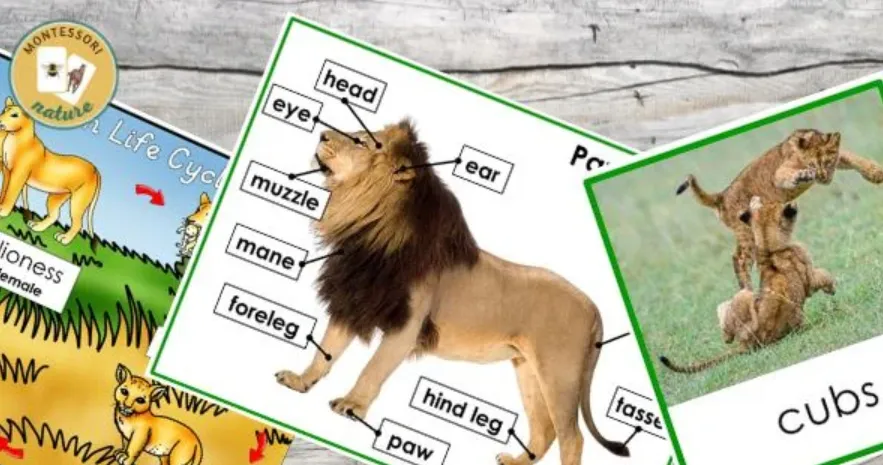
The life cycle of the African lion begins with a helpless cub. It develops through several demanding stages: newborn, playful cub, learning juvenile, independent subadult, and finally a mature adult that hunts, mates, defends territory, and contributes to the survival of the pride. The African lion is scientifically known as Panthera leo. It is a large carnivorous mammal and one of the most socially complex members of the cat family. Unlike most cats, lions live in groups called prides, usually made up of related females, their cubs, and one or more adult males.
African lions mainly live in sub-Saharan Africa, especially in savannas, grasslands, scrublands, and open woodlands. Their life cycle is closely connected to prey availability, pride protection, rainfall patterns, territory size, and human pressure. Today, the species is listed as Vulnerable with a decreasing population trend, and estimates commonly place the remaining wild population around 20,000–23,000 lions, though counts vary by region and survey method.
Q: How many stages are in the life cycle of an African lion?
A: The main stages are cub, juvenile, subadult, and adult. Some guides also separate the newborn stage from the cub stage for clearer understanding.
Q: How long does an African lion cub stay with its mother?
A: Lion cubs nurse for about six months, begin eating meat at around three months, and usually remain dependent on the pride for much longer while learning hunting and social behavior.
Q: What is the biggest danger in the African lion’s life cycle?
A: The most vulnerable period is early cub life. Starvation, disease, predators, and male takeovers can cause very high cub mortality, with some sources noting that up to 80% of cubs may die within their first two years in harsh conditions.
Quick Life Cycle Table
| Life Stage | Age Range | Main Features |
| Newborn Cub | 0–3 months | Blind at birth, fully dependent on mother, hidden in dens or thick cover |
| Growing Cub | 3–12 months | Starts eating meat, plays with siblings, learns pride signals |
| Juvenile Lion | 1–2 years | Practices stalking, follows hunts, and depends on adults for food |
| Subadult Lion | 2–4 years | Young males leave pride; females usually stay and join the hunting |
| Adult Lion | 4+ years | Hunts, mates, defends territory, raises cubs, leads pride life |
| Old Lion | 8+ years in the wild | Reduced hunting ability, injury risk increases, and survival becomes harder. |

The History of Their Scientific Naming, Evolution, and Origin
Scientific Naming of the African Lion
The scientific name of the African lion is Panthera leo. The word Panthera refers to the genus that includes large roaring cats such as lions, tigers, leopards, jaguars, and snow leopards. The species name leo is the Latin word for lion. This name reflects the lion’s long recognition in human history as a powerful wild cat and apex predator. National Geographic lists Panthera leo as the scientific name of the African lion.
Evolutionary Background
Lions were once spread across much wider regions than today. Historical evidence shows that lions lived across large parts of Africa, Europe, and Asia. Still, their modern wild range is now mostly restricted to parts of sub-Saharan Africa, with a separate Asiatic population in India’s Gir region.
Origin and Modern Distribution
The modern African lion evolved as a highly social predator adapted to open landscapes, where group hunting and cooperative cub rearing improve survival. Current lion populations are fragmented because of habitat loss, prey decline, human-wildlife conflict, and historical persecution. West and Central African lions are especially threatened, while East and Southern African populations remain more visible but still face serious pressure.
Their Reproductive Process, Giving Birth, And Rising Their Children
Mating and Breeding Behavior
The reproductive process of the African lion is closely linked to pride structure. Lionesses may become receptive several times a year unless they are pregnant or nursing. Mating often occurs repeatedly over several days, and this helps trigger ovulation. A healthy adult female may produce a litter roughly every two years under suitable conditions.
Pregnancy and Giving Birth
After mating, the lioness carries her cubs for about 3.5 months. She usually gives birth to one to four cubs in a hidden place such as tall grass, thick bushes, or rocky cover. At birth, cubs are blind, small, and completely dependent on their mother for warmth, milk, and protection.
Raising Their Children in the Pride
Lionesses are the main caregivers. In many prides, related females raise cubs together, and cubs may suckle from any lactating female. This shared care improves survival because cubs receive protection, grooming, warmth, and social learning from several adults.
Early Survival Challenges
The cub stage is dangerous. Food shortage, disease, hyenas, leopards, snakes, and male lion takeovers can kill cubs. When new males take over a pride, they may kill young cubs that are not theirs, prompting females to return to breeding condition sooner. This makes early cub survival one of the most fragile parts of the African lion‘s life cycle.
Important Things That You Need To Know
Many people search for the African lion using different related terms, but not all of them mean the same thing. The true biological topic is the life cycle of the African lion, focusing on cub development, pride behavior, reproduction, hunting, lifespan, and conservation.
The West African lion is especially important because lions in West and Central Africa are far more threatened than many better-known populations in East and Southern Africa. Conservation groups report that West African lion populations are extremely small and vulnerable, making habitat protection and prey recovery urgent.
The phrase Asiatic lion vs African lion refers to the comparison between lions in Africa and the small surviving Asiatic lion population in India. Asiatic lions are not a separate “life cycle type,” but their habitat, population size, and conservation challenges are different.
Search terms like African lion safari usually relate to wildlife tourism, photography, or safari parks. Responsible safari tourism can support conservation by funding protected areas and respecting animal behavior. However, tourism must avoid stressing animals or disrupting hunting, mating, and cub rearing.
Terms such as African lion dog, African lion hound, and African lion US military burden sharing are not part of lion biology. The first two are often confused with dog breeds or nicknames, while the military phrase is unrelated to wildlife. For accurate learning, focus on verified information about Panthera leo, its role in its ecosystem, and its current conservation status.
Stages of the Life Cycle of the African Lion
1. Newborn Cub Stage
The first stage of the African lion’s life cycle begins when the cub is born after a gestation period of about 3.5 months. Newborn cubs are small, blind, and unable to defend themselves. Their mother hides them away from the pride for the first few weeks because they are vulnerable to predators, including other lions.
During this stage, milk is the only food source. The mother frequently moves the cubs to safer hiding places by carrying them gently in her mouth. This reduces the risk of scent detection by predators.
2. Cub Learning Stage
At around three months, cubs begin eating meat, although they may continue nursing for about six months. They start following adults, playing with siblings, and practicing small behaviors that later become hunting skills. Play-fighting, pouncing, biting, and chasing are not just fun; they are survival training.
Cubs also learn pride communication. They respond to calls, body language, grooming, and social rank. Strong social bonding helps them survive in a group-based system.
3. Juvenile and Subadult Stage
Over a period of about 1 to 4 years, lions progress through the juvenile and subadult stages. Young females often stay in their birth pride and gradually become hunters and future mothers. Young males usually leave or are forced out when they mature. They may form coalitions with brothers or unrelated males.
This is a difficult stage because young males must survive without parental support. They may scavenge, hunt smaller prey, or challenge older males once they are strong enough.
4. Adult and Reproductive Stage
By around 4 years old, lions are usually mature enough to reproduce. Adult lionesses become the pride’s core hunters and caregivers. Adult males defend territory, protect mating access, and help guard cubs from rival males and other threats.
Adult pride in life depends on cooperation. Females hunt together, males defend territory, and cubs grow through social learning. This complete cycle continues only when habitat, prey, and pride stability remain strong.
Their main diet, food sources, and collection process are explained
Main Diet of the African Lion
The African lion is a carnivore. Its main diet consists of medium- to large-sized hoofed animals such as wildebeest, zebra, buffalo, and antelopes. Lions may also eat smaller animals, sick or injured prey, and carrion when available.
Food Sources in the Wild
Food availability changes by region and season. In savannas, lions often follow prey movement linked to rainfall and grazing. Where large herbivores are abundant, pride survival improves. Where prey is reduced by poaching or habitat loss, lions may turn toward livestock, increasing conflict with local communities.
Hunting and Food Collection Process
Lionesses usually do most of the hunting, although males may join, especially when prey is large or dangerous. Lions often hunt at night because low light gives them an advantage. During group hunts, some lionesses may move around prey while others wait closer to the attack point. WWF notes that lions can also hunt effectively during storms because noise and wind make it harder for prey to detect them.
Feeding Behavior
A lion can eat a large amount of meat in one feeding. WWF reports that lions may eat up to 40 kg of meat in a single meal. Their rough tongue helps scrape meat from bone, making feeding efficient after a successful hunt.

How long does the life cycle of an African Lion Live
The lifespan of an African lion depends on sex, habitat quality, pride stability, injury, prey availability, disease, and human pressure.
- Wild African lions commonly live around 8–10 years, especially males, because fighting, hunting injuries, starvation, and conflict reduce survival. Britannica notes that wild lions usually live only 8 to 10 years in many natural conditions.
- Lionesses may live longer than males in the wild because they often remain in their birth pride and receive group support. However, pregnancy, cub care, hunting injuries, and food shortages still make life difficult.
- Male lions face a high risk after maturity. Young males often leave their pride and live as nomads. They must hunt alone, scavenge, avoid stronger males, and eventually fight for pride control.
- Adult male pride tenure is often short. Smithsonian notes that adult males who gain pride residency hold tenure for an average of about two years before being displaced by another male coalition.
- Captive lions may live for over 25 years because they receive regular food, veterinary care, and protection from territorial fights and injuries from prey. However, captivity does not represent the natural ecological life cycle of a wild lion.
- Cub mortality strongly affects average lifespan. Many cubs never reach adulthood due to starvation, disease, predators, and male takeovers. This is why the first two years are the most critical period in the African lion’s life cycle.
- Human pressure can shorten a lion’s life. Habitat loss, poisoning, illegal killing, retaliatory killing after livestock attacks, and prey decline are major threats across the lion range.
Life Cycle of African Lion Lifespan in the Wild vs. in Captivity
African Lion Lifespan in the Wild
In the wild, the African lion faces constant survival pressure. Adult lions must hunt dangerous prey, defend territory, compete with rivals, and survive drought, disease, and food shortage. Wild lions often live around 8–10 years, although some individuals, especially females in stable prides, may live longer.
African Lion Lifespan in Captivity
In captivity, lions may live over 25 years because they are protected from starvation, major territorial fights, and many hunting injuries. Veterinary care can treat infections, dental problems, parasites, and wounds that would be deadly in the wild.
Why the Difference Matters
The longer captive lifespan does not mean captivity is “better” for the species. A wild lion performs ecological roles that a captive lion cannot fully perform. Wild lions regulate prey behavior, support scavengers through leftover kills, and help maintain the savanna balance. Conservation should therefore focus on protecting natural habitats, not simply increasing captive numbers.
Importance of the Life Cycle of the African Lion in this Ecosystem
Apex Predator and Natural Balance
The African lion is an apex predator. It helps regulate the populations of large herbivores such as zebras, wildebeests, and antelopes. By targeting weak, sick, young, or vulnerable animals, lions may influence prey health and movement patterns.
Support for Scavengers
Lion kills provide food for scavengers such as hyenas, vultures, jackals, and smaller carnivores. Even after lions finish feeding, many other animals benefit from the remains. This makes the lion part of a wider food web, not just a hunter.
Indicator of Ecosystem Health
A strong lion population usually suggests that the landscape still has enough prey, space, water, and habitat connectivity. When lions decline, it may signal deeper problems such as prey loss, illegal hunting, land conversion, or broken protected-area management. WWF identifies prey decline, habitat loss, human-lion conflict, and illegal wildlife trade as major threats.
Umbrella Species Value
Protecting lion habitat also protects many other species that share the same landscape. Smithsonian notes that saving lion habitat can help protect species such as hyenas, wildebeest, plains zebra, and other wildlife.
What to do to protect them in nature and save the system for the future
1. Protect Large Natural Habitats
- Lions need connected landscapes with enough prey and safe breeding areas.
- Expanding protected areas and wildlife corridors helps reduce isolation.
- Habitat protection also benefits many other savanna species.
2. Reduce Human-Lion Conflict
- Communities living near lion habitats need practical livestock protection.
- Stronger enclosures, predator-warning systems, and compensation programs can reduce retaliatory killing.
- AWF reports that community-based methods such as livestock management and predator deterrents are part of current lion conservation strategies.
3. Restore Prey Populations
- Lions cannot survive without natural prey.
- Anti-poaching patrols, bushmeat control, and habitat recovery help rebuild prey numbers.
- When wild prey returns, lions are less likely to attack livestock.
4. Stop Illegal Wildlife Trade
- Lion bones, skins, claws, and teeth are sometimes targeted by illegal trade.
- Strong law enforcement and consumer awareness are needed to reduce demand.
- WWF identifies illegal wildlife trade as one of the threats facing lions.
5. Support Responsible Ecotourism and Education
- Ethical wildlife tourism can fund conservation and create local income.
- Tourists should choose operators that respect distance, avoid disturbing cubs, and support community conservation.
- Education helps people understand that saving lions also protects ecosystems.

Fun & Interesting Facts About the Life Cycle of the African Lion
- African lion cubs are born with spots, and many of these markings fade as they grow.
- Lions are the most social of the big cats, living in prides that engage in cooperative hunting and cub-rearing.
- A lion’s roar can travel up to five miles, helping lions mark territory and communicate with pride members.
- Male lions develop manes that may signal maturity, strength, and dominance. Some populations, such as parts of Tsavo, may have males with little or no mane.
- Lionesses often hunt together, using teamwork to approach prey from different angles.
- Young male lions usually leave their birth pride, while many females stay with related lionesses.
- Lions can eat huge meals, sometimes up to 40 kg of meat in one feeding.
- The West African lion is among the most threatened lion subspecies, making regional conservation especially important.
Frequently Asked Questions (FAQs)
Q: What is the life cycle of the African lion?
A: The life cycle of the African lion includes newborn cub, growing cub, juvenile, subadult, adult, and old-age stages. The four main stages are cub, juvenile, subadult, and adult.
Q: How long is an African lion pregnant?
A: A lioness is pregnant for about 3.5 months before giving birth to a litter of usually one to four cubs.
Q: What do African lion cubs eat?
A: Cubs drink milk first, begin eating meat at around three months, and may nurse for about six months.
Q: How long does an African lion live?
A: In the wild, lions often live around 8–10 years, while captive lions may live over 25 years with proper care.
Q: Why are African lions important?
A: African lions are apex predators. They help control prey populations, support scavengers, and indicate the health of grassland and savanna ecosystems.
Q: Is the African lion endangered?
A: The lion is listed as Vulnerable, and its population trend is decreasing. Some regional populations, especially in West and Central Africa, are more severely threatened.
Q: What is the difference between the Asiatic lion and the African lion?
A: African lions mostly live in sub-Saharan Africa, while Asiatic lions survive in a small population in India’s Gir region. They are closely related but face different conservation challenges.
Conclusion
The life cycle of the African lion is a powerful story of survival, cooperation, danger, and ecological importance. From a blind newborn cub hidden in tall grass to a mature adult that hunts, mates, protects territory, and supports pride life, every stage depends on healthy habitat and strong social bonds. The African lion is more than a famous predator; it is a key part of savanna ecosystems, helping maintain balance among prey, scavengers, and competing species.
However, lions now face serious threats from habitat loss, prey decline, conflict with people, disease, and illegal wildlife trade. Protecting them requires more than saving individual animals. It means protecting landscapes, supporting local communities, restoring prey, and promoting responsible conservation. If these actions continue, future generations may still hear the roar of Panthera leo across Africa’s wild grasslands.
Also Read:
About the Author