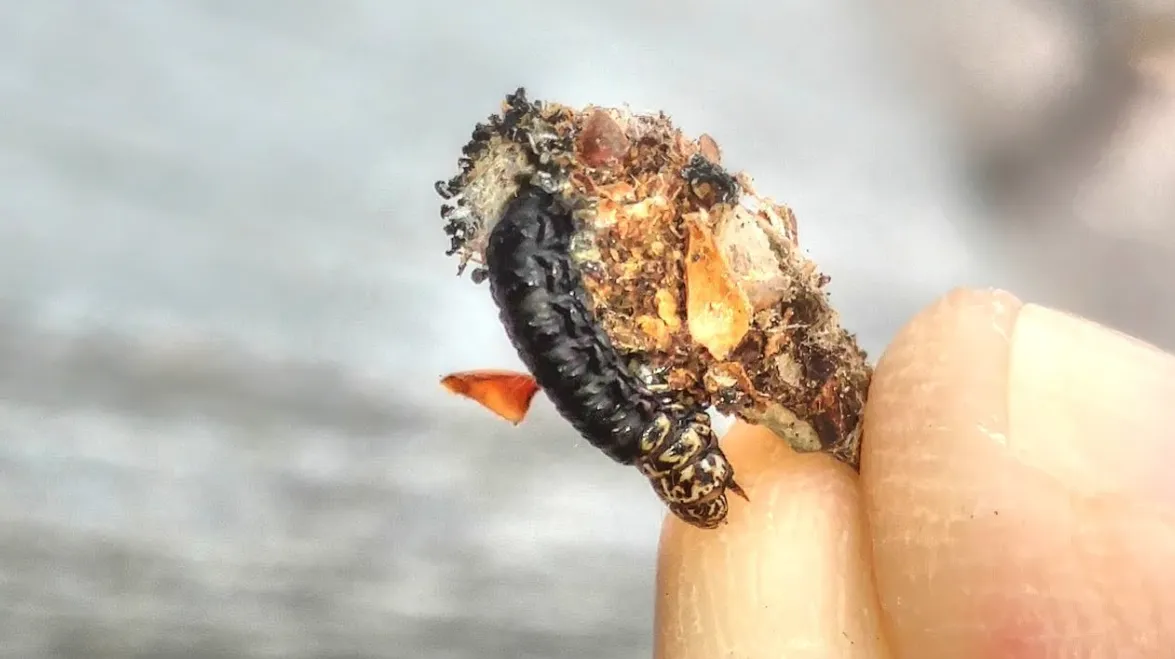
The bagworm life cycle is one of the most unusual in the insect world because the youngcaterpillar builds and carries a protective bag made from silk, leaves, needles, twigs, bark, dust, or other nearby materials. The word bagworm commonly refers to the case-building larvae of moths, especially the evergreen bagworm, Thyridopteryx ephemeraeformis, a species known for damaging evergreen and deciduous trees.
Most outdoor bagworms complete one generation per year. Their eggs usually overwinter inside the old female bag, hatch in spring or early summer, and the larvae begin feeding while constructing their small portable cases. As the larvae grow, they enlarge the bag and attach more plant pieces to it for camouflage.
The larval stage is the most important and damaging. A young bagworm moth caterpillar may look harmless, but heavy infestations can strip needles from arborvitae, juniper, cedar, spruce, pine, and other host plants. Once the larvae mature, they attach their bags firmly to twigs, pupate inside, and later become adult moths. Males develop into winged moths, while females of many common species remain wingless inside the bag.
Q: What is the bagworm life cycle?
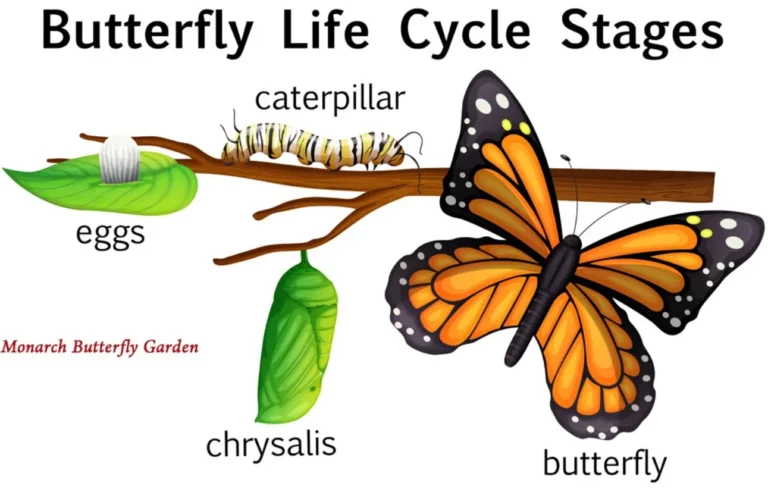
A: The bagworm life cycle has four main stages: egg, larva, pupa, and adult moth. The larva builds the famous protective bag and causes most plant damage.
Q: How long does a bagworm take to become a moth?
A: Outdoor evergreen bagworms usually take a full season to develop, with eggs hatching in spring, larvae feeding through summer, pupation in late summer, and adults appearing in late summer or fall.
Q: Are bagworms harmful to humans?
A: Bagworms are not known for biting or stinging people. Their main concern is plant damage outdoors, while plaster bagworm larvae indoors may become a nuisance by feeding on organic debris, spider webs, hair, lint, or similar materials.
Quick Life Cycle Table
| Stage | What Happens | Common Timeframe | Key Detail |
| Egg | Eggs stay protected inside the female’s old bag | Winter to spring | One bag may contain hundreds of eggs of many species |
| Larva | Caterpillar hatches, feeds, and builds a portable bag | Spring to summer | This is the main feeding and plant-damaging stage |
| Pupa | Mature larva anchors the bag and transforms inside it | Late summer | The bag works like a cocoon |
| Adult Moth | Male moth flies to mate; the female often remains wingless inside the bag | Late summer to fall | After mating, the female lays eggs inside the bag |
Important Things That You Need To Know
The term bagworm can refer to several case-building moth larvae, so identification depends on where the insect is found. The outdoor evergreen bagworm is usually seen on trees and shrubs, especially evergreens. It creates a cone-shaped or spindle-like bag covered with bits of host plant material. The indoor plaster bagworm, also called the household casebearer, is different; it is usually found on walls, ceilings, closets, garages, and humid indoor corners.
A bagworm moth is not always easy to recognize because the adult female may remain hidden inside the bag. The male is more moth-like and can fly, but the female of many bagworm species is wingless or wing-reduced. This unusual difference between males and females is one reason the bagworm life cycle is so fascinating.
The evergreen bagworm is important in gardens, nurseries, and landscapes because it can damage ornamental trees. Heavy feeding can cause browning, thinning, branch dieback, and, in severe cases, death of evergreen plants.
The plaster bagworm is more common indoors in warm, humid areas. It is not the same as the outdoor tree-feeding bagworm, but both are often searched together because they both make a protective case. For bagworm treatment, correct identification matters: tree bagworms are managed by timing treatment against young larvae, while indoor plaster bagworms are usually managed by cleaning, vacuuming, reducing humidity, and removing spider webs or lint sources.

The History of Their Scientific Naming, Evolution, and Origin
Scientific Naming of Bagworms
The common outdoor evergreen bagworm is scientifically known as Thyridopteryx ephemeraeformis. It belongs to the order Lepidoptera and the family Psychidae, known for larvae that build portable cases. The species name is associated with the insect’s moth identity and its unusual form, especially the difference between flying males and wingless females.
Evolution of the Protective Bag
The famous bag is an evolutionary survival tool. It protects the soft larva from predators, weather, and environmental stress. The larva lines the case with silk and decorates the outside with material from its surroundings. This camouflage makes the bag look like a tiny pine cone, a dead leaf cluster, a twig bundle, or a piece of bark.
Origin and Natural Spread
Bagworm moths occur in many parts of the world, but the evergreen bagworm is especially common in North American landscapes. Its spread is aided by young larvae that can disperse by crawling or by ballooning on silk threads carried by the wind.
Why Naming Can Be Confusing
The name bagworm is also used for unrelated or less closely related case-making moth larvae, including the indoor plaster bagworm or Phereoeca uterella, which belongs to the family Tineidae rather than Psychidae. This is why outdoor tree bagworms and indoor wall bagworms should not be treated as the same insect.
Their Reproductive Process, Giving Birth And Rising Their Children
Mating Behavior
The reproductive process of the bagworm moth is highly unusual. In many common outdoor bagworm species, the adult male develops wings and flies to find a mate. The female, however, remains inside her bag and emits chemical signals, or pheromones, to attract males.
Egg Laying Inside the Bag
After mating, the female lays eggs inside the old bag or pupal case. This bag becomes a protected egg chamber through winter. In some outdoor species, a single female bag may contain several hundred eggs, and some extension sources report 300–1,000 eggs per bag, depending on species and conditions.
No Parental Care Like Birds or Mammals
Bagworms do not raise their young in the way birds, mammals, or social insects do. The mother’s main contribution is the protected bag where the eggs are placed. After the female lays eggs, she dies, and the next generation develops independently.
Hatching and Dispersal
When spring conditions become suitable, young larvae hatch and leave the old bag. They may crawl to nearby foliage or release silk threads, which are carried by the wind. This wind-assisted movement is called ballooning. Once a larva lands on a suitable host plant, it begins feeding and building its own small bag.
Survival of the Young
Young bagworm caterpillars survive by hiding inside their cases while feeding. They pull their heads and front body out to eat, then retreat into the bag when disturbed. This behavior reduces exposure to predators and helps them remain unnoticed until the bags become larger.
Stages of the Bagworm Life Cycle
Egg Stage
The egg stage begins after the adult female lays eggs inside the bag. For outdoor evergreen bagworms, eggs usually overwinter in the old female bag, which is attached to a branch or twig. This stage is protected by the tough silk-and-plant material case, which helps the eggs survive cold or dry conditions.
Egg hatch usually occurs in spring or early summer, depending on climate and local growing-degree conditions. In many areas, eggs hatch around May or June. Warmer regions may see earlier hatch, while cooler regions may see delayed emergence.
Larva Stage
The larva stage is the most visible and damaging. After hatching, the tiny larva begins feeding on leaves or needles and builds a small bag around its body. As it grows, it adds more silk and host plant fragments to enlarge the bag.
Young larvae may scrape leaf surfaces, while older larvae consume larger parts of needles or leaves. On evergreens, severe feeding can be especially serious because these plants rely on persistent foliage.
Pupa Stage
When the larva matures, it attaches the bag firmly to a twig, branch, wall, or other surface, depending on the species. It then pupates inside the bag. During this stage, the larva transforms into an adult moth.
For outdoor evergreen bagworms, pupation often occurs in late summer. The bag becomes fixed in place and works like a cocoon, protecting the developing adult.
Adult Moth Stage
The adult stage is mainly for reproduction. Male bagworms emerge as moths and fly to locate females. Females of many species stay inside the bag, mate, lay eggs, and die.
This completes the annual cycle for outdoor species such as the evergreen bagworm. The new eggs remain in the bag until the next spring, when the cycle begins again.
Their main diet, food sources, and collection process are explained
Bagworms feed differently depending on the species and habitat. Outdoor tree-feeding bagworms, especially the evergreen bagworm, mainly feed on foliage. They are commonly associated with arborvitae, juniper, cedar, spruce, pine, cypress, and other evergreen plants, but they can also feed on several deciduous trees and shrubs.
Their feeding process is simple but effective. The larva extends its head and front body from the bag, chews leaves or needles, and then retreats when disturbed. As it feeds, it collects plant fragments from the same host plant and attaches them to the outside of the bag. This makes the bag blend naturally with the tree.
The bagworm moth caterpillar also uses silk as a construction material. Silk holds the plant fragments together and creates a strong inner lining. The case grows as the larva grows, so a young bag may be tiny, while a mature bag can become much larger and easier to notice.
Indoor plaster bagworms have a different diet. They are often associated with dust, lint, hair, spider webs, dead insects, wool materials, and organic debris in humid indoor areas. This is why cleaning, vacuuming, and removing spider webs are important in indoor bagworm treatment.

How Long Does A Bagworm Live
The lifespan of a bagworm depends on the species, climate, food quality, and whether it lives outdoors or indoors. Outdoor evergreen bagworms usually have one generation per year, meaning the complete cycle from egg to adult reproduction spans a seasonal year.
- Egg stage:
- Eggs may remain inside the female bag through winter. This can last several months, especially in areas with cold seasons.
- Larval stage:
- The larval stage lasts through much of spring and summer. This is the longest active feeding stage for the outdoor bagworm life cycle.
- Pupal stage:
- Pupation usually happens in late summer. Some sources report pupation and male emergence in outdoor species around August to September.
- Adult stage:
- Adult life is short because the main purpose is mating and reproduction. Males fly to find females, while females often remain inside the bag and lay eggs.
- Complete outdoor cycle:
- In the common evergreen bagworm, the life cycle is usually one year, as eggs overwinter and only one generation develops each year.
- Indoor plaster bagworm cycle:
- The indoor plaster bagworm can complete development faster under suitable indoor conditions. University of Florida IFAS information reports that Phereoeca uterella may complete its egg-to-adult cycle in 62–86 days, averaging 74.2 days under the studied conditions.
- Environmental effect:
- Warmth, humidity, available food, and protection can speed up or support development. Cold weather, poor nutrition, predators, parasites, or the bag removal can reduce survival.
Bagworm Lifespan in the Wild vs. in Captivity
Lifespan in the Wild
In the wild or outdoor landscape, evergreen bagworms usually live through a one-year cycle. Eggs overwinter, larvae hatch in spring, larvae feed through summer, pupae form in late summer, and adults reproduce before the next overwintering egg stage begins.
Wild survival is affected by weather, host plant quality, predators, parasitoid wasps, birds, and human control. Many larvae may not survive to adulthood because they are eaten, parasitized, removed by hand, or killed by natural disease or treatment.
Lifespan in Captivity
In controlled indoor or laboratory-like conditions, some case-bearing moths may develop faster because temperature, humidity, and food may remain stable. For example, plaster bagworm development has been reported at roughly two to three months from egg to adult under studied conditions.
Captivity does not always mean a longer life. If food, humidity, or suitable case-building material is missing, larvae may die earlier. For household casebearers, reducing indoor food sources can interrupt their development.
Main Difference
The key difference is that outdoor evergreen bagworms follow a seasonal one-generation cycle, while indoor plaster bagworms may complete development more quickly when conditions are favorable.
Importance of the Bagworm Life Cycle in this Ecosystem
Part of the Food Web
Although bagworms can be pests, they are still part of the ecosystem. Their larvae and pupae may become food for birds, predatory insects, and parasitoid wasps. This makes them part of a natural food chain rather than just a harmful garden pest.
Natural Pruning and Plant Pressure
In low numbers, bagworms may act as natural leaf consumers. They remove plant material and become part of nutrient cycling when damaged leaves, cases, and insect remains decompose.
Host for Beneficial Insects
Bagworms can support parasitoid wasps and other natural enemies. In balanced ecosystems, these natural enemies help prevent bagworm populations from exploding. This is why unnecessary broad insecticide use can sometimes disrupt natural control.
Indicator of Landscape Health
A heavy bagworm infestation may indicate stressed plants, low predator activity, poor monitoring, or repeated planting of susceptible host species. In managed landscapes, noticing the bagworm life cycle early helps reduce damage without excessive chemical use.
Educational Value
The bagworm moth caterpillar is also biologically interesting. Its case-building behavior, camouflage, sexual dimorphism, and seasonal development make it useful for teaching insect adaptation, metamorphosis, and ecological balance.
What to do to protect them in nature and save the system for the future
Protect Natural Predators
- Encourage birds, parasitoid wasps, and other beneficial insects by planting a diverse array of flowering plants.
- Avoid unnecessary broad-spectrum insecticides when infestation is low.
- Keep the garden ecosystem balanced instead of trying to remove every insect.
Use Selective Control When Needed
- If bagworms are damaging valuable trees, target young larvae rather than spraying randomly.
- Early treatment is more effective because young larvae are easier to control.
- Handpicking bags in winter or early spring can reduce the next generation before eggs hatch.
Maintain Plant Diversity
- Avoid planting only one susceptible evergreen species in large numbers.
- Mix trees, shrubs, and flowering plants to reduce pest buildup.
- A diverse landscape supports a greater number of natural enemies.
Keep Trees Healthy
- Water trees properly during drought.
- Mulch correctly without piling mulch against trunks.
- Healthy plants tolerate minor feeding better than stressed plants.
Manage Indoor Plaster Bagworms Humanely
- For plaster bagworm problems, start with cleaning, vacuuming, humidity control, and web removal.
- Remove larval cases manually when found indoors.
- Use chemical control only when necessary and always follow product labels.

Fun & Interesting Facts About Bagworm Life Cycle
- Bagworms are moth larvae, not true worms. The “worm” name comes from their caterpillar-like appearance.
- The famous bag is made from silk plus surrounding materials such as leaves, needles, bark, sand, lint, or dust.
- A bagworm caterpillar carries its home with it as it feeds, almost like a moving shelter.
- The bag also acts as camouflage. On evergreen trees, it can look like a tiny pine cone or dried plant cluster.
- Male bagworm moths often have wings, but females of many species remain wingless inside the bag.
- Outdoor evergreen bagworms usually have one generation per year.
- Young larvae may disperse by ballooning on silk threads carried by the wind.
- The plaster bagworm is usually found indoors and is different from the tree-feeding evergreen bagworm.
- Bagworms are easiest to notice after their bags become large, but by then, plant damage may already be serious.
- Hand-removing bags before eggs hatch can be one of the simplest non-chemical control methods.
Frequently Asked Questions (FAQs)
Q: What are the four stages of the bagworm life cycle?
A: The four stages are egg, larva, pupa, and adult moth. The larval stage is the most damaging because the caterpillar feeds and builds the protective bag.
Q: When do bagworms hatch?
A: Outdoor evergreen bagworms commonly hatch in spring or early summer, often around May or June, depending on location and temperature.
Q: What plants do evergreen bagworms attack?
A: Evergreen bagworms often attack arborvitae, juniper, cedar, spruce, pine, cypress, and other ornamental trees and shrubs. They may also feed on some deciduous plants.
Q: What is the best bagworm treatment?
A: The best bagworm treatment depends on timing. Handpick old bags in winter or early spring before eggs hatch. For active larvae, treatment is most effective when they are young and small. Indoor plaster bagworms are usually controlled by vacuuming, cleaning, removing spider webs, reducing humidity, and eliminating lint or organic debris.
Q: Are plaster bagworms the same as evergreen bagworms?
A: No. Plaster bagworms are indoor household casebearers, commonly associated with walls, ceilings, lint, webs, and organic debris. Evergreen bagworms are outdoor tree-feeding moth larvae that can damage landscape plants.
Conclusion
The bagworm life cycle is a remarkable example of insect adaptation, protection, and complete metamorphosis. From overwintering eggs to case-building larvae, hidden pupae, and short-lived adult moths, every stage has a clear purpose. The larva is the most important stage to understand because it builds the bag, feeds actively, and causes the most visible damage to trees and shrubs.
Knowing the difference between the evergreen bagworm, the bagworm moth, the bagworm moth caterpillar, and the plaster bagworm helps homeowners, gardeners, and pest managers choose the right response. Outdoor bagworms require early monitoring and timely treatment, while indoor plaster bagworms are usually managed through cleaning, vacuuming, humidity control, and source removal.
In nature, bagworms are not only pests; they are also part of the food web. The best approach is balanced management: protect plants, support natural predators, and control infestations before they become severe.
Also Read: life cycle of a cockroach
About the Author