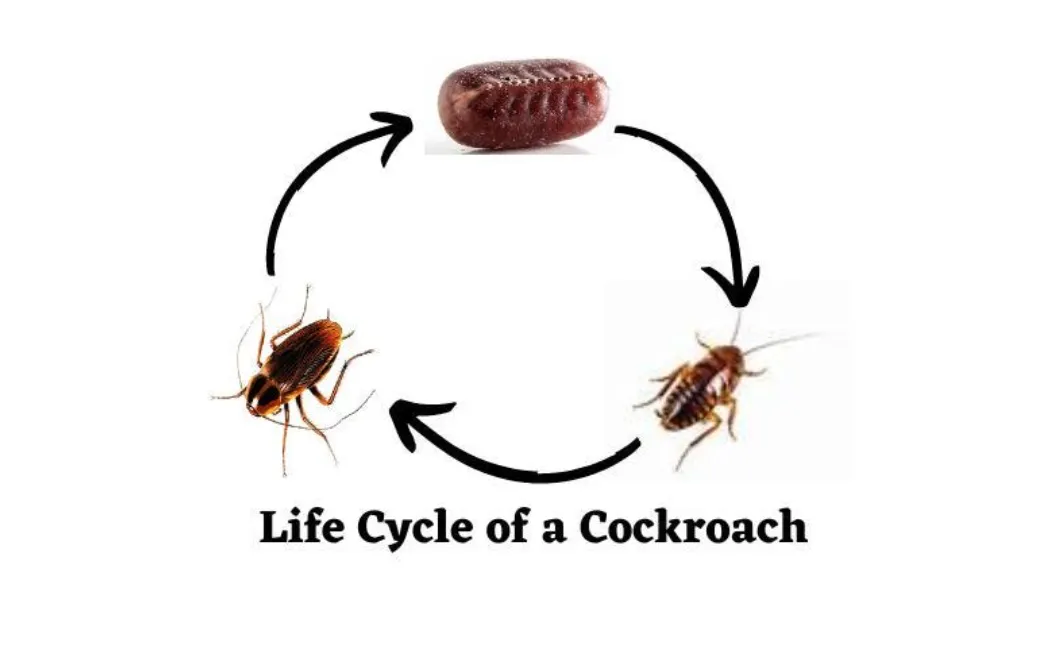
The American cockroach’s life cycle is one of the longest among common household cockroach species. Scientifically known as Periplaneta americana, this insect undergoes incomplete metamorphosis, meaning it lacks a pupal stage. Its life begins inside an ootheca, or egg case, then continues through several nymph stages before reaching the adult stage.
Although its name suggests an American origin, the American cockroach is believed to have been introduced to North America through ships and is now found worldwide in warm, moist environments. It commonly lives in sewers, basements, drains, restaurants, food-storage areas, gardens, leaf litter, and damp cracks near buildings. It prefers moisture, warmth, and easy access to food and water.
A mature American cockroach is reddish brown with a pale yellowish marking around the pronotum, the shield-like area behind the head. Adults are usually much larger than German cockroaches, and they have well-developed wings, although they usually run more than they fly.
Q: How many stages are in the American cockroach life cycle?
A: Scientifically, there are three main stages: egg, nymph, and adult. For easier learning, the cycle can also be explained in four practical parts: ootheca formation, egg hatching, nymphal growth, and adult reproduction.
Q: How long does an American cockroach take to become an adult?
A: Development from egg to adult can average about 600 days, but the time changes depending on temperature, humidity, food, and shelter.
Q: What does a baby American cockroach look like?
A: A baby American cockroach, or American cockroach nymph, looks like a smaller wingless adult. Early nymphs may be grayish brown, while older nymphs become reddish brown.
Quick Life Cycle Table
| Life Stage | What Happens | Time Period | Key Identification |
| Ootheca / Egg Case | Female forms and deposits a hardened egg case | Often, several weeks before hatching | Brown to dark, purse-shaped capsule |
| Hatching | Young nymphs emerge from the egg case | Around 6–8 weeks in many conditions | Tiny, wingless, soft-bodied young |
| Nymph | Nymphs molt repeatedly and grow larger | 6–12 months or longer | Wingless, reddish-brown body |
| Adult | Fully winged, reproductive cockroach | Up to about 1 year or more | Large reddish-brown body with pale pronotum band |
The American cockroach develops slowly compared with many indoor pests. Under suitable conditions, females can produce multiple oothecae, and each ootheca may contain 15–16 eggs.
The History Of Their Scientific Naming, Evolution, and Their Origin
Scientific Name and Classification
The scientific name of the American cockroach is Periplaneta americana. It belongs to the kingdom Animalia, class Insecta, order Blattodea, family Blattidae, and genus Periplaneta. The name helps scientists separate it from other common cockroaches, such as the German cockroach, Oriental cockroach, and smokybrown cockroach.
Origin and Global Spread
Despite the common name, the American cockroach is not truly native to America. It is widely believed to have spread from warmer regions, probably through ships and global trade routes. Because it can survive in human-made structures, drains, ships, markets, and storage areas, it has become a cosmopolitan species found in many parts of the world.
Evolutionary Adaptation
Cockroaches are ancient insects with strong survival traits. Their flattened bodies allow them to hide in narrow spaces, while their long antennae help them detect food, moisture, and danger. The American cockroach life cycle reflects this survival design: the egg case protects embryos, nymphs grow through repeated molts, and adults reproduce efficiently in warm, moist habitats.

Their Reproductive Process, Giving Birth And Rising Their Children
Mating and Fertilization
The American cockroach does not give live birth like mammals. Instead, after mating, the female produces a protective egg case called an ootheca. Mating involves chemical communication, and females release pheromones that help attract males. After fertilization, the female begins forming the egg case inside her body.
Ootheca Production
A female usually produces an ootheca about a week after mating. At peak reproductive activity, she may regularly produce egg cases. Each egg case typically holds about 15–16 eggs, and the female deposits it in a protected location near food and moisture.
Choosing Safe Egg Sites
The female places the ootheca in hidden, humid spaces such as cracks, crevices, damp wall voids, drains, storage areas, or outdoor organic debris. She may glue it to a surface using a secretion from her mouth. This helps protect the eggs from drying out, predators, and physical disturbance.
Do They Raise Their Young?
The American cockroach does not care for its young after the egg case is deposited. Once the American cockroach nymphs hatch, they immediately begin searching for food, water, and shelter on their own. Their survival depends on their ability to hide, access moisture, and access available food sources.
Stages of the American Cockroach Life Cycle
Scientifically, the American cockroach’s life cycle has three biological stages: egg, nymph, and adult. However, for easier understanding, the process can be explained through four practical stages.
Stage 1: Ootheca or Egg Case Formation
The life cycle begins when the female forms a hardened egg case called an ootheca. This capsule is brown to dark brown and shaped like a small purse. It protects the developing embryos from dryness and minor environmental stress.
The female usually deposits the ootheca near food and moisture. This placement gives the young nymphs a better chance of survival after hatching.
Stage 2: Egg Development and Hatching
Inside the ootheca, the embryos develop until they are ready to emerge. In many conditions, nymphs hatch after about six to eight weeks, although warmer and more favorable environments can shorten development time.
When the nymphs hatch, they are small, soft, and pale. Soon after, their body color darkens.
Stage 3: American Cockroach Nymph
The American cockroach nymph is wingless and resembles a small adult. Nymphs undergo several molts, shedding their exoskeletons as they grow. Reports describe 6-14 molts, and many nymphs molt 10–13 times before becoming adults.
This is the longest part of the life cycle. Nymphs actively search for food and water while hiding in dark, humid spaces.
Stage 4: Adult American Cockroach
After the final molt, the insect becomes a fully developed adult with wings and reproductive ability. Adults are reddish brown and have a pale yellowish margin around the pronotum. They can reproduce, spread to new shelters, and continue the cycle by producing new oothecae.
Important Things That You Need To Know
Several related search terms help people correctly identify and understand this insect. The phrase “German vs. American cockroach” is important because these two pests are often confused. The American cockroach is usually larger, reddish-brown, and commonly found in sewers, drains, basements, and warm, damp areas. The German cockroach is smaller, lighter brown, and more commonly found in kitchens and other indoor areas.
A baby American cockroach is also called a nymph. It lacks wings and may appear darker or smaller than the adult. As it grows, it molts several times and gradually develops the adult shape. This is why identifying the nymph stage is important for early pest detection.
The phrase “American cockroach vs. German cockroach” is also useful for homeowners, as control methods may differ between the two species. German cockroaches reproduce very quickly indoors, while American cockroaches often enter from drains, sewers, damp outdoor areas, and structural gaps.
Another key topic is identifying American droppings. Their droppings may look like dark, blunt-ended pellets or smears in damp areas. Droppings, shed skins, and body parts can contribute to indoor allergen problems, especially in areas with heavy infestations. Cockroach materials such as body parts, saliva, feces, and waste can act as allergens.
Their Main Diet, Food Sources, and Collection Process Explained
The American cockroach is an omnivorous scavenger. This means it can eat both plant-based and animal-based materials. Its flexible diet is one of the main reasons it survives in cities, buildings, drains, gardens, and waste areas.
Main Food Sources
- Decaying organic matter, such as dead leaves, rotting plant material, and decomposed waste.
- Human food scraps, including bread, fruit, sweets, grease, rice, and stored food residues.
- Starchy materials such as paper, book bindings, cardboard, and glue.
- Animal-based materials, including dead insects, fish remains, and other decaying matter.
- Moist waste areas, especially drains, garbage zones, sewers, and food-storage spaces.
American cockroaches are especially attracted to sweets and fermenting materials, but they can survive on a surprisingly wide range of foods.
How They Collect Food
- They mostly forage at night because they avoid light.
- Their long antennae help them detect food, moisture, and chemical cues.
- They move quickly between hiding sites and feeding areas.
- They often feed near moisture because water is essential for survival.
- They may contaminate surfaces by moving between dirty areas and food zones.
This feeding behavior makes the American cockroach ecologically useful outdoors but problematic indoors.

How Long Does an American Cockroach Live
The lifespan of an American cockroach depends on food, temperature, humidity, shelter, predators, and human control measures. In favorable environments, it can live much longer than many other common cockroach species.
- Average development from egg to adult: The complete development from egg to adult can take around 600 days under some reference conditions.
- Adult lifespan: Adult American cockroaches may live for about one year, and some sources report that adult life may extend to another 400 days after reaching maturity.
- Nymph period: The nymph stage can last six to twelve months, but it may take longer when the temperature, food, or humidity are not ideal.
- Effect of temperature: Warm temperatures speed up development. Cold conditions slow growth and may kill the insect if exposure is severe or prolonged. The species generally prefers warm, moist places.
- Effect of humidity: Moisture is essential. American cockroaches survive best in damp areas such as sewers, drains, basements, bathrooms, and outdoor organic debris.
- Effect of food: Good food access allows nymphs to molt successfully and adults to reproduce. Poor nutrition can slow development and reduce survival.
- Predators and natural enemies: Birds, reptiles, amphibians, mammals, spiders, ants, and parasitoid wasps may attack cockroaches or their egg cases.
- Indoor survival: Indoors, they may live longer if they find water, warmth, food scraps, and hidden cracks.
- Outdoor survival: In the outdoors, survival depends heavily on climate, seasonal temperatures, rainfall, shelter, and predator pressure.
- Population growth: A female can produce many young during her lifetime, which is why even a small infestation can become serious if food, water, and shelter remain available.
American Cockroach Life Cycle Lifespan in the Wild vs. in Captivity
Lifespan in the Wild
In the wild, the American cockroach usually lives in warm, moist shelters such as leaf litter, tree holes, rotting wood, drains, gardens, caves, and sewer-like environments. Its survival is affected by rain, drought, temperature changes, disease, parasites, predators, and food availability.
Outdoor populations may decline in cold weather, especially in regions where winter temperatures become too low. However, in tropical and subtropical climates, outdoor populations can remain active for much of the year.
Lifespan in Human Buildings
Inside buildings, the American cockroach may survive longer because it can find stable warmth, water, food waste, and dark shelter. Basements, bathrooms, commercial kitchens, steam tunnels, bakeries, grocery stores, and drains can provide ideal conditions.
Lifespan in Captivity or Laboratory Conditions
In captivity, lifespan can be longer and more predictable because temperature, humidity, diet, and shelter are controlled. Laboratory conditions are often used to study growth, molting, reproduction, toxicology, and insect physiology. However, captivity does not always reflect real-world survival because natural predators and environmental stress are reduced.
Importance of the American Cockroach Life Cycle in this Ecosystem
Decomposition and Nutrient Recycling
Outdoors, American cockroaches help break down dead plant material, decaying organic matter, and waste. By feeding on decomposing materials, they contribute to nutrient cycling. This supports soil systems and helps organic matter return to the environment.
Food for Other Animals
Cockroaches are part of the food web. They can become prey for birds, frogs, lizards, spiders, ants, small mammals, and parasitic wasps. In this way, they transfer energy from decaying matter to higher levels of the ecosystem.
Natural Population Control
The American cockroach’s life cycle also supports natural enemies. Certain parasitoid wasps attack cockroach egg cases, preventing nymphs from emerging. This is one reason natural biological control is important in outdoor and semi-natural systems.
Public Health Balance
While they have ecological value outdoors, they can be harmful indoors. Cockroaches can move from dirty areas to food surfaces and may carry microbes. Their droppings, shed skins, and body parts can also contribute to allergy and asthma problems.
What to do to protect them in nature and save the system for the future
Protect Natural Decomposer Habitats
- Preserve leaf litter, soil organisms, rotting wood zones, and natural microhabitats in forests and gardens.
- Avoid removing every decomposer species from outdoor ecosystems.
Use Pest Control Only Where Needed
- Control American cockroaches inside homes, kitchens, hospitals, and food businesses.
- Avoid unnecessary chemical spraying in natural outdoor areas where they are part of the food web.
Reduce Pollution and Waste Mismanagement
- Keep human waste, sewage, and garbage under proper control.
- Cleaner environments reduce unhealthy pest populations without destroying natural decomposer roles.
Support Natural Predators
- Protect birds, reptiles, amphibians, spiders, ants, and parasitoid wasps.
- These predators help keep cockroach populations balanced naturally.
Choose Integrated Pest Management
- Seal cracks, remove moisture, store food properly, and use targeted control when necessary.
- This protects human health while reducing excessive pesticide use.

Fun & Interesting Facts About American Cockroach Life Cycle
- American cockroaches are not truly American in origin; they likely spread globally through trade and shipping.
- A female produces a protective egg case, called an ootheca, rather than loose individual eggs.
- A baby American cockroach is called a nymph and resembles a small, wingless adult.
- The nymph stage can include many molts before adulthood.
- Adults have wings, but they usually prefer running to flying.
- They are mostly nocturnal and hide during the day.
- They prefer warm, moist places and are common around drains, sewers, and basements.
- They can eat many unusual materials, including paper, glue, hair, and decaying matter.
- Their droppings, shed skins, and body fragments may trigger allergies in sensitive people.
- Their egg cases can be attacked by tiny parasitoid wasps, which act as natural biological control agents.
Frequently Asked Questions (FAQs)
Q: What is the full American cockroach life cycle?
A: The full American cockroach life cycle includes egg, nymph, and adult stages. For practical understanding, it can be explained as ootheca formation, hatching, nymphal growth, and adult reproduction.
Q: How many eggs are in an American cockroach ootheca?
A: One ootheca usually contains about 15–16 eggs, depending on the female and environmental conditions.
Q: What is the difference between the German and American cockroach?
A: The American cockroach is larger, reddish brown, and often linked to drains, sewers, basements, and damp areas. The German cockroach is smaller, lighter brown, and commonly found in kitchens and indoor food areas.
Q: How can I identify an American cockroach nymph?
A: An American cockroach nymph is wingless, smaller than the adult, and usually grayish brown to reddish brown. It becomes more adult-like after each molt.
Q: What does American cockroach droppings identification look like?
A: Droppings may appear as dark pellets or smears, often found near damp hiding places, food sources, or travel routes. Finding droppings, shed skins, and egg cases can indicate an active infestation.
Conclusion
The American cockroach’s life cycle is slow but highly successful in terms of survival. From the protective ootheca to the growing American cockroach nymph and finally the reproductive adult, every stage is designed for survival in warm, moist, food-rich environments. Although this insect plays a useful role outdoors as a decomposer and a food source for other animals, it becomes a serious concern when it enters homes, restaurants, drains, hospitals, or food storage areas.
Understanding the difference between the American cockroach and the German cockroach, recognizing a baby American cockroach, and identifying droppings can help people respond early and correctly. The best approach is balance: protect natural ecosystems outdoors, but use clean, safe, and targeted control indoors. A clear understanding of the American cockroach life cycle helps support both public health and ecological awareness.
Also Read: life cycle of a dolphin
About the Author