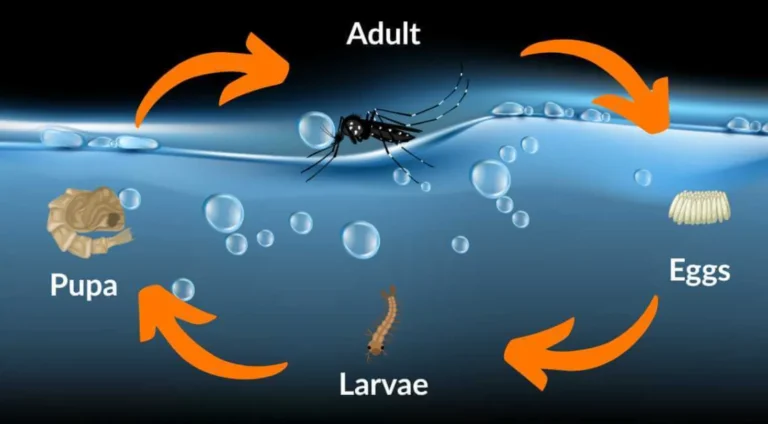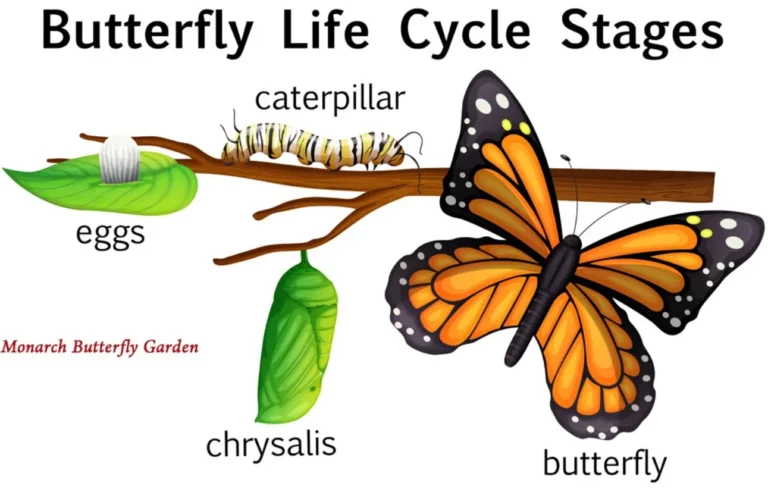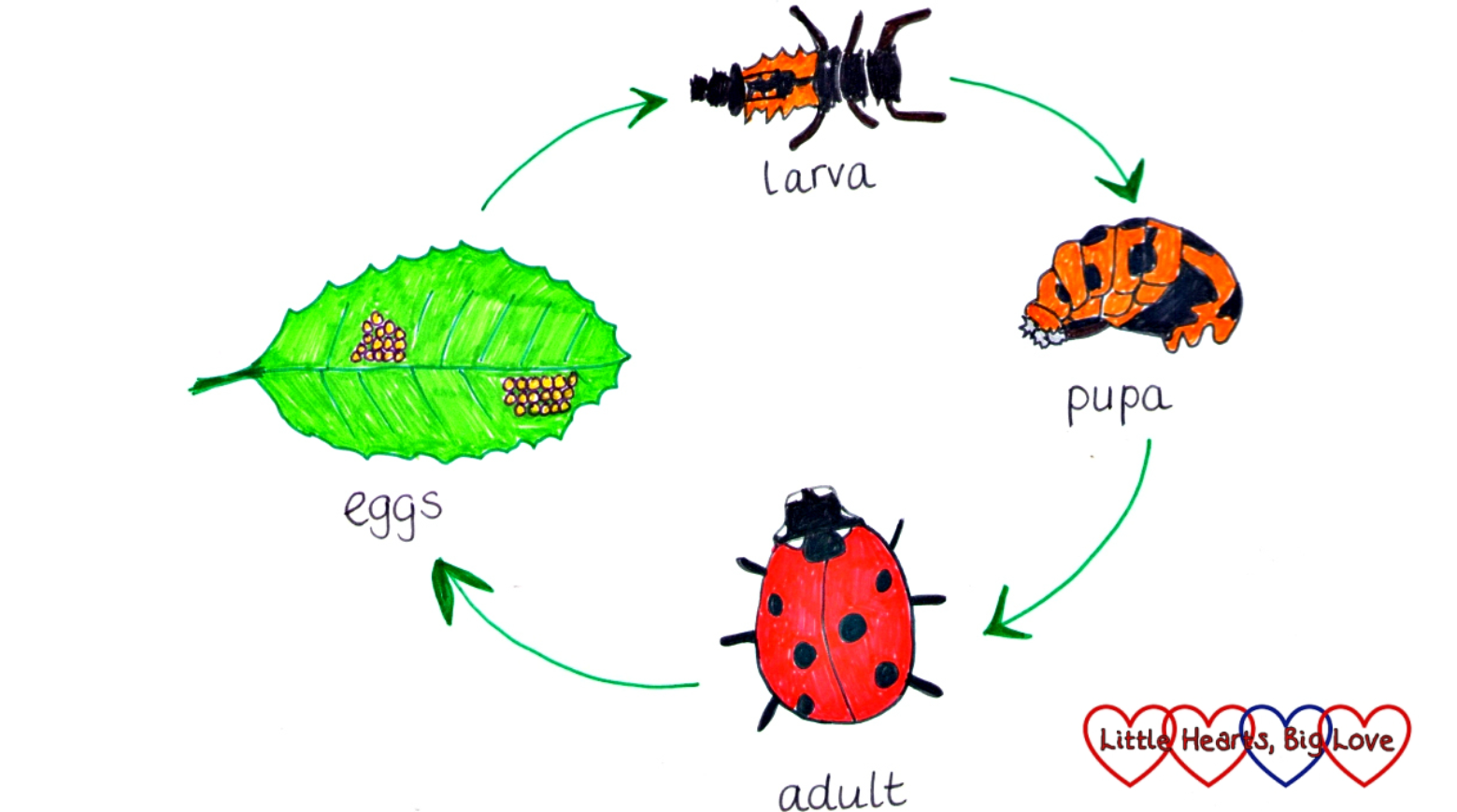
The lady beetle’s life cycle is one of the most interesting transformations in the insect world. A lady beetle, also called a ladybug, does not grow like humans or other animals. It undergoes a complete body-changing process called complete metamorphosis. This means it develops through four clear stages: egg, larva, pupa, and adult. UC IPM and university extension sources describe these four stages as the main pattern of lady beetle development.
Ladybeetles are best known for their bright red, orange, yellow, or black bodies, but their baby stage looks very different. Ladybeetle larvae are often long, dark, spiny, and alligator-like. Many people mistake them for harmful insects, but they are actually powerful garden helpers because they eat aphids, scale insects, mites, and other soft-bodied pests.
These beetles are important for gardens, farms, and natural ecosystems. They naturally reduce pest populations and help keep plants healthier, without relying too much on chemical insecticides. Understanding their life cycle helps gardeners protect them at every stage.
Q: What are the four stages of the lady beetle life cycle?
A: The four stages are egg, larva, pupa, and adult.
Q: Are ladybeetle larvae harmful?
A: No. Ladybeetle larvae may look rough or scary, but they are beneficial predators that eat many garden pests.
Q: How long does the lady beetle’s life cycle take?
A: It depends on species, food, and temperature. For some common species, development from egg to adult can take around several weeks, with the sevenspotted lady beetle taking about six weeks during the growing season.
Quick Life cycle table
| Stage | Mobile-friendly summary | What happens |
| Egg | Tiny yellow or orange eggs | Females lay eggs near aphids or other food sources |
| Larva | Dark, spiny, alligator-like body | Larvae eat pests, grow fast, and molt several times |
| Pupa | Still, the stage is attached to a leaf or stem | The body changes into the adult beetle form |
| Adult | Winged beetle with hard wing covers | Adults feed, mate, lay eggs, and may overwinter |

The History of Their Scientific Naming
The scientific family name for lady beetles is Coccinellidae. This family name was established by the French zoologist Pierre André Latreille in 1807. The word is linked to the Latin root coccineus, meaning “scarlet” or “bright red,” which matches the color of many familiar ladybug species. Taxonomic databases such as ITIS list Coccinellidae Latreille, 1807 as the family for ladybird beetles.
The common name has its own cultural history, too. In Britain, these insects became known as ladybirds, connected with “Our Lady,” referring to the Virgin Mary. In North America, people commonly call ladybugs ladybugs, although this name is not scientifically accurate.
Entomologists usually prefer the lady beetle or the ladybird beetle because these insects are beetles, not true bugs. True bugs belong to a different insect group. So, when comparing ladybug vs ladybeetle, both names often refer to the same insect, but ladybeetle is more scientifically accurate.
Their Evolution And Their Origin
The origin of lady beetles is linked to the long evolutionary history of beetles. Beetles belong to the order Coleoptera, one of the most diverse insect groups on Earth. Ladybeetles later developed as a specialized family within this huge beetle order.
Modern studies suggest that the family Coccinellidae has an ancient history, although the fossil record is incomplete. Fossil evidence indicates that ladybird beetles date back to the Eocene, while molecular studies suggest the group may have originated even earlier. A 2026 mitogenomic study notes that Coccinellidae may have an Early Cretaceous origin, while also stating that confirmed Cretaceous fossil records are still lacking.
This means scientists are still improving the timeline of lady beetle evolution. Their soft, small bodies do not fossilize as readily as those of harder or larger animals. Many known fossils are preserved in amber, offering researchers a rare glimpse of ancient beetle forms.
Over time, ladybeetles evolved traits that helped them survive. Their rounded body shape protects them from attack. Their bright colors often serve as warning signals, telling predators they may taste bad or release defensive fluids. Many species also became excellent predators of soft-bodied insects such as aphids and scale insects.
Their origin is not limited to one place today. Coccinellidae is now a worldwide family, with thousands of described species living in forests, farms, grasslands, gardens, wetlands, and urban areas. Some species are native to certain regions, while others, such as the multicolored Asian lady beetle, have spread widely beyond their original range.
Important Things That You Need To Know
There are a few important facts people should know before learning more about the lady beetle’s life cycle. First, the terms ladybeetle, ladybug, and ladybird beetle are commonly used for the same insect group. However, ladybeetle is the better scientific term because these insects are beetles, not true bugs.
Second, ladybeetle larvae are extremely useful. They look very different from adults, so many gardeners accidentally kill them. The larvae are usually dark, long, and spiny, but they are not plant pests. They eat aphids and other harmful insects.
Third, the topic ladybug vs ladybeetle is mostly about naming. A ladybug is not a “bug” in the strict scientific sense. It is a beetle with hard wing covers and chewing mouthparts.
Fourth, a lady beetle bite is usually associated with certain species, especially the multicolored Asian lady beetle. University of Minnesota Extension notes that some Asian lady beetles can bite hard enough to cause minor, short-lived discomfort, but they are not considered dangerous to most people.
Finally, the search term “Japanese ladybeetle” often confuses. Many people use it to refer to the Asian lady beetle, especially Harmonia axyridis. This species is native to eastern Asia and is known for entering homes in large groups during cooler months.
Their main food and its collection process
Ladybeetles are famous because many species feed on crop and garden pests. Their main food is usually soft-bodied insects, especially aphids. Aphids suck plant sap and can weaken vegetables, flowers, fruit trees, and field crops. Ladybeetles help control them naturally.
Both adults and larvae can feed on pests. University of Minnesota Extension explains that lady beetles eat insects, nectar, and pollen, and that both adults and larvae are useful predators.
Their food collection process is simple but effective:
- Searching for plants: Adult lady beetles fly from plant to plant, looking for aphid colonies, scale insects, mites, and other small prey.
- Using smell and sight: They can locate areas where prey insects gather, especially on tender stems, leaf undersides, and new plant growth.
- Laying eggs near food: Female ladybeetles often lay eggs near aphids so the larvae can begin feeding soon after hatching.
- Larval feeding: Lady beetle larvae cannot fly, so they crawl across leaves and stems. They attack prey directly with their mouthparts.
- Adult feeding: Adults chew prey and can move quickly between plants. Cornell’s biological control information notes that some lady beetle species can consume many aphids, with seven-spotted lady beetle larvae eating hundreds of aphids as they grow.
Ladybeetles may also consume pollen and nectar, especially when prey is low. This helps them survive between pest outbreaks and makes flowering plants important for their protection.

Their life cycle and ability to survive in nature
Egg Stage
The lady beetle life cycle begins when a female lays clusters of small, yellow or orange eggs. These eggs are often placed on the underside of leaves, near aphid colonies or other prey. This provides young larvae with a food supply immediately after hatching.
Larva Stage
After hatching, the larva begins to feed. This is the most active feeding stage. Ladybeetle larvae grow quickly and pass through several larval phases called instars. UC IPM notes that larvae develop through four increasingly larger instars after hatching.
Pupa Stage
When the larva is fully grown, it attaches itself to a leaf, stem, or another surface. It becomes a pupa. In this stage, it does not move much, but major changes occur inside the body. The larval body transforms into an adult beetle.
Adult Stage
The adult emerges with soft body parts at first. Later, the body hardens, and the adult color becomes clearer. Adults can fly, find food, mate, and lay eggs.
Survival Ability
Ladybeetles survive in nature through several methods. Their bright colors warn predators. Some release a yellowish defensive fluid when disturbed. Many adults also survive cold seasons by hiding under bark, leaf litter, stones, or inside sheltered places. Some species, especially Asian lady beetles, gather in buildings to overwinter.
Their Reproductive Process and raising their children
Ladybeetles reproduce sexually. The adult male mates with the adult female, and the female later lays eggs in places where young larvae can find food. Their reproductive process is strongly linked with prey availability.
Important points include:
- Mating occurs after adulthood: Lady beetles must complete the egg, larva, and pupa stages before they can reproduce.
- Females choose food-rich places: Females often lay eggs near aphids because the young larvae need food immediately.
- Eggs are laid in clusters. Eggs are usually placed on leaves or stems, often near pest colonies.
- No direct parenting: Ladybeetles do not raise their young like birds or mammals. They do not feed larvae after hatching.
- Smart egg placement works like care: although they do not stay with their young, choosing a safe, food-rich place increases the larvae’s chances of survival.
- Larvae feed independently: Once hatched, larvae crawl around and hunt small insects.
- High egg numbers increase survival: Some eggs may not hatch, and predators may eat some larvae. Laying many eggs helps the species continue.
For example, UC IPM notes that adult female sevenspotted lady beetles may lay about 200 to 300 eggs during their growing season, and reproduction stops as day length shortens.
So, ladybeetles do not “raise children” in the human sense. Their care is mostly shown through egg placement and timing.
The importance of them in this Ecosystem
Natural Pest Control
Lady beetles are among the most useful natural pest-control insects. They feed on aphids, scale insects, mites, mealybugs, and other pests that damage plants. This reduces the need for chemical pesticides.
Support for Farmers and Gardeners
In farms and gardens, lady beetles help protect vegetables, fruits, flowers, and other crops. When pest numbers rise, ladybeetles often move into those areas to feed.
Food Web Balance
Ladybeetles are both predators and prey. They eat smaller insects, but birds, spiders, frogs, and other animals may eat them as well. This makes them part of a balanced food web.
Plant Health
By reducing sap-sucking insects, ladybeetles help plants grow better. Healthier plants can flower, fruit, and reproduce more successfully.
Biodiversity Indicator
A garden with ladybeetles often has a richer insect community. Their presence suggests there is food, shelter, and reduced chemical disturbance.
Biological Control Value
Cornell describes lady beetles as strong predators that become common where prey is plentiful and broad-spectrum insecticide use is limited. This makes them important in sustainable pest management.
What to do to protect them in nature and save the system for the future
Protecting ladybeetles means protecting the natural balance of gardens, farms, and wild habitats. Here are practical ways to help them:
- Avoid unnecessary pesticides: Broad-spectrum insecticides can kill both pests and beneficial insects, including lady beetle larvae and adults.
- Plant nectar-rich flowers: Add dill, fennel, yarrow, marigold, cosmos, alyssum, and native flowering plants to support adults with pollen and nectar.
- Keep some natural shelter: Leaf litter, dry stems, bark, and ground cover can provide hiding places during cold or dry seasons.
- Do not kill larvae: Learn to identify lady beetle larvae. They may look like tiny dark alligators, but they are helpful predators.
- Control ants around aphids: Ants often protect aphids for honeydew. Reducing ant activity can help ladybeetles reach aphid colonies.
- Use water spray first: If aphids are heavy, spray plants with water before using chemical control.
- Support native species: Avoid releasing large numbers of purchased non-native beetles without understanding local effects.
- Seal homes gently: If Asian lady beetles enter buildings, seal cracks and use vacuum removal instead of crushing them.
- Grow diverse plants: A mixed garden provides food, shelter, and safer breeding sites for lady beetles.
- Teach others: Many people kill larvae by mistake. Sharing correct information helps protect beneficial insects.

Frequently Asked Questions (FAQs)
Q1: What is the lady beetle’s life cycle?
A: The lady beetle life cycle has four stages: egg, larva, pupa, and adult. This is called complete metamorphosis.
Q2: How long does a lady beetle live?
A: Lifespan depends on species, weather, food, and predators. Some adults live for weeks or months, while some can survive through winter in protected places.
Q3: What do ladybeetle larvae eat?
A: Ladybeetle larvae mainly eat aphids, scale insects, mites, and other soft-bodied pests. They are very helpful in gardens.
Q4: What is the difference between a ladybug and a lady beetle?
A: In common use, both names often mean the same insect. Scientifically, ladybeetle is more accurate because the insect is a beetle, not a true bug.
Q5: Can a lady beetle bite humans?
A: Some species, especially Asian lady beetles, may bite lightly. A lady beetle bite usually causes only minor, short-lived discomfort.
Q6: Are ladybeetles good for gardens?
A: Yes. They are beneficial because they naturally reduce pest populations, especially aphids.
Q7: What is a Japanese lady beetle?
A: Many people use the Japanese lady beetle when they mean the Asian lady beetle. The better-known species is Harmonia axyridis, also called the multicolored Asian lady beetle.
Q8: Should I remove ladybeetle larvae from plants?
A: No. Keep them on plants unless you are sure they are something else. They are useful predators and often protect plants from pests.
Conclusion
The lady beetle life cycle is a powerful example of natural transformation. From tiny eggs to hungry larvae, from quiet pupae to colorful adults, every stage has a clear role in survival and ecosystem balance. These beetles are not just attractive garden insects. They are natural pest controllers, plant protectors, and important members of the food web.
Learning the differences between lady beetle larvae, adults, and similar insects helps people avoid accidentally killing them. It also helps gardeners understand why chemical-free and biodiversity-friendly spaces matter.
Whether someone searches for ladybug vs ladybeetle, ladybeetle bite, or japanese ladybeetle, the key lesson is simple: ladybeetles are valuable insects that deserve protection. By growing diverse plants, reducing pesticide use, and protecting natural shelters, we can help lady beetles continue their important work in nature.
Also Read: aphids life cycle
About the Author