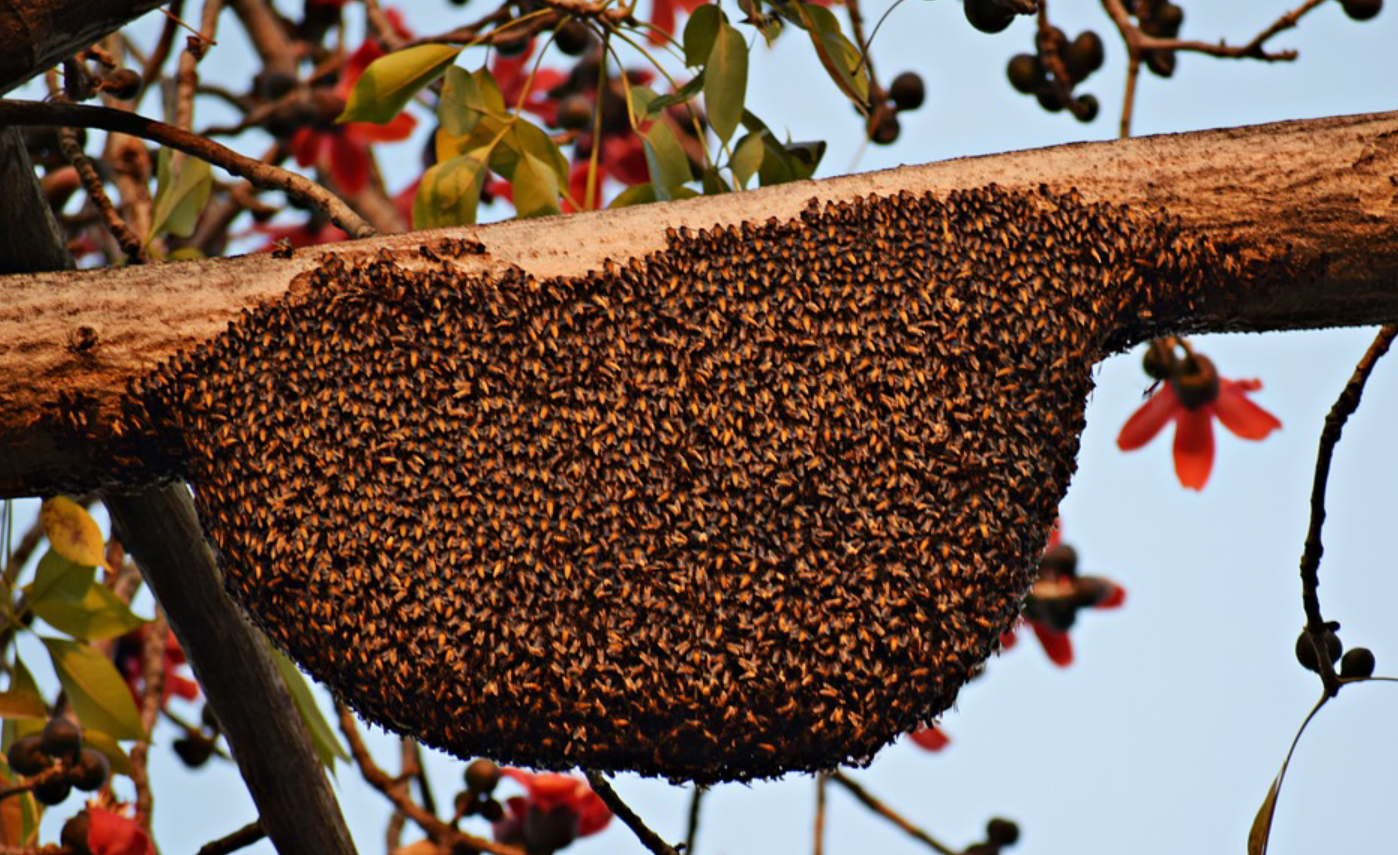
The life cycle of a beehive is not just the story of one bee growing from an egg into an adult. A beehive is a living community, and its life cycle includes the birth of new bees, the growth of the colony, food collection, reproduction, swarming, winter survival, and renewal. Inside a healthy beehive, thousands of bees work together with clear roles. The queen bee lays eggs, worker bees clean, feed young bees, build wax comb, guard the hive, and collect nectar and pollen, while drone bees exist mainly for mating.
Most people search for information on the life cycle of a beehive to understand how bees live, how honey is made, why bees are important, and how a colony survives in nature. The common honey bee, known scientifically as Apis mellifera, develops through four main stages: egg, larva, pupa, and adult. The full development time depends on the bee’s role: queens usually take about 16 days, workers about 21 days, and drones about 24 days.
Q: What is the life cycle of a beehive?
A: The life cycle of a beehive includes egg laying, brood development, adult bee work, food collection, reproduction, swarming, winter survival, and colony renewal.
Q: How long does it take for a honey bee to become an adult?
A: A queen takes about 16 days, a worker takes about 21 days, and a drone takes about 24 days to emerge as an adult bee.
Q: Why is a beehive important?
A: A beehive supports pollination, honey production, plant reproduction, biodiversity, and food systems. Honey bees alone help pollinate many fruits, nuts, and vegetables.
Quick Life Cycle Table
| Stage | What Happens | Time / Role | Simple Meaning |
| Egg | The queen bee lays eggs in wax cells | About 3 days | The colony begins new bee life |
| Larva | Nurse bees feed young bees with brood food | Around 5.5–6.5 days | Fast growth stage |
| Pupa | Body parts form inside capped cells | Varies by caste | Bee changes into adult form |
| Adult Queen | Emerges, mates, then lays eggs | About 16 days to emerge | Main egg-layer |
| Adult Worker | Cleans, feeds, builds, guards, forages | About 21 days to emerge | Main worker of the hive |
| Adult Drone | Male bees develop for mating | About 24 days to emerge | Helps reproduction |
| Colony Growth | Hive expands during flower-rich seasons | Spring and summer peak | More food, more brood |
| Colony Survival | Bees cluster, save food, protect the queen | Winter or hard seasons | Hive stays alive |

The History of Their Scientific Naming
The best-known honey bee associated with a beehive is the western honey bee, Apis mellifera. This name was given by Carl Linnaeus in 1758, during the early development of modern biological classification. In simple terms, Apis means “bee,” while mellifera means “honey-bearing” or “honey-carrying.”
The scientific name helps people avoid confusion because the word “bee” can refer to thousands of species. Not all bees live in hives, and not all bees make honey. Many wild bees are solitary and live in soil, wood, stems, or small cavities.
The name Apis mellifera is important because it connects the honey bee to its correct taxonomic position: Animalia, Arthropoda, Insecta, Hymenoptera, Apidae, Apis, and Apis mellifera.
Over time, this scientific naming system helped researchers, beekeepers, farmers, and conservation workers study honey bees more accurately. It also made it easier to compare honey bees with other bees, such as bumblebees, stingless bees, carpenter bees, and solitary bees.
Their Evolution And Their Origin
The origin of bees is closely connected with the rise of flowering plants. Bees are believed to have evolved from wasp-like ancestors that gradually shifted from hunting prey to feeding on nectar and pollen. This change was important because flowering plants needed insects to move pollen from flower to flower, while early bees gained a rich food source in return.
Honey bees belong to the genus Apis, and many of their close relatives are believed to have roots in Asia. However, Apis mellifera is widely distributed across Europe, Africa, and western Asia, and was spread by humans to many other parts of the world.
The evolution of the beehive is also the evolution of social life. Honey bees are eusocial insects, meaning they live in highly organized groups with shared duties. A colony usually has one fertile queen, many female workers, and seasonal male drones. This division of labor allowed honey bees to build wax comb, store honey, defend their home, care for young bees, and survive difficult seasons.
The beehive is therefore more than a nest. It is a natural survival system. Over millions of years, bees developed communication methods such as scent signals, touch, vibration, and dance-like movements to share information about food and danger. This teamwork helped honey bee colonies survive in changing environments.
Today, managed honey bees are found far beyond their original range because humans moved them for honey production and crop pollination. This expansion made honey bees highly visible in agriculture, but it also reminds us to protect both managed honey bees and native wild bees.
Important Things That You Need To Know
When people search for a beehive, they may not always mean the natural home of honey bees. Search engines often associate this word with various topics, so it is useful to understand its meaning clearly.
In biology, a beehive means the home of a honey bee colony. It may be a natural nest inside a tree cavity or a human-made box used by beekeepers. This article mainly discusses the life cycle of a beehive, meaning the biological growth and survival of a honey bee colony.
However, the word also appears in searches for lifestyle, travel, food, and business. For example, beehive hairstyle and Beehive hairdo refer to a tall, rounded hairstyle made popular in the 1960s. It has no connection to bee biology except for its shape, which resembles a traditional hive.
Beehive Trail in Acadia National Park is a well-known hiking trail. The word “beehive” here is used as a place name, not an insect term.
Beehive Meals is commonly searched as a food or meal-service phrase, while Beehive Farmacy may refer to a brand, shop, or wellness-related name, depending on the location. These terms are useful for search intent, but they should not be mixed with the natural science of bees.
When learning about the life cycle of a beehive, focus on the colony, the queen, workers, drones, wax comb, eggs, larvae, pupae, nectar, pollen, honey, and survival behaviors. This keeps the topic accurate, helpful, and easy to understand.
Their main food and its collection process
Honey bees depend mainly on nectar, pollen, water, and plant-based resins. Each food has a different role in the life of a beehive.
- Nectar is the sweet liquid collected from flowers. Worker bees carry nectar in a special honey stomach and bring it back to the hive. Inside the hive, other workers process it, reduce its moisture, and store it as honey.
- Pollen is the main protein source for bees. It is especially important for feeding larvae and producing strong young workers. A colony grows better when pollen is abundant and of high quality.
- Water helps cool the hive, dilute food, and maintain the right conditions for brood development.
- Propolis comes from plant resins. Bees collect it from buds, bark, and trees, then use it to seal cracks, strengthen the hive, and support colony hygiene.
The collection process is organized. Older worker bees usually become foragers. They leave the beehive, search for flowers, collect nectar or pollen, and return. Pollen is packed into pollen baskets on their hind legs, while nectar is carried internally.
Food collection depends on weather, season, flower availability, colony strength, and the health of worker bees. When flowers are rich in spring and summer, the colony expands quickly. When food is limited, the queen reduces egg laying, and the hive becomes more conservative with stored honey.

Their life cycle and ability to survive in nature
Egg to adult development
The inner life cycle of a beehive begins when the queen bee lays eggs in wax cells. Fertilized eggs become female bees, either workers or new queens. Unfertilized eggs become male drones.
After about three days, the egg hatches into a larva. Nurse bees feed the larvae, and their bodies grow quickly. Later, the cell is capped with wax, and the larva enters the pupa stage. Inside the capped cell, the bee develops eyes, legs, wings, body hair, and adult organs.
Worker life inside the hive
A worker bee’s role changes with age. Young workers clean cells, feed larvae, care for the queen, and build wax comb. Middle-aged workers may store nectar, process honey, remove waste, and guard the hive entrance.
Older workers become foragers. This is one of the most dangerous jobs because they face weather, predators, pesticides, and exhaustion outside the hive.
Seasonal survival system
A beehive survives by adapting to its environment. In spring, the queen lays more eggs, and the colony grows. In summer, workers collect a lot of food. In autumn, the colony prepares for colder months by storing honey. In winter, bees form a warm cluster around the queen and use stored honey for energy. Seasonal colony activity changes strongly with climate and food supply.
Their Reproductive Process and raising their children
The reproductive process of a beehive is centered on the queen bee, but the whole colony supports it.
- The queen bee lays eggs in carefully cleaned wax cells. She can lay fertilized or unfertilized eggs, depending on the type of cell and the colony’s needs.
- Fertilized eggs become female bees. If the larva receives special feeding and develops in a queen cell, it can become a new queen. If it receives normal worker feeding, it becomes a worker.
- Unfertilized eggs become drones. Drones are male bees, and their main role is to mate with a virgin queen from another colony.
- A young queen usually takes mating flights after emergence. She mates with drones in the air and stores sperm for future egg laying.
- Nurse bees raise the young. They feed the larvae, keep the brood warm, clean the cells, and protect the brood area.
- Worker bees act like the childcare system of the hive. They do not usually reproduce, but they raise their sisters and future queens.
- When a colony becomes crowded and strong, it may reproduce at the colony level through swarming. The old queen leaves with many workers to start a new colony, while a new queen remains or emerges in the original hive.
This means honey bee reproduction happens in two ways: individual bees are born from eggs, and whole colonies multiply through swarming.
The importance of them in this Ecosystem
Pollination and plant reproduction
The biggest ecological role of a beehive is pollination. When worker bees visit flowers for nectar and pollen, pollen grains stick to their bodies and move between flowers. This helps plants produce fruits, seeds, and the next generation.
Honey bees are especially important in agriculture because they can be managed and moved to crop fields. In the United States, honey bees pollinate more than 130 types of fruits, nuts, and vegetables and support billions of dollars in crop value each year.
Food web support
Bees also support natural food webs. When bees help plants reproduce, those plants provide fruit, seeds, shelter, and food for birds, mammals, insects, and other wildlife.
Without healthy pollinators, many ecosystems become weaker. Plant diversity can decline, and animals that depend on flowering plants may also suffer.
Biodiversity and balance
A healthy beehive is part of a larger pollinator community. Honey bees are important, but they should not be the only focus. Wild bees, butterflies, moths, beetles, flies, and birds also support pollination.
Recent reports of colony losses show why pollinator health matters. Some 2024–2025 survey data reported high annual honey bee colony losses in the United States, showing that parasites, poor nutrition, pesticide exposure, diseases, and habitat stress remain serious concerns.
What to do to protect them in nature and save the system for the future
- Plant more flowering plants: Grow native flowers, herbs, shrubs, and trees that bloom in different seasons. This gives bees food for more months of the year.
- Avoid harmful pesticides: Do not spray insecticides when plants are flowering. If pest control is needed, use safer methods and follow label directions carefully.
- Protect natural habitat: Leave some wild spaces, hedges, fallen wood, and natural ground areas for pollinators and other insects.
- Provide clean water: A shallow water source with stones or floating material can help bees drink safely without drowning.
- Support responsible beekeeping: Beekeepers should monitor hive health, manage Varroa mites, prevent disease spread, and avoid overcrowding areas with too many managed hives.
- Grow diverse gardens: A garden with many flower shapes, colors, and blooming periods supports honey bees and native bees.
- Reduce lawn overmanagement: Short, flowerless lawns provide little food for pollinators. Leaving small flowering patches can support pollinators.
- Protect native bees too: Saving honey bees is useful, but wild bees also need attention. Many native bees are solitary and need nesting places, pesticide-free flowers, and undisturbed soil.
- Buy local honey carefully: Supporting ethical local beekeepers can help responsible hive management and pollinator education.
- Teach others: A basic understanding of a beehive’s life cycle can help people respect bees rather than fear them.

Frequently Asked Questions (FAQs)
Q1: What is the life cycle of a beehive?
A: The life cycle of a beehive includes the development of bees from egg to adult, the growth of the colony, food collection, reproduction, swarming, seasonal survival, and renewal of the hive.
Q2: Is a beehive alive?
A: A beehive is not one single living animal, but it works like a living system. Thousands of bees act as a single, organized colony.
Q3: How long does a honey bee take to grow?
A: It depends on the caste. A queen bee takes about 16 days, a worker bee takes about 21 days, and a drone bee takes about 24 days to emerge as an adult.
Q4: What are the four stages of a honey bee’s life cycle?
A: The four stages are egg, larva, pupa, and adult.
Q5: What does the queen bee do in a beehive?
A: The queen bee lays eggs and produces chemical signals that help maintain colony order. She is the main reproductive female in the hive.
Q6: What do worker bees do?
A: Worker bees clean cells, feed larvae, build wax comb, guard the hive, process nectar into honey, collect pollen, and forage outside.
Q7: What do drone bees do?
A: Drone bees are male bees. Their main role is to mate with a young queen. They do not collect nectar, make honey, or care for larvae.
Q8: Why should humans protect beehives?
A: Beehives support pollination, food production, biodiversity, and ecosystem balance. Protecting bees also helps protect plants, wildlife, and agriculture.
Conclusion
The life cycle of a beehive is one of nature’s best examples of teamwork. From a tiny egg to a fully active colony, every stage has a purpose. The queen bee keeps the colony growing, worker bees maintain the hive and collect food, and drones support reproduction. Together, they create a powerful survival system built on cooperation, communication, and seasonal adaptation.
A beehive also supports life outside its own walls. Through pollination, bees help plants produce fruits, seeds, and flowers that feed humans and wildlife. This makes the beehive important for farms, gardens, forests, and natural ecosystems.
Protecting bees is not only about saving honey. It is about saving the natural systems that support food, biodiversity, and future life. By planting flowers, reducing pesticides, protecting habitats, and supporting responsible beekeeping, people can help keep the beehive life cycle strong for generations.
Also Read: american cockroach life cycle
About the Author