The life cycle of salmon is one of the most captivating journeys in the animal kingdom. Starting from the moment they are eggs in freshwater streams, salmon embark on a remarkable life cycle, making long migrations that span both freshwater rivers and the vast, unpredictable oceans.
This cycle is essential for the survival and continuation of the species, and its intricate stages have fascinated scientists and wildlife enthusiasts alike.
Q: What is the life cycle of salmon?
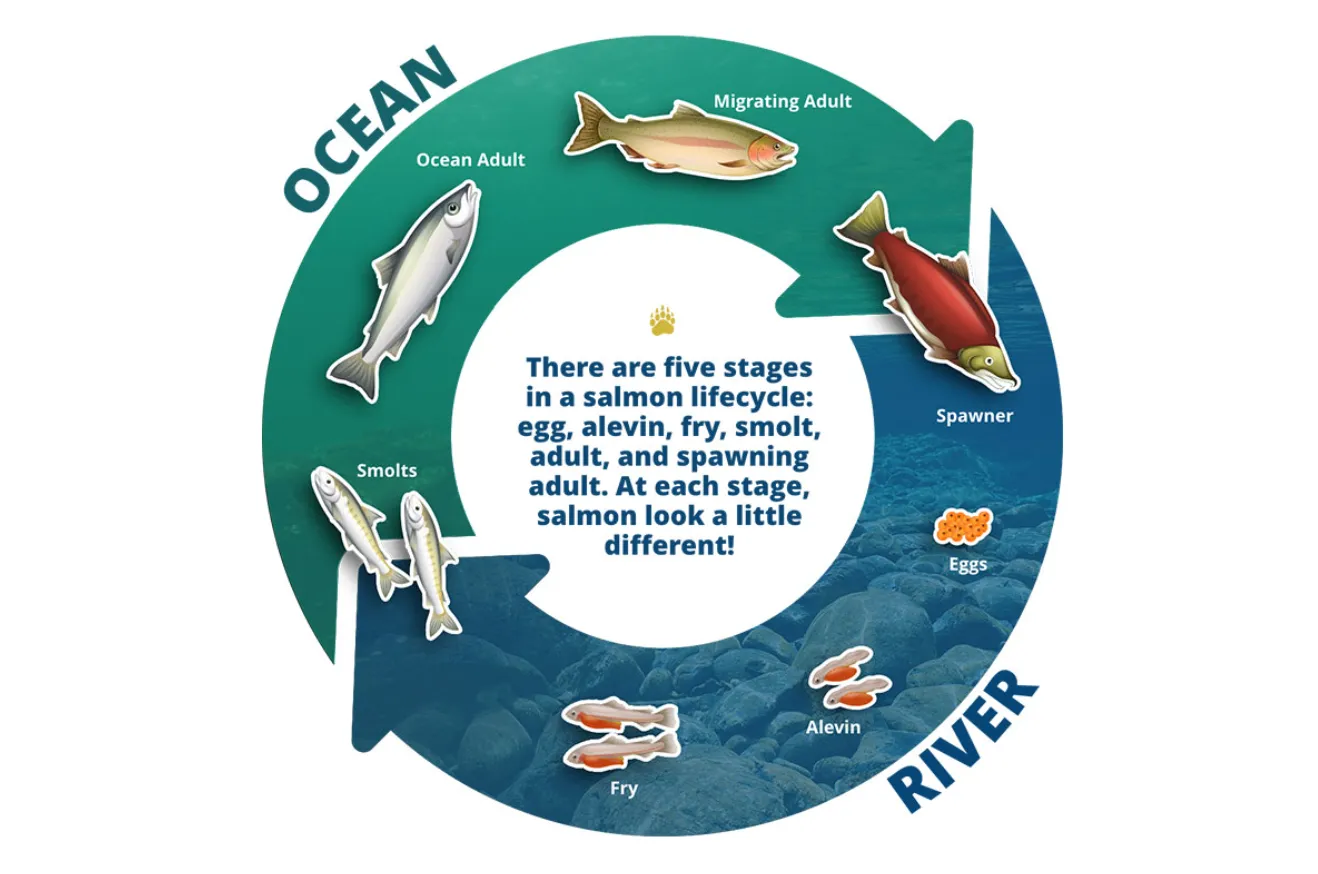
A: The life cycle of salmon includes various stages, starting from eggs in freshwater, moving to juvenile stages in the river, migrating to the ocean as adults, and eventually returning to freshwater to spawn and die.
Q: How long does the life cycle of a salmon take?
A: The life cycle of a salmon can take anywhere from two to seven years, depending on the species and environmental factors.
Q: Why do salmon migrate?
A: Salmon migrate to the ocean to grow and mature before returning to freshwater to spawn. This migration is crucial for their survival and reproduction.
Quick Life Cycle Table
| Stage | Description |
| Egg | Fertilized eggs are laid in freshwater streams and incubated. |
| Alevin | Newly hatched salmon are still dependent on their yolk sac. |
| Fry | Juvenile salmon, emerging from the gravel to begin feeding. |
| Smolt | Juvenile salmon undergo physiological changes to live in saltwater. |
| Adult | Fully mature salmon live in the ocean, where they live for 1-4 years. |
| Spawning | Returning adult salmon migrate to freshwater to reproduce and die. |

The History of Their Scientific Naming
The scientific name of the salmon is rooted in the Latin genus Salmo, meaning “to leap.” This refers to their remarkable ability to leap over obstacles during their upstream migration. The name also ties into their natural habitats, which are primarily found in cold, fast-moving rivers and oceans. The most well-known species of salmon, such as the Atlantic Salmon (Salmo salar) and various Pacific salmon species, carry this lineage in their scientific names.
The name Salmo was first used by Swedish botanist Carl Linnaeus in the 18th century, who formalized the classification of this genus. The species name refers to their distinctive migratory habits, which have intrigued biologists and marine ecologists for centuries. Over time, additional species, such as Chinook, Coho, and Sockeye salmon, have been discovered, each with unique migration and spawning patterns. Yet, all share the common theme of returning to freshwater to reproduce.
Their Evolution and Their Origin
The evolution of salmon is a product of millions of years of adaptation to both freshwater and saltwater environments. Salmon are believed to have originated in the northern hemisphere, particularly in the Pacific Ocean. Over time, different species adapted to varying climatic conditions, leading to the evolution of the various types of salmon found today.
Salmon evolved to be anadromous, meaning they live in both freshwater and saltwater. This adaptation allowed them to exploit the abundant resources of the ocean while using the nutrient-rich waters of rivers and streams for spawning. Evolution has equipped salmon with an extraordinary ability to navigate vast distances, returning to the very rivers where they were born, guided by a combination of magnetic fields, water temperature, and even their sense of smell.
The salmon’s evolution also involved the development of specialized anatomical features. For instance, their streamlined bodies and strong tails are designed for fast swimming, helping them battle strong currents during migrations. Additionally, their capacity to switch between saltwater and freshwater is an incredible physiological feat, involving changes in their kidneys and gills.
Their Main Food and Its Collection Process
Salmon, especially when in their oceanic stage, consume a variety of foods. Adult salmon primarily feed on smaller fish, krill, and plankton, while juvenile salmon (fry) tend to eat insects, small invertebrates, and plant material found in freshwater. This dietary habit allows them to grow rapidly in the ocean, where food resources are abundant. The main challenge they face in their early stages is finding enough food to grow strong enough to migrate and survive in the ocean.
The process of food collection varies by life stage. Fry and juvenile salmon are foragers, actively hunting for small invertebrates and insects, while adults tend to engage in more predatory feeding, targeting fish and crustaceans. Salmon’s migration patterns often align with the availability of food sources, ensuring they grow as efficiently as possible in preparation for their return to freshwater.
Their Life Cycle and Ability to Survive in Nature
The life cycle of salmon is an extraordinary survival story. Each stage, from the fertilized egg to the adult returning to spawn, is fraught with dangers. Predators, changing water conditions, and human activities such as habitat destruction and pollution are all challenges that salmon must face. Despite these threats, their life cycle is one of resilience.
Salmon possess several traits that aid their survival. Their smoltification process, in which juvenile salmon adapt to saltwater, is a crucial developmental stage that enables them to thrive in the ocean. During their time in the ocean, they grow and accumulate fat, which is vital for the long journey back to freshwater. Their ability to navigate complex rivers and even leap over obstacles ensures that they can reach their spawning grounds.

Their Reproductive Process and Raising Their Children
The reproductive process of salmon is an annual event that takes place in the rivers of their birth. As mature adults, salmon return from the ocean to their natal streams, guided by their extraordinary homing ability. This migration is a crucial part of their life cycle, and once they arrive in freshwater, they engage in a final mating ritual.
Salmon reproduction involves a complex process of spawning. Female salmon build nests, or “redds,” in gravel beds where they lay their eggs. Males compete for the right to fertilize the eggs. After fertilization, the female guards the nest until the eggs hatch.
The juvenile salmon, known as alevins, remain in the gravel for several months before emerging as fry. The fry feed on small aquatic organisms and grow into smolts, which begin their journey toward the ocean.
Importance of Them in This Ecosystem
Salmon are an integral part of both freshwater and marine ecosystems. Their migration sustains not only the species themselves but also many other organisms. By transferring nutrients from the ocean back to freshwater rivers, salmon help enrich the soil and support plant and animal life in the rivers and surrounding areas. They also serve as a food source for numerous animals, including bears, birds, and even humans.
Furthermore, salmon contribute to the overall health of aquatic systems. Their spawning activities oxygenate the water and help maintain the ecological balance by distributing nutrients. Their lifecycle promotes biodiversity and supports the food chains in both their freshwater and ocean habitats.
What to Do to Protect Them in Nature and Save the System for the Future
To ensure the continued survival of salmon populations, several actions can be taken to protect them in nature:
- Preserve natural habitats: Protecting the rivers and streams where salmon spawn is crucial for their survival.
- Reduce pollution: Limiting pollutants such as chemicals, plastics, and agricultural runoff that can harm water quality.
- Support sustainable fishing practices: Implement and enforce sustainable fishing regulations to prevent overexploitation of salmon populations.
- Enhance fish passageways: Build fish ladders and improve dam systems to help salmon navigate obstacles along their migration route.
Important Things That You Need to Know
Salmon are one of the most important species in both freshwater and ocean ecosystems. Here are some important things to consider when dealing with salmon:
- Salmon recipes: You can enjoy salmon in various ways, such as baked salmon, air fryer salmon, or even smoked salmon, which are all popular culinary options.
- Health benefits of salmon: Known for its rich omega-3 fatty acids, salmon is not only delicious but also good for your heart.
- Salmon in the wild: Their natural habitats need protection to ensure that wild salmon populations thrive.
- Importance of sustainable practices: Supporting sustainable salmon farming and fishing practices can help maintain healthy salmon stocks for future generations.

Frequently Asked Questions (FAQs)
Q: How long do salmon live?
A: Depending on the species, salmon can live anywhere from 2 to 7 years. They spend most of their life in the ocean before returning to freshwater to spawn.
Q: Can all salmon species migrate the same distance?
A: No, different salmon species migrate varying distances. Some species, like the Chinook, migrate over 2,000 miles, while others may travel only a few hundred.
Q: Why are salmon so important to ecosystems?
A: Salmon transfer nutrients from the ocean to freshwater ecosystems and serve as food for many predators, playing a vital role in maintaining ecological balance.
Q: Can salmon survive in both freshwater and saltwater?
A: Yes, salmon are anadromous, meaning they can survive in both freshwater and saltwater, adapting to each environment during their life cycle.
Q: How do salmon find their way back to their birthplace?
A: Salmon use their sense of smell and environmental cues to navigate back to the exact river where they were born.
Q: How can we protect salmon populations?
A: Protecting their natural habitats, reducing pollution, and supporting sustainable fishing practices are key to preserving salmon populations.
Q: What are the benefits of eating salmon?
A: Salmon is a great source of omega-3 fatty acids, protein, and vitamins, which are beneficial for heart health and overall well-being.
Q: Are there any threats to salmon populations?
A: Yes, threats to salmon include habitat destruction, pollution, overfishing, and climate change, all of which can impact their ability to reproduce and survive.
Conclusion
The life cycle of salmon is a remarkable journey of survival, migration, and reproduction. From their early stages in freshwater streams to their oceanic growth and eventual return to spawn, salmon play a vital role in both freshwater and marine ecosystems.
Understanding the intricate processes that govern their life cycle can help us protect these incredible creatures and their habitats. By taking proactive steps to preserve natural environments, we can ensure that future generations continue to witness the salmon’s amazing journey.
Also Read: life cycle of a turtle
About the Author