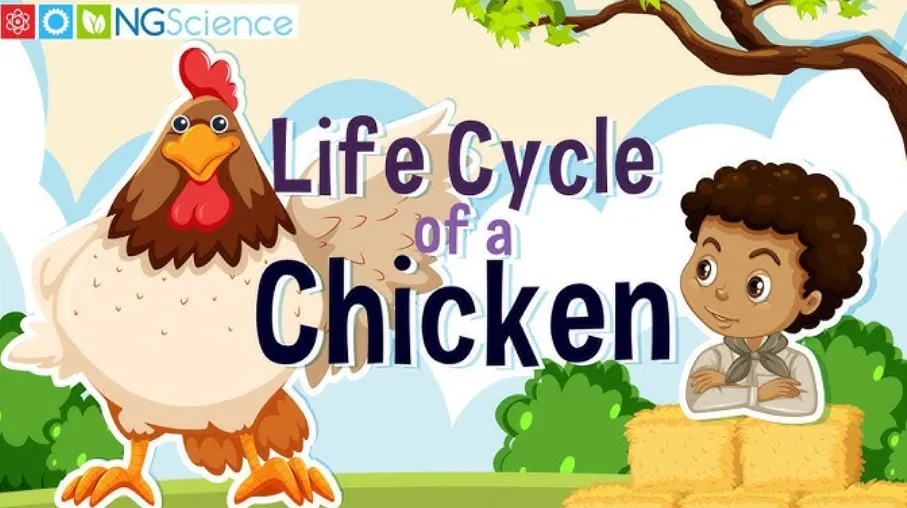
The life cycle of the chicken is one of the most familiar yet scientifically fascinating examples of animal growth. A chicken begins life inside a fertilized egg, develops as an embryo, hatches as a soft down-covered chick, grows into a juvenile bird, and finally becomes an adult hen or rooster capable of reproduction.
Scientifically, domestic chickens are closely related to the red junglefowl, and modern poultry breeds are now raised worldwide for eggs, meat, farming, education, and backyard companionship. Chickens are among the most widely domesticated birds, with many breeds descended mainly from wild junglefowl ancestors.
Understanding the chicken life cycle is useful for students, farmers, poultry keepers, and nature lovers. It explains how a bird grows from a tiny embryo into a fully active adult, how hens reproduce, what chickens eat, and why they matter in both human society and natural ecosystems.
Q: What are the main stages in the life cycle of the chicken?
A: The main stages are fertilized egg, embryo, hatching chick, growing chick, juvenile chicken, and adult hen or rooster.
Q: How long does a chicken egg take to hatch?
A: A fertilized chicken egg usually takes about 21 days of proper incubation to hatch.
Q: What does a chicken become after it grows up?
A: A female chicken becomes a hen, while a male chicken becomes a rooster or cock.
Quick Life Cycle Table
| Life Cycle Stage | Approximate Time | Main Development | Key Features |
| Fertilized Egg | Day 0 | Life begins after fertilization | An embryo starts as microscopic cells |
| Embryo Development | Day 1–20 | Organs, heart, wings, legs, beak, and feathers develop | Heartbeat begins early; chick prepares to hatch |
| Hatching Chick | Around Day 21 | Chick breaks the shell using an egg tooth | Down-covered, weak at first, then active |
| Young Chick | Week 1–6 | Rapid growth and feather development | Learns to eat, drink, scratch, and follow mother |
| Juvenile Chicken | Week 7–20 | Body size increases; adult feathers appear | Comb and wattles grow; behaviour becomes mature |
| Adult Chicken | Around 5–6 months onward | Reproductive maturity begins | Hens lay eggs; roosters produce sperm |

Important Things That You Need To Know
The word chicken is commonly used for the domesticated bird raised on farms, in villages, and in backyards. In everyday language, people may say chicken when talking about the bird, its meat, its eggs, or poultry farming in general. In biology, however, the term has a more specific meaning connected with domesticated junglefowl.
A young chicken is called a chick. A female adult is called a hen, and a male adult is called a rooster or cock. These names are important because each stage has a different role in the life cycle. Chicks focus on growth, hens focus on egg production and brooding, and roosters help fertilize eggs.
The chicken is an omnivorous bird, meaning it can eat both plant and animal foods. It may eat grains, seeds, insects, worms, kitchen scraps, and balanced poultry feed. For healthy growth, chickens need energy, protein, vitamins, minerals, and clean water.
Another important fact is that not every egg becomes a chick. Only a fertilized egg can develop into an embryo, and it needs correct warmth, humidity, and turning during incubation. Without these conditions, the embryo cannot complete development.
The chicken also plays a major role in human food systems. Eggs and meat provide protein, while backyard flocks support rural livelihoods. At the same time, responsible care is needed to protect bird health, prevent disease, and maintain a balanced environment.
The History of Their Scientific Naming
The scientific naming of the chicken has an interesting history because it connects the domestic bird with its wild ancestors. Many biological references use Gallus gallus domesticus to refer to the domestic chicken, indicating that it is a domesticated form of the red junglefowl, Gallus gallus.
Some taxonomists also use Gallus domesticus, especially when treating the chicken as a separate domesticated species. This difference happens because domestic animals often have complex ancestry and long histories of human-controlled breeding.
Important naming points:
- Kingdom: Animalia
- Class: Aves
- Order: Galliformes
- Family: Phasianidae
- Genus: Gallus
- Common scientific name: Gallus gallus domesticus
- Primary wild ancestor: Red junglefowl
This scientific name helps researchers identify the bird correctly across biology, agriculture, genetics, and poultry science.
Their Evolution And Their Origin
The origin of the chicken is closely linked to the wild junglefowl found in South and Southeast Asia. The red junglefowl is widely accepted as the main ancestor of domestic chickens, although other junglefowl species may have contributed genetic traits over time. Genetic studies suggest that chicken domestication was not a single, simple event but likely involved multiple regions, populations, and human communities.
Early humans may have been drawn to junglefowl because these birds lived near forest edges, scratched the ground for food, laid eggs, and adapted well to human settlements. As people began farming grains, junglefowl may have been attracted to leftover seeds, insects, and safer shelter around villages.
Over generations, humans selected birds that were calmer, more productive, larger, or better suited for living near people. This selection gradually changed wild junglefowl into domesticated chickens.
Today, chickens exist in hundreds of local and commercial varieties. Some are bred mainly for egg production, some for meat, some for ornamental beauty, and some for dual-purpose farming. Their evolution shows how natural adaptation and human selection can reshape a species over thousands of years.

Their main food and its collection process
Chickens are natural foragers. In the wild or in free-range systems, they collect food by walking, pecking, scratching soil, turning leaves, and searching under grass or loose earth. This feeding behaviour is a key survival skill that helps them find different food sources throughout the day.
Their main foods include:
- Grains and seeds: Chickens commonly eat corn, wheat, barley, rice grains, millet, and other seeds.
- Insects and worms: They scratch the soil to find ants, beetles, larvae, termites, earthworms, and small bugs.
- Green plants: They may pick tender leaves, grass tips, weeds, vegetables, and herbs.
- Small animal matter: As omnivores, chickens may eat small insects, larvae, and sometimes tiny invertebrates.
- Commercial feed: Farm chickens are often fed a balanced feed containing energy, protein, vitamins, minerals, and calcium.
The collection process is simple but effective. A chicken lowers its head, uses its beak to peck food, and uses its feet to scratch the ground. This “scratch and peck” behaviour helps uncover hidden food.
For laying hens, calcium is especially important because eggshells need strong mineral support. That is why egg-laying feed usually contains more calcium than starter or grower feed.
Their life cycle and ability to survive in nature
Fertilized Egg Stage
The life cycle of the chicken begins when a rooster fertilizes the hen’s egg inside the female reproductive tract. After the egg is formed and laid, the embryo can remain inactive until suitable incubation begins. A newly laid fertile egg already contains a tiny embryo, but development waits for the right temperature.
Embryo Stage
During incubation, the embryo develops rapidly. The heart, blood vessels, eyes, beak, legs, wings, feathers, and internal organs gradually form. The heart begins to beat early in development, and visible body structures become clearer over the first several days.
Hatching Stage
Around day 21, the chick uses its egg tooth to break the shell. It first reaches the air cell inside the egg, begins breathing with its lungs, and slowly cuts through the shell. After hatching, the chick rests while its down dries.
Chick to Adult Stage
A chick grows quickly by eating, drinking, staying warm, and avoiding predators. Feathers replace soft down, muscles become stronger, and social behaviour develops. In nature, survival depends on warmth, camouflage, group living, quick movement, and protection from the mother hen.
Their Reproductive Process and raising their children
The reproductive process in chickens involves mating, fertilization, egg formation, incubation, and chick care. A healthy adult rooster mates with a hen, and sperm fertilize the ovum before the complete egg is formed. The hen then lays the egg after the shell and inner structures develop.
Important points about reproduction and chick raising:
- Mating: A rooster transfers sperm to the hen during mating. One mating can fertilize several eggs over a short period.
- Egg formation: The hen’s body forms the yolk, albumen, membranes, and shell before laying the egg.
- Egg laying: A hen can lay eggs without a rooster, but those eggs will not hatch unless fertilized.
- Incubation: Fertilized eggs need warmth, correct humidity, and regular turning for healthy embryo growth.
- Hatching: A chick usually hatches after about 21 days of incubation.
- Brooding: A mother hen keeps chicks warm under her feathers and protects them from danger.
- Teaching: Chicks learn feeding behaviour by watching the hen scratch, peck, and call them to food.
- Protection: The hen warns chicks about predators, bad weather, and unsafe spaces.
In natural conditions, the mother hen plays a major role in survival. She gives warmth, guidance, and social training. In farms or incubator systems, humans provide heat lamps, starter feed, clean water, bedding, and protection.
The importance of them in this Ecosystem
Natural Pest Control
Chickens help control insects, larvae, worms, and other small invertebrates. By scratching the soil and eating pests, they can reduce insect pressure in gardens, farms, and rural areas.
Soil Movement and Nutrient Cycling
When chickens scratch the ground, they loosen soil, mix organic matter, and spread droppings. Their manure contains nutrients such as nitrogen, phosphorus, and potassium. When managed properly, this can improve soil fertility.
Food Chain Role
In natural and semi-wild systems, chickens and junglefowl are part of the food chain. Their eggs, chicks, and adults can become food for predators such as snakes, wild cats, foxes, hawks, and other carnivores. This connects them to broader ecological balance.
Seed and Plant Interaction
Chickens may eat seeds, weeds, and plant materials. Although they are not major seed dispersers like some wild birds, their movement and droppings can still influence small-scale vegetation patterns.
Human-Ecosystem Connection
The chicken is also important in agroecosystems. It supports food security through eggs and meat, especially in rural households. Small flocks can convert kitchen scraps, grains, insects, and farm by-products into useful protein.
However, chickens must be managed responsibly. Overcrowding, poor hygiene, and uncontrolled free-ranging can damage gardens, spread disease, and disturb native wildlife. Their ecosystem value is highest when they are raised with proper care.
What to do to protect them in nature and save the system for the future
Protecting chickens and the surrounding Ecosystem requires balanced management. Chickens are domesticated birds, so they depend heavily on humans for safety, food, health care, and shelter.
- Keep chickens in a safe coop at night to protect them from predators such as foxes, snakes, raccoons, dogs, and birds of prey.
- Provide clean water daily, because dehydration weakens chickens quickly and reduces egg production.
- Feed them a balanced diet that includes grains, protein, vitamins, minerals, and calcium, according to their age and purpose.
- Avoid overcrowding, because crowded spaces increase stress, feather pecking, parasites, and disease spread.
- Keep bedding dry and clean to reduce ammonia, bacteria, mites, and lice, and to reduce the risk of respiratory problems.
- Allow controlled foraging so chickens can scratch naturally without damaging gardens, young crops, or native habitats.
- Vaccinate and monitor flock health where recommended by local veterinary guidance.
- Do not release domestic chickens into wild areas, because they may spread disease or fail to survive.
- Protect wild junglefowl habitats, especially forests and forest-edge ecosystems, because these birds are linked to the ancestry of domestic chickens.
- Use chicken manure carefully as compost, not as fresh waste directly on sensitive plants or waterways.
- Choose humane farming practices that reduce stress and support natural behaviours such as dust bathing, perching, scratching, and nesting.

Frequently Asked Questions
Q: What is the life cycle of the chicken?
A: The life cycle of the chicken includes the fertilized egg, embryo, hatching chick, young chick, juvenile chicken, and adult hen or rooster. The cycle continues when adult chickens reproduce and produce fertilized eggs.
Q: How many days does a chicken egg need to hatch?
A: A fertilized chicken egg usually needs about 21 days of incubation. Proper warmth, humidity, and egg turning are necessary for healthy embryo development.
Q: Can every chicken egg hatch into a chick?
A: No. Only a fertilized egg can hatch. An egg laid by a hen without mating with a rooster will not develop into a chick.
Q: What is a baby chicken called?
A: A baby chicken is called a chick. It is usually covered in soft down after hatching and becomes more feathered as it grows.
Q: What is the difference between a hen and a rooster?
A: A hen is an adult female chicken that can lay eggs. A rooster is an adult male chicken that can fertilize eggs.
Q: What do chickens eat naturally?
A: Chickens naturally eat grains, seeds, insects, worms, green plants, and small invertebrates. They are omnivores so that they can eat both plants and animals.
Q: When does a chicken become an adult?
A: Many chickens reach reproductive maturity around 5 to 6 months, though timing depends on breed, nutrition, light, health, and environment.
Q: Why are chickens important to humans?
A: Chickens provide eggs, meat, manure, income, education, and food security. They are one of the most important domesticated birds in agriculture and household farming.
Conclusion
The life cycle of the chicken is a complete journey from a tiny fertilized egg to a fully developed adult bird. Each stage has a clear purpose: the embryo develops inside the egg, the chick hatches and grows, the juvenile learns survival behaviour, and the adult hen or rooster continues the cycle through reproduction.
Chickens are more than common farm birds. They have a rich evolutionary origin, a debated scientific naming history, and a major role in food systems, rural livelihoods, and ecological balance. Their ability to scratch, forage, reproduce quickly, and adapt to human care has made them one of the world’s most successful domesticated birds.
To protect chickens and the environment, people must provide proper food, clean shelter, disease prevention, humane care, and responsible flock management. When raised wisely, chickens support both human needs and a healthier ecosystem.
Also Read: life cycle of a honey bee
About the Author