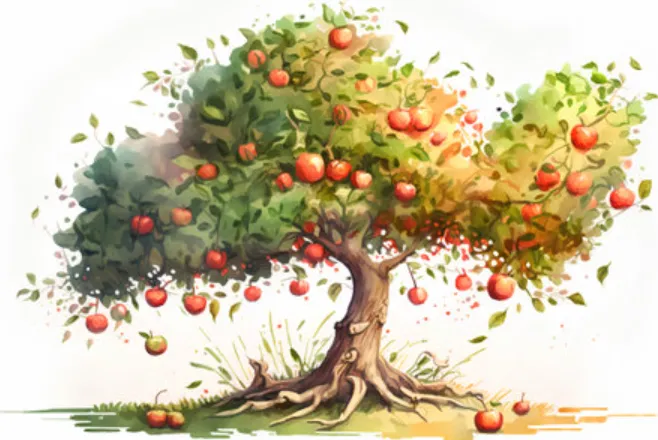
The life cycle of an apple tree is a fascinating natural journey that begins with a tiny seed and continues through germination, seedling growth, flowering, fruiting, seed formation, dormancy, and renewal. An apple tree is not just a fruit-producing plant; it is also an important part of the Ecosystem that supports pollinators, birds, soil organisms, and human food systems.
Scientifically known as Malus domestica, the apple tree belongs to the Rosaceae family. Modern apple trees are usually grown from grafts rather than seed because apple seeds do not produce fruit identical to the parent tree. For example, planting a seed from a Honeycrisp apple tree will not reliably grow another true Honeycrisp tree.
Apple trees need sunlight, water, nutrients, pollination, seasonal rest, and proper apple tree care to complete their life cycle successfully. Most apple trees need cross-pollination, and a nearby crab apple tree can often help improve fruit production.
Q: How long does the life cycle of an apple tree take?
A: An apple tree can take 2–8 years to produce fruit, depending on whether it is dwarf, semi-dwarf, or standard size.
Q: What are the main stages in the life cycle of an apple tree?
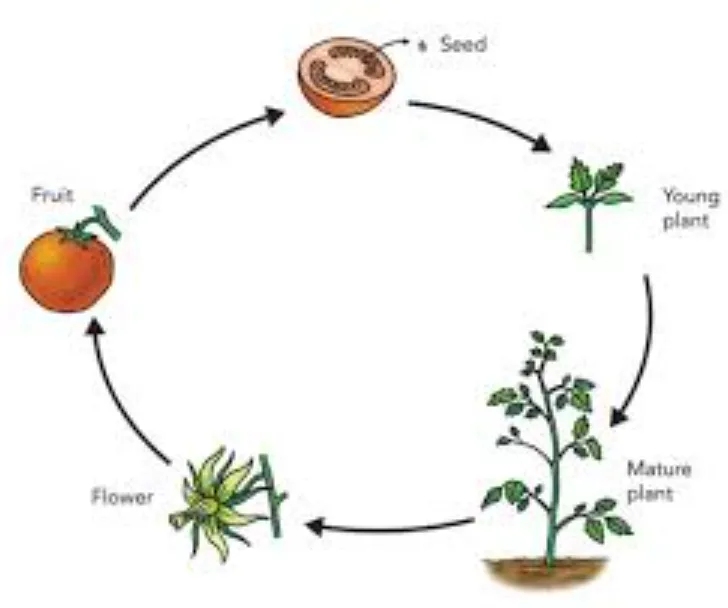
A: The main stages are seed, germination, seedling, young tree, flowering, pollination, fruiting, seed formation, dormancy, and mature tree renewal.
Q: Can an apple tree grow from seed?
A: Yes, but seed-grown apple trees are genetically different from the parent fruit. Most orchard apple trees are grown by grafting.
Quick Life Cycle Table
| Life Cycle Stage | What Happens | Time/Season | Key Need |
| Seed Stage | A seed forms inside the apple fruit. | After fruit development | Moisture and protection |
| Dormant Seed | Seed rests until conditions are right. | Winter or cold period | Cold stratification |
| Germination | Root and shoot begin to grow. | Spring | Water, oxygen, warmth |
| Seedling Stage | Young leaves and roots develop. | First growing season | Light and soft soil |
| Young Tree Stage | Trunk, branches, and roots expand. | 1–5 years | Pruning and nutrition |
| Flowering Stage | Buds open into apple blossoms. | Spring | Healthy buds and pollinators |
| Pollination Stage | Bees transfer pollen between flowers. | Spring bloom | Compatible apple variety |
| Fruit Formation | Fertilized flowers become small apples. | Spring to summer | Water and nutrients |
| Fruit Maturity | Apples grow, color, sweeten, and ripen. | Summer to autumn | Sunlight and balanced care |
| Seed Dispersal | Fruits fall or are eaten; seeds spread. | Harvest season | Animals, humans, nature |
| Dormancy | Trees rest and store energy. | Winter | Cold rest and protection |
| Mature Renewal | The tree repeats flowering and fruiting yearly. | Every year | Long-term care |

The History of Their Scientific Naming
The scientific name of the cultivated apple tree is Malus domestica. This name identifies the common cultivated apple grown in orchards, gardens, and commercial fruit farms.
Important points about the naming history include:
- Malus is the genus name. It refers to apples and closely related species.
- Domestica means domesticated. This shows that the plant has been shaped by human selection and cultivation over many generations.
- The apple tree belongs to the Rosaceae family, which also includes roses, pears, cherries, peaches, strawberries, and plums.
- Various scientific names were historically known for Apple trees before the modern name became widely accepted.
- The scientific name distinguishes cultivated apples from their wild relatives, such as Malus sieversii, Malus sylvestris, and many ornamental crab apples.
- Common names may vary by region, but Malus domestica provides scientists, farmers, gardeners, and researchers with a clear identity for the cultivated apple tree.
This naming history matters because apples have been grown across many countries for centuries. A clear scientific name helps avoid confusion between true apples, crab apples, and unrelated fruits such as the sugar apple tree.
Their Evolution And Their Origin
The origin of the apple tree is closely linked to Central Asia. Modern cultivated apples are believed to have developed mainly from wild apple ancestors, especially Malus sieversii, which grows naturally in parts of Central Asia.
Wild apple trees once grew in mountain forests, producing fruits with a range of colors, sizes, flavors, and textures. Some were small and sour, while others were larger and sweeter. Over time, humans selected trees that produced better fruit.
As people traveled and traded along ancient routes, apple seeds and grafted trees spread from Central Asia to Europe and the Middle East, and later to many other parts of the world. During this journey, cultivated apples were also mixed with other wild apple species.
This long process created the wide diversity of apples we see today. Modern apples include dessert apples, cooking apples, cider apples, disease-resistant apples, and ornamental crab apples.
The evolution of apples also explains why seed-grown apple trees are unpredictable. Each apple seed carries a new genetic combination. This means a seed from a sweet apple may produce a tree with sour, small, or completely different fruit.
That is why growers use grafting to preserve popular varieties such as Honeycrisp, Fuji, Gala, Granny Smith, and other named apples. Through grafting, the fruit quality, size, taste, and tree characteristics can remain consistent.
Their main food and its collection process
The apple tree does not eat food like animals. It makes its own food through photosynthesis, a natural process that happens mainly in the apple tree leaves. The leaves capture sunlight and use it to turn carbon dioxide and water into sugar.
This sugar becomes the tree’s energy source for root growth, leaf production, flowering, fruit development, and winter survival.
Here is how an apple tree collects and makes its food:
- Sunlight collection through leaves:
- The leaves work like natural solar panels. Their green pigment, chlorophyll, absorbs sunlight and initiates photosynthesis.
- Water absorption through roots:
- Roots collect water from the soil. This water moves upward through the trunk, branches, and leaves.
- Mineral collection from soil:
- The roots absorb essential minerals, including nitrogen, phosphorus, potassium, calcium, and magnesium. These nutrients support healthy growth and fruit quality.
- Carbon dioxide intake:
- Tiny pores on the leaves, called stomata, take in carbon dioxide from the air.
- Sugar production:
- Inside the leaves, sunlight, water, and carbon dioxide are converted into sugars. These sugars move through the tree to feed roots, flowers, fruits, bark, and buds.
- Energy storage:
- Apple trees store extra energy in roots, branches, and trunk tissues. This stored energy helps the tree survive winter and begin new growth in spring.
- Role of apple tree fertilizer:
- Apple tree fertilizer is not food itself. It provides nutrients that help the tree make food more effectively. Balanced fertilizer can improve growth, flowering, and fruit development.
Too little nutrition can weaken the tree, while too much fertilizer can cause excessive leafy growth and reduce fruit quality. Proper care requires balance.
Their life cycle and ability to survive in nature
Seed to Seedling
The life cycle of an apple tree begins with a seed inside the apple fruit. In nature, an apple may fall to the ground or be eaten by animals. If the seed reaches suitable soil and gets the right cold period, it may germinate.
The first root grows downward to anchor the seedling and absorb water. Then a shoot grows upward toward sunlight. At this stage, the young plant is fragile and needs moisture, loose soil, and protection from harsh conditions.
Young Tree to Mature Tree
As the seedling grows, it develops a woody stem, stronger roots, branches, and leaves. In orchards, many apple trees are grafted onto rootstocks. These rootstocks help control tree size, disease resistance, and fruiting age.
A dwarf apple tree may begin producing fruit in 2–3 years. A standard apple tree may take 5–8 years or more, depending on variety, growing conditions, and care.
Flowering and Fruiting
In spring, flower buds open into white or pink apple blossoms. Bees and other pollinators transfer pollen from one flower to another. After successful pollination and fertilization, the flower base gradually develops into an apple fruit.
Dormancy and Survival
Apple trees survive winter through dormancy. During this period, growth slows down, leaves fall, and the tree protects itself from cold weather. Stored energy in roots and branches helps the tree begin growing again when spring arrives.

Their Reproductive Process and raising their children
Apple trees reproduce through flowers, pollination, seeds, and fruit. Although plants do not raise children like animals, an apple tree protects and supports its next generation by forming fruits around seeds.
Important steps in apple tree reproduction include:
- Flower bud formation:
- Apple trees form flower buds before bloom. Healthy buds depend on sunlight, proper pruning, balanced nutrients, and good tree health.
- Blossom opening:
- In spring, flower clusters open. Each blossom contains male and female reproductive parts.
- Pollen production:
- The male part of the flower produces pollen. This pollen must reach the stigma of a compatible apple flower.
- Pollination by insects:
- Bees are the most important pollinators for apple trees. They move pollen while collecting nectar and pollen from flowers.
- Cross-pollination:
- Most apple varieties produce better fruit when pollen comes from another compatible variety. A nearby crab apple tree can sometimes serve as an effective pollinator.
- Fertilization:
- After pollen reaches the flower, fertilization happens inside the ovary. This begins seed development.
- Fruit development:
- The fertilized flower slowly becomes an apple. The fruit protects the seeds as they mature.
- Seed dispersal:
- When apples ripen, they may fall, be eaten by animals, or be collected by humans. In nature, animals can help spread seeds away from the parent tree.
- Human-assisted reproduction:
- In orchards, apple trees are commonly reproduced through grafting. This method pairs a desired apple variety with a rootstock to produce consistent fruit quality.
This reproductive process connects the apple tree with pollinators, soil, weather, animals, and human agriculture.
The importance of them in this Ecosystem
Support for Pollinators
Apple blossoms provide nectar and pollen for bees, butterflies, and other insects. In spring, flowering apple trees become valuable food sources for pollinators.
Without pollinators, many apple trees would produce fewer fruits. This makes apple trees part of an important ecological relationship between plants and insects.
Food for Wildlife and Humans
Apples feed many animals, including birds, deer, insects, and small mammals. Fallen apples also add organic matter to the soil and support decomposers.
For humans, apples are one of the most widely grown fruit crops. They are eaten fresh, dried, baked, juiced, fermented, and processed into many food products.
Soil and Microbial Benefits
Apple trees support soil life through fallen leaves, fruit drops, roots, and organic debris. As these materials decompose, they feed earthworms, fungi, bacteria, and other soil organisms.
Healthy soil helps apple trees grow stronger and improves the natural nutrient cycle.
Shelter and Habitat
Mature apple trees provide shelter for birds, insects, and small animals. Their branches offer nesting spaces, shade, and protection.
Even old apple trees can become valuable habitats for wildlife.
Genetic Diversity
Wild apple relatives and crab apple tree types are important for breeding stronger apple varieties. Their genes may help improve disease resistance, climate tolerance, and fruit quality in future orchards.
Carbon Storage and Climate Role
Like other trees, apple trees absorb carbon dioxide during photosynthesis. They store carbon in their wood, roots, and surrounding soil.
A single tree may seem small, but orchards, gardens, and landscapes together contribute to greener environments.
Important Things That You Need To Know
Understanding related terms helps improve apple tree care and makes the apple tree life cycle easier to understand.
A crab apple tree is closely related to cultivated apples. Many crab apples produce smaller, tart fruits, but they are very useful in gardens and orchards because they bloom heavily and often help with pollination. A flowering crab apple near orchard trees can improve fruit set if bloom times overlap.
A Honeycrisp apple tree is a popular cultivated apple variety known for its crisp texture and sweet-tart flavor. Like many named apple cultivars, it should be grown from a grafted tree, not from seed, because seeds will not produce a true Honeycrisp clone.
Apple tree fertilizer should be used carefully. Fertilizer supports growth, but excess nitrogen can promote excessive leafy growth and may reduce fruit quality. Balanced nutrition is always better than random fertilizing.
Apple tree leaves are key indicators of health. Yellowing, spotting, curling, or early leaf drop may signal nutrient problems, pests, fungal diseases, drought stress, or environmental damage.
Apple tree care includes watering, pruning, mulching, sunlight management, pest monitoring, disease prevention, and correct harvest timing. A healthy apple tree is not created in one season. It needs consistent care year-round.
Other terms, such as apple tree yard, sugar apple tree, and apple tree auction, can be confusing. A sugar apple tree is not the same as a true apple tree; it belongs to a different plant group. Apple tree auctions may involve fruit, nursery trees, or orchard equipment, depending on the market.
What to do to protect them in nature and save the system for the future
- Plant disease-resistant varieties:
- Choose apple cultivars that suit the local climate and are resistant to common diseases such as apple scab, fire blight, and powdery mildew.
- Protect wild apple relatives:
- Wild apple species are important genetic resources. Conserving them helps future breeding and biodiversity.
- Avoid unnecessary chemical use:
- Use pesticides only when needed. Overuse can harm bees, beneficial insects, soil life, and nearby plants.
- Support pollinators:
- Grow pollinator-friendly flowers near apple trees. Avoid spraying chemicals during bloom when bees are active.
- Use organic mulch:
- Mulch helps conserve soil moisture, reduce weeds, and improve soil structure. Keep mulch away from direct contact with the trunk.
- Prune correctly:
- Annual pruning improves airflow, sunlight penetration, branch strength, and fruit quality.
- Water young trees regularly:
- Young apple trees need steady moisture while their roots are establishing.
- Prevent soil erosion:
- Maintain groundcover where suitable to protect soil around orchards and gardens.
- Remove diseased material:
- Fallen infected leaves, rotten fruit, and diseased branches can spread problems. Clean orchard hygiene supports long-term tree health.
- Use balanced apple tree fertilizer:
- Fertilize based on tree condition, soil quality, and growth needs.
- Preserve old orchards:
- Older apple trees may harbor rare genetic traits and provide habitat for wildlife.
- Teach children about apple trees:
- Education helps future generations understand food systems, plant life cycles, and environmental care.
Protecting apple trees means protecting pollinators, soil organisms, food diversity, and the natural balance around orchards and gardens.

Frequently Asked Questions (FAQs)
Q1: What is the full life cycle of an apple tree?
A: The full life cycle of an apple tree includes seed formation, germination, seedling growth, young tree development, flowering, pollination, fruit formation, seed maturity, dormancy, and yearly renewal.
Q2: How many years does an apple tree live?
A: Many apple trees can live for several decades. With good care, some standard apple trees may remain productive for 30–50 years or more, while dwarf trees often have shorter productive lives.
Q3: How long does it take for an apple tree to produce fruit?
A: Dwarf apple trees may produce fruit in 2–3 years, while standard apple trees may take 5–8 years, depending on variety, rootstock, and care.
Q4: Why do apple trees need another apple tree nearby?
A: Most apple trees need cross-pollination from a compatible variety. A nearby crab apple tree or another apple cultivar can help improve fruit production.
Q5: Can I grow an apple tree from apple seeds?
A: Yes, but the new tree will not be genetically identical to the apple it came from. For reliable fruit quality, growers use grafted trees.
Q6: What is the role of apple tree leaves?
A: Apple tree leaves make food through photosynthesis. They also show early signs of stress, disease, or nutrient problems.
Q7: What is the best apple tree fertilizer?
A: The best fertilizer depends on soil conditions and tree health. Apple trees usually need balanced nutrients, but too much nitrogen can cause excessive leafy growth.
Q8: Is a sugar apple tree the same as an apple tree?
A: No. A sugar apple tree is different from Malus domestica. Sugar apple belongs to a different plant family and usually grows in warmer climates.
Conclusion
The life cycle of an apple tree is a complete story of growth, survival, reproduction, and renewal. From a small seed to a mature fruiting tree, each stage depends on sunlight, soil, water, nutrients, pollination, seasonal dormancy, and proper care.
The apple tree, scientifically known as Malus domestica, has a long history linked to its wild apple ancestors and human cultivation. Today, apple trees are valuable not only for their fruits but also for their role in ecosystems.
They support bees, feed wildlife, improve landscapes, and contribute to agricultural biodiversity. Related trees, such as crabapple trees, also help with pollination and ecological balance.
To protect apple trees for the future, we need better orchard care, pollinator protection, disease-resistant varieties, soil conservation, and preservation of wild apple relatives. A healthy apple tree is more than a fruit tree; it is a living connection between nature, food, and future generations.
Also Read: life cycle of a honey bee
About the Author