Toxoplasma gondii is a microscopic, single-celled parasite that causes toxoplasmosis. It is not a worm, insect, or visible animal. It is an intracellular protozoan parasite, meaning it survives and multiplies inside the cells of warm-blooded animals, including humans, birds, livestock, rodents, and cats.
The Toxoplasma gondii life cycle is unique because cats and other members of the cat family are the only definitive hosts in which the parasite completes its sexual reproduction. Humans, sheep, pigs, birds, rodents, and many other animals are usually intermediate hosts, where the parasite forms tissue cysts and can remain for a long time.
People usually become infected by eating undercooked contaminated meat, swallowing oocysts from contaminated soil, food, or water, or through congenital transmission from mother to baby during pregnancy. Many healthy people have no symptoms, but infection can be serious for pregnant people, unborn babies, newborns, and people with weakened immune systems.
Quick Answers: Most Common Questions
Q: What is the main host in the Toxoplasma gondii life cycle?
A: Cats are the main definitive hosts because Toxoplasma gondii completes sexual reproduction in the cat intestine and releases oocysts through feces.
Q: What are common Toxoplasma gondii symptoms?
A: Many people have no symptoms. Some may have flu-like symptoms such as swollen lymph nodes, muscle aches, tiredness, and fever. Severe cases may affect the eyes, brain, or organs, especially in immunocompromised people.
Q: Can Toxoplasma gondii be removed naturally?
A: There is no scientifically proven natural cure that reliably kills Toxoplasma gondii in the body. Prevention, safe food handling, and medical treatment when needed are the safest approaches.
Quick Life Cycle Table
| Stage | Where It Happens | Simple Explanation |
| 1. Oocyst Stage | Cat feces, soil, water, and food | Cats shed oocysts that become infectious in the environment. |
| 2. Sporozoite Stage | Inside mature oocysts | Infective cells develop inside oocysts after environmental maturation. |
| 3. Tachyzoite Stage | Host body cells | A fast-growing stage that spreads through the body during an active infection. |
| 4. Bradyzoite / Tissue Cyst Stage | Brain, muscle, eyes, organs | It is a slow-growing stage that can remain hidden in tissues for years. |
| 5. Sexual Reproduction Stage | Cat intestine | Parasite reproduces sexually only in cats and produces new oocysts. |

Important Things That You Need To Know
Understanding Toxoplasma gondii, its symptoms, Toxoplasma treatment, Toxoplasma life cycle diagram, and how to get rid of it naturally helps readers separate facts from myths.
First, Toxoplasma gondii is not spread only by cats. Cats are important in the life cycle, but humans can also become infected through undercooked meat, unwashed produce, contaminated soil, untreated water, and poor kitchen hygiene. Owning a cat does not automatically mean a person will get toxoplasmosis.
Second, symptoms of Toxoplasma gondii are often mild or absent in healthy adults. However, the infection can become dangerous during pregnancy or in people with weakened immunity. Eye disease, brain infection, and congenital complications are the most serious concerns.
Third, treatment for Toxoplasma gondii depends on the patient’s condition. Many healthy people may not need medication, but severe infection may require medicines such as pyrimethamine, sulfadiazine, clindamycin, or folinic acid under medical supervision.
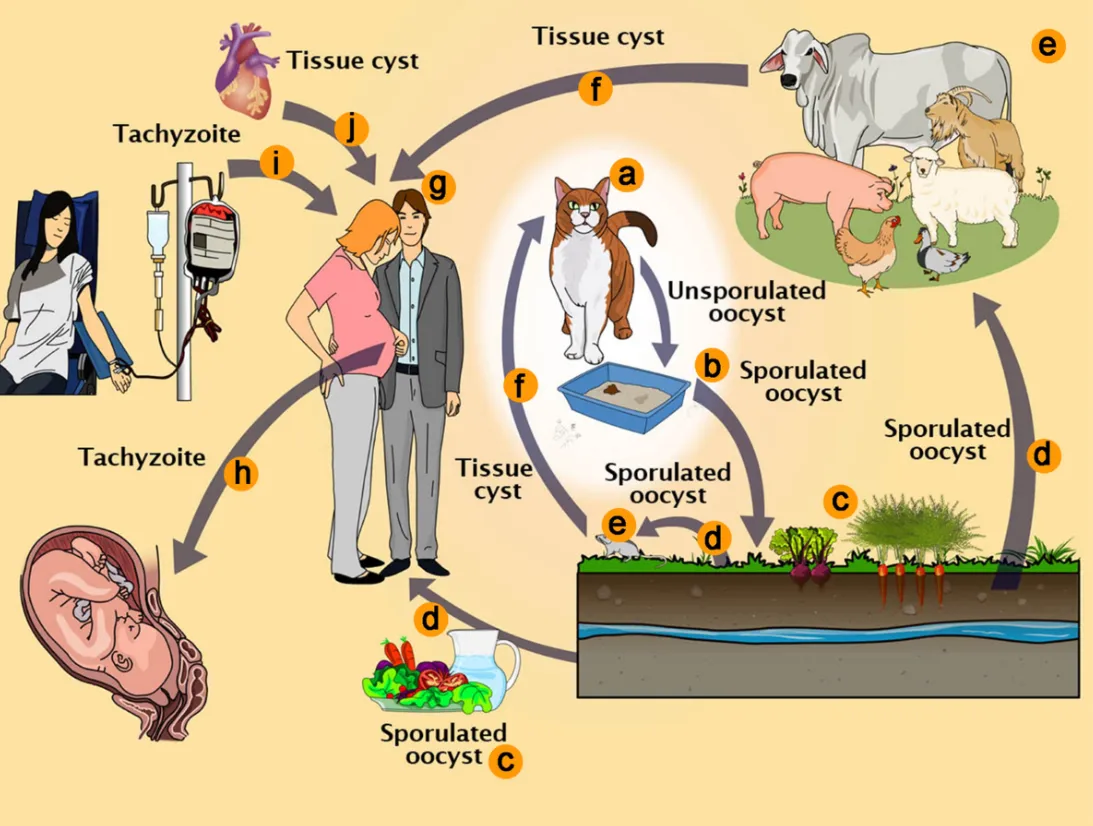
Fourth, a Toxoplasma gondii life cycle diagram usually shows cats, oocysts, soil, livestock, humans, tissue cysts, and food transmission. This diagram is useful because it explains how the parasite moves through animals, the environment, and people.
Finally, the phrase how to get rid of Toxoplasma gondii naturally should be understood carefully. Natural habits such as cooking meat properly, washing vegetables, avoiding untreated water, wearing gloves while gardening, and keeping cats indoors can reduce the risk of infection. But they should not replace medical treatment when the infection is serious.
The History Of Their Scientific Naming, Evolution, and Their Origin
Discovery of Toxoplasma Gondii
Toxoplasma gondii was discovered in 1908 by Charles Nicolle and Louis Manceaux in a North African rodent called the gundi. Around the same time, Alfonso Splendore observed a similar parasite in a rabbit in Brazil. This made T. gondii one of the most important protozoan parasites in medical and veterinary science.
Meaning of the Scientific Name
The name Toxoplasma comes from Greek roots meaning “curved” or “bow-like.” The species name gondii comes from the gundi, the rodent in which the parasite was first identified. The full name, therefore, reflects both the parasite’s shape and its original host of discovery.
Evolution and Origin
Evolutionarily, Toxoplasma gondii belongs to the Apicomplexa group, a group of parasites that use specialized structures to enter host cells. Its success stems from its ability to infect almost all warm-blooded animals, with cats serving as the final host for sexual reproduction.
Their Reproductive Process, Giving Birth And Rising Their Children
A Parasite Does Not Give Birth Like Animals
Toxoplasma gondii does not give birth, lay visible eggs like birds, or raise young. It reproduces through biological stages inside host cells. The closest equivalent to “offspring” is the formation of new parasite cells and oocysts.
Sexual Reproduction in Cats
Cats are the only definitive hosts. When a cat eats infected prey or raw contaminated meat, the parasite enters the intestine. Within the cat’s intestinal cells, T. gondii undergoes sexual reproduction, forming oocysts. These oocysts are shed from the cat’s body in feces.
After shedding, oocysts usually require time in the environment to become infectious. Once mature, they can contaminate soil, water, vegetables, or surfaces.
Asexual Reproduction in Other Hosts
In humans and other warm-blooded animals, the parasite mainly reproduces asexually. The fast-growing tachyzoite stage multiplies rapidly inside cells and spreads through the body. Later, immune pressure pushes the parasite into the slower bradyzoite stage.
Formation of Tissue Cysts
Bradyzoites form tissue cysts, commonly in the brain, eyes, heart, and skeletal muscles. These cysts can persist for a long time and may reactivate if immunity weakens.
Stages of Toxoplasma Gondii Life Cycle
1. Oocyst Stage
The life cycle begins when infected cats release oocysts in feces. These oocysts are not always immediately infectious, but after environmental maturation, they become capable of infecting humans and animals.
Oocysts are important because they can contaminate soil, gardens, sandboxes, water, and unwashed produce. This is why handwashing, washing vegetables, and wearing gloves while gardening are important prevention steps.
2. Sporozoite Stage
Inside a mature oocyst are infective forms called sporozoites. When a person or animal accidentally swallows mature oocysts, sporozoites are released in the digestive tract.
They then enter host cells and begin the next stage of infection. This stage is one reason contaminated soil or water can play a major role in spreading toxoplasmosis.
3. Tachyzoite Stage
The tachyzoite is the fast-multiplying stage. It spreads through the bloodstream and tissues during active infection. In healthy people, the immune system usually controls this stage.
However, in pregnant people or immunocompromised patients, tachyzoites can cause serious illness. They may affect the brain, eyes, lungs, or unborn baby.
4. Bradyzoite and Tissue Cyst Stage
When the immune system slows the infection, tachyzoites change into bradyzoites. Bradyzoites live inside tissue cysts and multiply slowly.
These cysts may stay in the body for years. If another animal eats infected tissue, the parasite can continue its life cycle. This is why undercooked meat is a major route of human infection.
Their Main Diet, Food Sources, and Collection Process Explained
Toxoplasma Gondii Does Not Eat Like an Animal
Toxoplasma gondii does not have a normal diet like insects, mammals, or birds. It does not hunt, chew, or digest food externally. Instead, it survives within host cells and uses nutrients available there.
Nutrients from Host Cells
As an intracellular parasite, T. gondii collects energy and building materials from the host. It depends on host-cell resources such as amino acids, lipids, glucose-related pathways, and other cellular components.
This makes the parasite highly adapted to living inside warm-blooded animals. Its “food source” is essentially the environment of the infected host cell.
Food-Related Transmission
Although the parasite does not eat meat, humans can acquire it by eating contaminated food. Common food-related sources include:
- Undercooked pork, lamb, venison, or other meat
- Unwashed fruits and vegetables
- Contaminated cutting boards or knives
- Unpasteurized goat’s milk
- Untreated water
- Raw shellfish from contaminated waters
CDC prevention guidance recommends cooking meat safely, washing produce, avoiding untreated water, and preventing cross-contamination in the kitchen.
How It Collects Resources
The parasite invades a host cell, forms a protective space, and uses the host environment to grow. This hidden lifestyle helps it avoid immune attack and survive in the long term.

How Long Does A Toxoplasma Gondii Live
The lifespan of Toxoplasma gondii depends on the parasite’s stage, the host, and the environment. Unlike visible animals, it does not have a single, fixed lifespan.
- Oocysts in the environment: Mature oocysts can survive for long periods in moist soil, water, or shaded environments. This helps the parasite spread through gardens, farms, and outdoor spaces.
- Tachyzoites during active infection: Tachyzoites multiply quickly but are usually controlled by the immune system in healthy hosts. Their active phase may be shorter than the cyst stage.
- Bradyzoites inside tissue cysts: Bradyzoites may persist for years in brain, eye, heart, or muscle tissue. This is the long-term survival form of the parasite.
- Inside cats: Cats may shed oocysts for a limited period after infection, but the number of oocysts can be very large. This short shedding period can still contaminate the environment.
- Inside humans: In many healthy people, the parasite may remain latent in tissue cysts without causing symptoms. It can reactivate if immunity becomes seriously weakened.
- During pregnancy, A new infection is important because the parasite can cross the placenta and infect the fetus. Medical evaluation is essential.
- In food animals, tissue cysts can persist in livestock or wild game. If meat is eaten raw or undercooked, the parasite may infect a new host.
- Under laboratory conditions, scientists can maintain T. gondii in cell culture or animal models for research, but this is not the same as its natural lifespan.
In simple terms, the active stage can be quickly controlled, but the cyst stage can allow Toxoplasma gondii to survive for a very long time within hosts.
Toxoplasma Gondii Lifespan in the Wild vs. in Captivity
In the Wild
In the wild, Toxoplasma gondii moves between cats, prey animals, soil, water, birds, and livestock. Wild and feral cats can become infected by hunting rodents or birds. After infection, they may shed oocysts into the environment.
The parasite can survive outside the body as oocysts and inside animals as tissue cysts. This makes the wildlife cycle highly efficient.
In Domestic or Captive Settings
In homes, farms, shelters, and laboratories, the parasite’s survival depends on hygiene and food control. Indoor cats fed commercial food are less likely to become infected than cats that hunt or eat raw meat.
In laboratories, T. gondii may be maintained for research under controlled conditions. In farms, poor food safety or outdoor exposure may allow the parasite to continue circulating.
Key Difference
The wild cycle depends on hunting, predation, and environmental contamination. Captive or domestic settings can reduce transmission when food, litter, soil, and water hygiene are controlled.
Importance of Toxoplasma Gondii in this Ecosystem
A Parasite with Ecological Influence
Toxoplasma gondii is not “beneficial” in the way pollinators or decomposers are. However, it plays a real role in ecosystems by moving through predator-prey relationships, especially between cats and prey animals.
Connection Between Cats and Prey
The parasite’s life cycle depends heavily on cats eating infected animals. Rodents, birds, and small mammals can carry tissue cysts. When cats eat infected prey, the parasite reaches its definitive host.
Impact on Wildlife Health
In some ecosystems, especially where feral cats are common, T. gondii can become a wildlife health concern. Oocysts from cat feces may contaminate soil and water, affecting animals beyond land environments.
Human, Animal, and Environmental Link
This parasite is a strong example of the One Health concept, which connects human, animal, and environmental health. Controlling toxoplasmosis is not only about medicine. It also involves safe farming, responsible cat ownership, food safety, and clean water.
What to do to Protect Them in Nature and Save the System for the Future
Because Toxoplasma gondii is a disease-causing parasite, the goal is not to protect the parasite itself. The real goal is to protect humans, cats, livestock, wildlife, and ecosystems from unsafe spread.
1. Keep Cats Indoors When Possible
- Indoor cats are less likely to hunt infected prey.
- This reduces the chance of cats becoming infected and shedding oocysts.
- Feed cats commercial dry or canned food instead of raw meat.
2. Improve Food Safety
- Cook meat to safe internal temperatures.
- Wash fruits and vegetables carefully.
- Avoid unpasteurized goat’s milk and untreated water.
- Clean knives and cutting boards after contact with raw meat.
3. Manage Cat Litter Safely
- Clean litter boxes daily because oocysts need time to become infectious.
- Pregnant people should avoid handling cat litter when possible.
- Use gloves and wash your hands thoroughly after cleaning.
4. Protect Soil and Water
- Cover children’s sandboxes.
- Wear gloves while gardening.
- Prevent cat feces from contaminating vegetable gardens.
5. Support Responsible Pet and Wildlife Management
- Control feral cat populations humanely.
- Avoid feeding cats raw prey or raw meat.
- Protect wildlife habitats from contamination.

Fun & Interesting Facts About Toxoplasma Gondii
- Toxoplasma gondii can infect almost all warm-blooded animals, but only cats complete the sexual stage.
- The parasite was first discovered in a rodent called the gundi, which gave the species name gondii.
- It has three major forms: oocyst, tachyzoite, and bradyzoite.
- Many infected healthy people never know they have been exposed.
- A Toxoplasma gondii life cycle diagram usually shows cats, soil, meat animals, humans, and tissue cysts.
- It is one of the best-known examples of a parasite connected to food safety, pregnancy health, and animal ecology.
- The parasite can hide inside tissue cysts for a long time.
- Cats usually do not spread the parasite through their fur. The bigger concern is contaminated feces, soil, litter, food, or water.
- Proper cooking and handwashing are among the simplest ways to reduce infection risk.
- There is no proven natural cure, but natural prevention habits can greatly lower exposure risk.
Frequently Asked Questions (FAQs)
Q: What is the Toxoplasma gondii life cycle?
A: The Toxoplasma gondii life cycle includes oocysts from cat feces, sporozoites inside mature oocysts, tachyzoites that spread in the host, and bradyzoites that form tissue cysts. Cats are the definitive hosts.
Q: What are the main Toxoplasma gondii symptoms?
A: Many people have no symptoms. Others may experience swollen lymph nodes, fever, muscle pain, tiredness, or flu-like illness. Severe infection may affect the eyes, brain, or organs.
Q: What is the best Toxoplasma gondii treatment?
A: Treatment depends on severity and patient risk. Doctors may use pyrimethamine with sulfadiazine or clindamycin, often with folinic acid support. Pregnant patients and immunocompromised patients need medical guidance.
Q: How can I understand a Toxoplasma gondii life cycle diagram?
A: Look for cats as the final host, oocysts in feces, soil or water contamination, livestock or prey animals with tissue cysts, and humans infected through food, soil, or pregnancy transmission.
Q: How to get rid of Toxoplasma gondii naturally?
A: Natural methods cannot reliably cure an established infection. However, safe cooking, washing produce, avoiding untreated water, wearing gloves in soil, and keeping cats indoors can reduce exposure. Serious infection requires medical care.
Q: Can indoor cats spread Toxoplasma gondii?
A: Indoor cats that eat commercial food and do not hunt are less likely to become infected. Risk increases when cats eat raw meat or infected prey.
Q: Is Toxoplasma gondii dangerous during pregnancy?
A: Yes, a new infection during pregnancy can be dangerous because it may pass to the fetus. Pregnant people should follow food safety rules and seek medical advice if exposure is suspected.
Conclusion
The life cycle of Toxoplasma gondii is one of the most fascinating and important parasite life cycles in science. It connects cats, soil, water, food animals, wildlife, and humans in a complex biological system. Cats are the only definitive hosts, while humans and many other animals serve as intermediate hosts, where tissue cysts may persist for years.
For most healthy people, Toxoplasma gondii may cause no symptoms or only mild illness. However, it can be serious during pregnancy and in people with weakened immune systems. That is why accurate knowledge of Toxoplasma gondii symptoms, prevention, and Toxoplasma treatment is essential.
The safest approach is not fear, but smart prevention. Cook meat properly, wash produce, avoid untreated water, handle cat litter carefully, and keep cats healthy. These simple steps protect people, pets, livestock, and the wider ecosystem.
Also Read: life cycle of a cockroach
About the Author