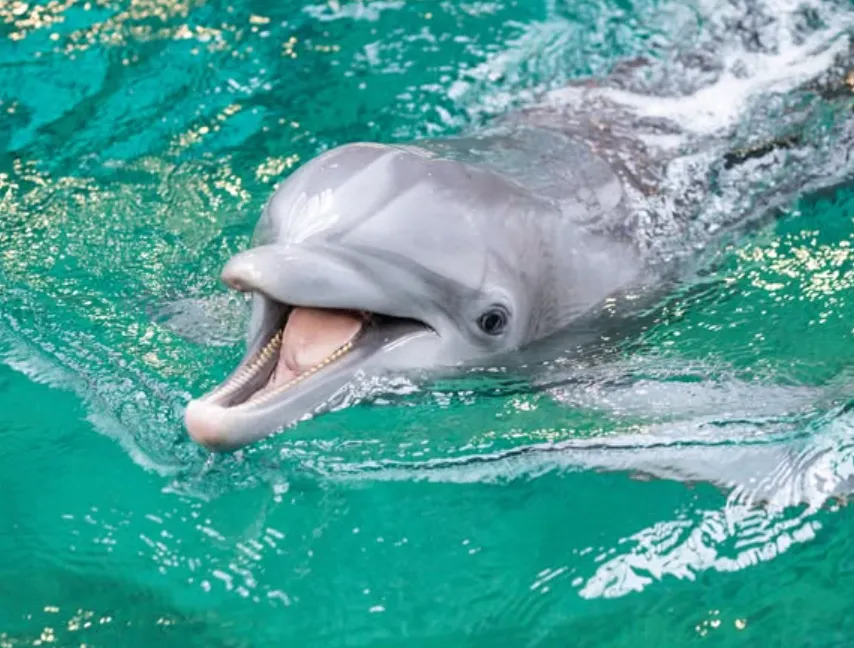
The life cycle of a dolphin is the complete journey from birth as a helpless calf to growth, maturity, reproduction, and old age. Dolphins are not fish; they are marine mammals. This means they breathe air through a blowhole, give birth to live young, nurse their babies with milk, and need social learning to survive.
There are many kinds of dolphins, including bottlenose, common, spinner, and river dolphins, as well as the famous pink dolphin of the Amazon. However, most life-cycle information is presented using the bottlenose dolphin because it is one of the most-studied species.
A dolphin’s life is strongly connected to its mother, pod, hunting skills, communication, and ocean health. After around 12 months of pregnancy, a female dolphin usually gives birth to one calf. The calf nurses for many months and may stay close to its mother for several years. NOAA states that bottlenose calves nurse for about 20 months and generally remain with their mothers for 3 to 6 years.
Q: How many stages are in the life cycle of a dolphin?
A: The main stages are calf, juvenile, adult, and old age/senior dolphin.
Q: How long is a dolphin pregnant?
A: For bottlenose dolphins, pregnancy lasts about 12 months.
Q: How long can dolphins live?
A: Many bottlenose dolphins live at least 40 years, and some females may live 60 years or more.
Quick Life Cycle Table
| Life Stage | Approximate Age | Main Features | Survival Needs |
| Newborn Calf | Birth to 1 year | Learns breathing, swimming, nursing, and staying beside the mother | Mother’s milk, protection, warm social contact |
| Young Calf | 1 to 3 years | Starts learning hunting, communication, and pod behavior | Mother’s guidance and safe feeding areas |
| Juvenile Dolphin | 3 to 8 years | More independent, playful, socially active | Food skills, pod learning, predator avoidance |
| Adult Dolphin | 5 to 15+ years onward | Sexual maturity, mating, parenting, strong pod role | Healthy habitat, prey availability, and social bonds |
| Senior Dolphin | 30 to 60+ years | Slower but experienced; may still reproduce in some cases | Low stress, clean water, and enough prey |

The History of Their Scientific Naming, Evolution, and Origin
Scientific Naming of Dolphins
The word “dolphin” is used for many species of aquatic mammals in the order Cetacea. Oceanic dolphins mostly belong to the family Delphinidae. According to Britannica, the family Delphinidae includes oceanic dolphins found worldwide, with many genera and species.
The common bottlenose dolphin is scientifically named Tursiops truncatus. NOAA classifies it under Kingdom Animalia, Class Mammalia, Order Cetartiodactyla, Family Delphinidae, Genus Tursiops, and Species truncatus.
Evolutionary Origin
Dolphins evolved from land-dwelling mammals that gradually adapted to life in water. Their ancestors returned to aquatic environments over millions of years, developing streamlined bodies, flippers, powerful tails, and advanced hearing.
This is why dolphins still breathe air and nurse their young like other mammals. Britannica notes that cetaceans, including dolphins, breathe air, give birth to live young, produce milk, and have mammalian features.
Why Their Origin Matters
Understanding dolphin evolution helps explain their life cycle. A dolphin calf is born alive, not hatched from an egg. It must quickly reach the surface to breathe. It also depends heavily on its mother’s milk, protection, and social learning.
Their Reproductive Process, Giving Birth And Rising Their Children
Mating and Sexual Maturity
Dolphins do not reproduce at a fixed age for every species. In bottlenose dolphins, reproduction commonly begins between 5 and 15 years old, depending on the population. Females may mature earlier than males.
Long-term Sarasota Bay research found predicted female sexual maturity at about 8.5 years, first reproduction at about 9.6 years, and male sexual maturity around 10 years in that population.
Pregnancy and Birth
A female dolphin usually carries one calf for about 12 months. Twins are extremely rare. Birth happens in water, and the calf is normally born tail-first. This helps reduce the risk of drowning during delivery.
Immediately after birth, the mother guides the calf to the surface so it can take its first breath through the blowhole.
Raising the Calf
Dolphin mothers invest heavily in their young. A calf swims close to its mother in a position often called the baby position. NOAA explains that this position helps the calf nurse easily and may reduce swimming drag by using the mother’s slipstream.
Calves learn feeding routes, social signals, vocal sounds, and predator avoidance from their mother and pod. This long childhood is one reason dolphins are considered highly intelligent, socially minded mammals.
Stages of the Life Cycle of a Dolphin
1. Newborn Calf Stage
The newborn calf stage begins at birth. A baby dolphin is completely dependent on its mother. It must quickly learn to breathe, swim, and stay close to the mother’s body.
During this stage, the calf drinks rich milk from its mother. It does not chew solid food at first. The mother protects the calf from sharks, aggressive dolphins, boat traffic, and separation from the pod.
2. Young Calf Stage
As the calf grows, it becomes more active and curious. It starts practicing swimming, jumping, vocalizing, and following the pod. This is also when the calf begins observing how adults hunt fish and squid.
The young dolphin may still nurse while slowly trying solid food. For bottlenose dolphins, nursing may continue for around 20 months, and the mother-calf bond can last 3 to 6 years.
3. Juvenile Stage
The juvenile dolphin is no longer a helpless baby but is not fully mature. Juveniles spend much time playing, chasing, socializing, and practicing hunting strategies.
Play is not just fun. It helps dolphins build coordination, communication, teamwork, and confidence. Juveniles also learn which fish to chase, where to hunt, and how to avoid danger.
4. Adult and Senior Stage
An adult dolphin can reproduce, form long-term social relationships, and contribute to pod survival. Adult females may give birth every 3 to 6 years on average in bottlenose dolphins.
In old age, dolphins may slow down but still use experience to find food and navigate their environment. Some older females can still reproduce; NOAA notes that bottlenose females as old as 45 have given birth.
Their main diet, food sources, and collection process are explained
Dolphins are carnivorous marine mammals. Their diet depends on species, habitat, season, and prey availability. Most oceanic dolphins eat fish, squid, and sometimes crustaceans such as shrimp and crabs. Animal Diversity Web describes oceanic dolphins as carnivorous, mainly eating fish and squid, while larger dolphins, such as orcas, may hunt larger prey.
Common food sources include:
- Small schooling fish such as mullet, sardines, herring, and mackerel
- Squid in deeper or offshore waters
- Crustaceans such as shrimp and crabs are found in some coastal habitats
- Bottom-dwelling fish for nearshore dolphins
- Regional prey depend on local waters and seasons
Dolphins collect food using advanced hunting techniques. They use echolocation, which means sending sound waves and reading the returning echoes to locate prey. NOAA notes that bottlenose dolphins use passive listening and high-frequency echolocation to locate food.
They may hunt alone or cooperatively. Some dolphins herd fish into tight groups, then take turns rushing through the school. Others push fish toward sandbars or shorelines. Bottlenose dolphins grip prey with their teeth and usually swallow fish whole, often head-first.
Important Things That You Need To Know
When people search for the life cycle of a dolphin, Google may also show mixed LSI keywords such as dolphin emulator, dolphin radar, byford dolphin incident, pink dolphin, gerald the dolphin, dolphin mall, and dolphin drawing. These words do not all mean the same thing.
The main biological keyword is dolphin. It refers to the marine mammal discussed in this article. Pink dolphin is also related because it usually refers to the Amazon river dolphin, a real freshwater dolphin known for its pinkish color in some adults.
However, the term ‘dolphin‘ is not an animal term. It refers to gaming software. Dolphin radar may refer to radar systems, apps, or brand-related technology, not dolphin biology. The Byford Dolphin incident refers to a serious historical industrial accident involving a diving system, not the life cycle of dolphins.
Similarly, “Dolphin Mall is a shopping mall search term, while “dolphin drawing” is usually searched by students, artists, or children looking for drawing ideas. Gerald the dolphin may refer to a character, a meme, or a named dolphin, depending on the search context.
For SEO, it is important to separate these meanings. This article focuses on the real-life cycle of a dolphin, including birth, growth, diet, reproduction, lifespan, and ecological importance.

How Long Does A Dolphin Live
The lifespan of a dolphin depends on species, sex, habitat, food supply, disease risk, pollution, fishing pressure, and human disturbance. There is no single lifespan for every dolphin species.
For a clear example, the common bottlenose dolphin is widely studied. NOAA reports that bottlenose dolphins can live at least 40 years, and some females may live 60 years or more.
Key lifespan points:
- Common bottlenose dolphins often live around 40 to 60 years, especially in healthy conditions.
- Females may live longer than males in some studied populations.
- A 2025 long-term study of Sarasota Bay bottlenose dolphins estimated maximum lifespans of 67 years for females and 52 years for males in that population.
- Calf survival is one of the most important factors for population growth. If many calves die early, the population may decline even when adults survive.
- Dolphins face natural threats such as sharks, disease, harmful algal blooms, and food shortages.
- Human-related threats can shorten lifespan. These include entanglement in fishing gear, vessel strikes, pollution, illegal feeding, ocean noise, and habitat degradation. NOAA lists these as major threats to common bottlenose dolphins.
- Coastal dolphins are often more exposed to human pressure because they live near boats, ports, fisheries, cities, and polluted runoff.
- A long lifespan is useful for dolphins because they learn complex survival skills over many years. Older dolphins may know safe routes, feeding grounds, social partners, and danger zones.
So, while a dolphin can live for decades, its real lifespan depends heavily on environmental safety and human behavior.
Dolphin Lifespan in the Wild vs. in Captivity
Lifespan in the Wild
In the wild, dolphins live in their natural ocean or river systems. They can travel, hunt, socialize, mate, and raise calves in complex environments. A healthy wild bottlenose dolphin may live 40 years or more, and some females may reach 60+ years.
However, wildlife is not risk-free. Dolphins may face predators, disease, storms, food shortages, pollution, boat strikes, and fishing gear.
Lifespan in Captivity
In captivity, dolphins may receive veterinary care and regular food, but their environment is limited compared with the ocean. Captive conditions cannot fully reproduce natural travel distance, hunting, acoustic space, and complex pod life.
Lifespan comparisons can vary across facilities, species, and data sources. Some individuals may live long lives under human care, but captivity also raises welfare concerns because dolphins are intelligent, social, and wide-ranging animals.
Which Is Better?
A simple “wild vs. captivity” answer is not enough. The best life for dolphins depends on welfare, space, health, social stability, and natural behavior. From a conservation view, protecting wild habitats is the most important long-term solution.
Importance of Dolphins in this Ecosystem
Dolphins Help Balance Marine Food Webs
Dolphins are important predators. They feed on fish, squid, and other marine animals, helping control prey populations. This supports balance in the marine food web.
Animal Diversity Web notes that oceanic dolphins act as apex predators in their ecosystems and also serve as prey for larger predators such as sharks and larger delphinids.
Dolphins Indicate Ocean Health
Dolphins are often considered sentinel species. This means their health can reflect the condition of the surrounding ecosystem. If dolphins show disease, toxin exposure, or reproductive failure, it may signal wider environmental problems.
NOAA explains that dolphin strandings can help scientists understand larger ocean health issues, including disease, harmful algal blooms, vessel strikes, pollution, and underwater noise.
Dolphins Support Ecotourism and Education
Dolphins are also valuable for coastal communities through responsible wildlife tourism. Dolphin watching can support local economies when done safely and ethically.
However, tourism must not disturb feeding, resting, nursing, or migration. Poorly managed dolphin tourism can harm the animals it claims to celebrate.
What to do to protect them in nature and save the system for the future
Reduce Fishing Gear Entanglement
- Use dolphin-safe fishing practices.
- Avoid abandoned nets and fishing lines.
- Report entangled dolphins to trained rescue authorities.
- Support bycatch-reduction policies and responsible fisheries.
Never Feed Wild Dolphins
- Feeding wild dolphins changes their natural behavior.
- It teaches them to approach boats and fishing lines.
- NOAA warns that fed dolphins may become more vulnerable to vessel strikes and gear entanglement.
Keep a Safe Viewing Distance
- Watch dolphins from a respectful distance.
- Do not chase, touch, swim with, or surround them.
- NOAA recommends observing dolphins and porpoises from at least 50 yards away.
Reduce Pollution and Plastic Waste
- Keep plastic, oil, chemicals, and trash out of rivers and oceans.
- Choose reusable products where possible.
- Support clean-water policies and beach cleanups.
Protect Coastal and River Habitats
- Save estuaries, mangroves, seagrass beds, and river systems.
- Reduce boat speed in dolphin areas.
- Support research, monitoring, and marine protected areas.

Fun & Interesting Facts About the Life Cycle of a Dolphin
- Dolphins are mammals, not fish. They breathe air and nurse their young with milk.
- A baby dolphin is called a calf.
- A mother dolphin may keep her calf close for several years.
- Dolphins use echolocation to find prey and understand their surroundings.
- Dolphins often sleep with one side of the brain resting at a time, helping them continue breathing.
- The pink dolphin is a real species, commonly linked to the Amazon river dolphin.
- Dolphins have signature-like whistles that may help individuals recognize each other.
- A dolphin’s teeth are mainly for gripping prey, not chewing.
- Some dolphins hunt cooperatively, almost like a team strategy.
- Older dolphins can be very important because they carry survival knowledge about feeding areas and social life.
Frequently Asked Questions (FAQs)
Q: What is the life cycle of a dolphin?
A: The life cycle of a dolphin includes birth as a calf, growth into a young dolphin, the juvenile learning stage, adulthood, reproduction, and old age.
Q: How long does a dolphin calf stay with its mother?
A: In bottlenose dolphins, calves generally stay with their mothers for 3 to 6 years, although the exact time can vary by population and environment.
Q: What do dolphins eat during their life cycle?
A: Young calves drink milk. Older dolphins eat fish, squid, and sometimes crustaceans. Their diet depends on species and habitat.
Q: At what age can dolphins reproduce?
A: Bottlenose dolphins generally begin reproducing between 5 and 15 years old, depending on population and sex.
Q: Are pink dolphins part of the same life cycle pattern?
A: Yes, pink dolphins also go through birth, calf growth, juvenile learning, adulthood, and aging. However, their habitat, lifespan, and threats differ from those of oceanic dolphins.
Conclusion
The life cycle of a dolphin is a powerful example of how intelligence, motherhood, social learning, and ecosystem health work together. A dolphin begins life as a dependent calf, grows through playful and important learning stages, becomes an adult, and may live for many decades if conditions are safe.
Dolphins are not only beautiful marine animals; they are also essential predators, ecosystem indicators, and symbols of ocean health. Their survival depends on clean water, healthy fish populations, safe migration routes, and reduced human disturbance.
Protecting dolphins means protecting the wider marine system. Simple actions such as avoiding plastic pollution, keeping distance from wild dolphins, never feeding them, and supporting responsible fishing can help future generations continue to see dolphins thriving in oceans and rivers.
Also Read: life cycle of a dog
About the Author