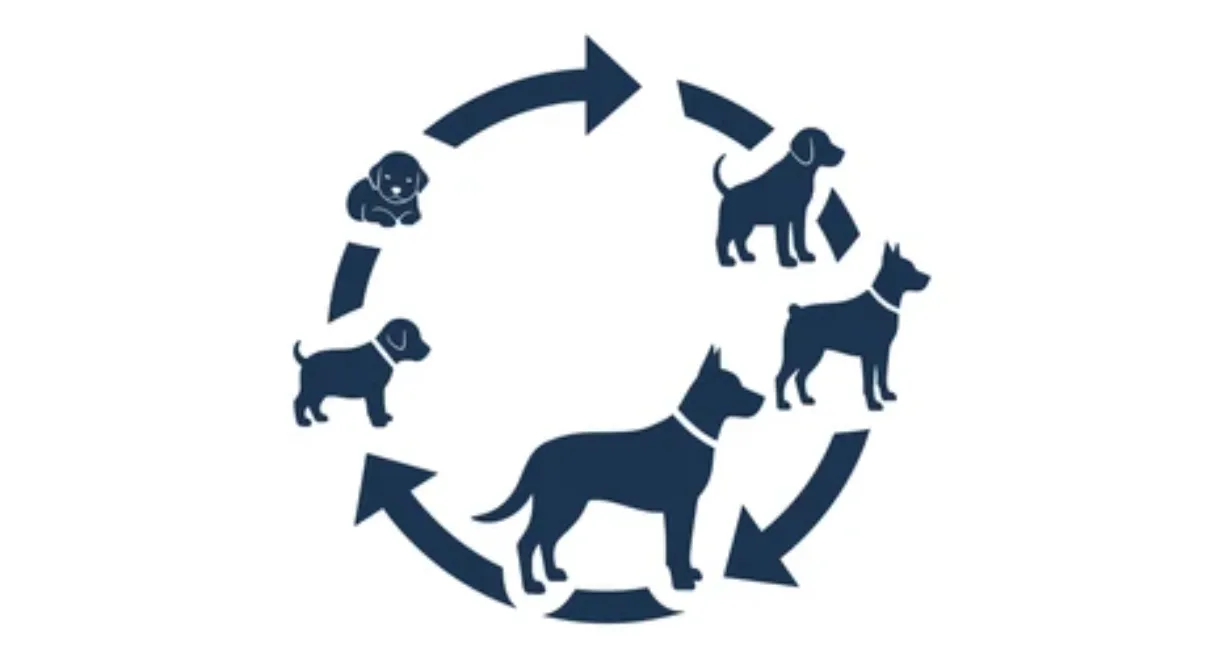
The life cycle of a dog explains how it grows from a newborn puppy into a young, active adult, and finally into a senior companion. A domestic dog, scientifically known as Canis lupus familiaris or Canis familiaris, belongs to the family Canidae. Dogs are domesticated mammals closely related to wolves, foxes, and jackals. Britannica identifies the dog as a domesticated mammal of the order Carnivora and a subspecies or descendant of the gray wolf lineage.
The dog life cycle varies among breeds. Small breeds often mature faster and live longer, while large and giant breeds grow more slowly but usually have shorter lifespans. A puppy may become physically mature within 8–24 months, depending on size, but emotional maturity and behavior training continue for much longer.
Understanding the life cycle of a dog helps owners provide the right food, vaccination, training, exercise, and healthcare at each stage. From milk feeding and social learning to adult activity and senior care, each stage has specific needs. This makes the dog’s life cycle important not only for pet owners but also for animal welfare, veterinary care, and responsible breeding.
Quick Answers: Most Common Questions
Q: What are the main stages in the life cycle of a dog?
A: The main stages are newborn puppy, puppy/juvenile, adult dog, and senior dog.
Q: How long does a dog live on average?
A: Many dogs live around 10–13 years, but lifespan depends strongly on breed size, genetics, diet, exercise, and veterinary care.
Q: When does a dog become an adult?
A: Small dogs may become adults around 8–12 months, while large and giant breeds may take 18–24 months to mature fully.
Quick Life Cycle Table
| Dog Life Stage | Age Range | Main Changes | Care Focus |
| Newborn Puppy | 0–2 weeks | Eyes closed, depends on mother, drinks milk | Warmth, nursing, safe bedding |
| Puppy/Juvenile | 2 weeks–6 months | Eyes open, teeth grow, and they learn social behavior | Vaccines, training, and balanced puppy food |
| Adolescent Dog | 6–18/24 months | Sexual maturity, high energy, and behavior testing | Exercise, obedience, social control |
| Adult Dog | 1–7 years | Full body strength, stable habits | Routine diet, exercise, and health checks |
| Senior Dog | 7+ years, varies by size | Slower movement, dental/joint issues may appear | Senior diet, vet checks, comfort care |

The History of Their Scientific Naming, Evolution, and Origin
Scientific Naming of the Dog
The domestic dog is commonly classified as Canis lupus familiaris or Canis familiaris. The name Canis comes from Latin and means dog. Scientific classification has changed over time because researchers continue to study how domestic dogs relate to wolves and other canids.
Evolution from Wolf-Like Ancestors
Dogs evolved from wolf-like ancestors through a long process of domestication. Evidence shows that dogs were among the earliest animals domesticated by humans, long before modern agriculture became common. Britannica notes that dog domestication took place thousands of years ago, possibly between 12,000 and 32,000 years ago.
Origin of Human–Dog Relationship
The bond between humans and dogs likely began when less fearful wolves approached human settlements in search of food scraps. Over generations, humans selected animals with useful traits such as loyalty, alertness, hunting ability, guarding behavior, and companionship.
Breed Development
Today, dogs exist in many shapes, sizes, and behavioral types. The American Kennel Club states that there are over 340 dog breeds worldwide, while it recognizes 200. This diversity shows how deeply human selection shaped the modern dog.
Their Reproductive Process, Giving Birth, And Rising Their Children
Sexual Maturity in Dogs
Dogs usually reach sexual maturity during adolescence. Small breeds may become fertile earlier, sometimes around 6 months, while larger breeds may take longer. However, early pregnancy is not ideal because a young dog’s body and behavior may not be fully mature.
Mating and Pregnancy
Female dogs go through a reproductive cycle called estrus, often called “in heat.” During this period, a female can mate and become pregnant. Scientific research on canine gestation found the average pregnancy length to be about 62 days, although timing can vary depending on breed, litter size, and ovulation timing.
Veterinary references also describe dog pregnancy as a carefully timed process, with late gestational radiography sometimes used after about 55 days to estimate litter size and fetal development.
Giving Birth to Puppies
The birth process is called whelping. A mother dog usually gives birth to several puppies in one litter. Litter size varies widely: small breeds may have fewer puppies, while large breeds often have more.
Raising Their Children
Newborn puppies are blind, deaf, and completely dependent on the mother. They drink mother’s milk, stay close for warmth, and begin opening their eyes around the second week.
As puppies grow, they start walking, playing, chewing, and learning social behavior from their mother, littermates, and humans. This early stage is very important because poor socialization can lead to fear, aggression, or anxiety later in life.
Stages of the Life Cycle of a Dog
1. Newborn Puppy Stage
The newborn puppy stage begins at birth and lasts for about two weeks. At this stage, puppies are extremely fragile. Their eyes and ears are closed, and they cannot regulate body temperature well.
They depend on the mother for milk, warmth, cleaning, and protection. The mother’s first milk, called colostrum, helps support early immunity. A safe, clean, warm environment is essential during this stage.
2. Puppy and Juvenile Stage
The puppy stage is one of the most important phases of a dog’s life cycle. Puppies begin opening their eyes, hearing sounds, walking, playing, and exploring their surroundings.
This is the best time for early training, gentle handling, and socialization. Puppies should gradually learn house rules, basic commands, safe play, and confidence around people and other animals.
They also need proper vaccination, deworming, and balanced puppy food, as their bones, muscles, brains, and immune systems are still developing.
3. Adolescent and Adult Dog Stage
The adolescent stage can be challenging because dogs become energetic, curious, and sometimes stubborn. Hormonal changes may influence behavior, especially if the dog is not neutered or spayed.
After adolescence, the dog enters the adult stage. Adult dogs are usually physically mature, stronger, and more stable in behavior. They need regular exercise, mental stimulation, dental care, parasite prevention, and a complete diet.
4. Senior Dog Stage
The senior dog stage begins at different ages depending on size. Small dogs may become senior around 10–12 years, while large or giant breeds may be considered senior around 6–8 years.
Senior dogs may sleep more, move slowly, gain or lose weight, develop dental problems, or experience joint stiffness. Regular veterinary checkups become more important during this stage.
Important Things That You Need To Know
The word ‘dog’ may seem simple, but it encompasses a wide range of breeds, behaviors, sizes, and roles. A dog can be a family pet, working animal, guard animal, rescue partner, therapy companion, or service animal. This is why understanding a dog’s life cycle is useful for both pet owners and animal lovers.
One important thing to know is that a dog is not a small wolf living in a house. Dogs have changed over thousands of years of domestication. They can understand human gestures, follow social cues, and build emotional bonds with people.
Another important point is that the dog’s life cycle depends heavily on breed size. A Chihuahua and a Great Dane do not age in the same way. Small breeds often live longer, while large breeds may develop joint, heart, and aging-related problems earlier.
A healthy dog needs more than food and shelter. It needs training, exercise, vaccination, socialization, mental enrichment, and regular veterinary care. Without these, even a physically healthy dog may develop stress, aggression, obesity, or poor behavior.
Also, responsible ownership matters. Spaying or neutering, preventing abandonment, controlling free-roaming dogs, and providing humane care help protect both dogs and ecosystems.
In simple words, a dog is a living companion with biological, emotional, and social needs. Knowing these needs makes the full life cycle of a dog easier to manage.

Their main diet, food sources, and collection process are explained
Main Diet of a Dog
A dog is often described as an omnivorous carnivore, meaning it can eat animal-based food and digest some plant-based ingredients. Unlike strict carnivores, dogs can use nutrients from meat, grains, vegetables, fats, and certain carbohydrates.
Veterinary nutrition references explain that complete and balanced commercial dog foods are designed to provide necessary nutrients without unsafe excesses. These foods may come in dry kibble, canned, or semi-moist forms.
Key Nutrients Dogs Need
Dogs need:
- Protein for muscles, organs, skin, hair, enzymes, and immune support.
- Fat for energy, healthy skin, coat condition, and absorption of fat-soluble vitamins.
- Carbohydrates provide energy and fiber, depending on the diet.
- Vitamins and minerals for bones, nerves, blood, immunity, and metabolism.
- Water daily for digestion, temperature regulation, and organ function.
Food Sources
Common dog food sources include chicken, beef, fish, eggs, rice, oats, sweet potato, pumpkin, and formulated commercial diets.
However, dogs should not eat unsafe foods such as chocolate, grapes, raisins, onions, garlic, alcohol, or excessive fatty scraps.
Collection Process in Natural or Free-Roaming Conditions
Free-roaming dogs often search for food from human waste, leftovers, small prey, or scavenged materials. This can be dangerous because spoiled food, plastic, bones, toxins, and exposure to disease may harm them.
How long does the life cycle of a dog last
A dog’s lifespan depends on breed, size, genetics, diet, exercise, environment, and healthcare. There is no single fixed age for every dog because the life cycle changes greatly between small, medium, large, and giant breeds.
- Small dog breeds often live longer than large breeds. Many small dogs live 12–16 years, and some can live longer with good care.
- Medium-sized dogs often live around 10–14 years, depending on breed health, activity level, and inherited conditions.
- Large dog breeds usually have shorter lifespans, commonly around 8–12 years. Large bodies put more pressure on joints, heart function, and overall metabolism.
- Giant dog breeds may have the shortest average lifespan, sometimes around 6–10 years, depending on breed and health management.
- Mixed-breed dogs may sometimes benefit from genetic diversity, but this does not guarantee a long life. Care quality still matters.
- Nutrition plays a major role. Overfeeding can lead to obesity, which increases risks of diabetes, joint disease, heart strain, and reduced mobility.
- Exercise helps maintain muscle strength, body weight, heart health, and mental balance. However, exercise should be tailored to age and breed.
- Veterinary care improves lifespan by preventing or treating parasites, dental disease, infections, reproductive problems, and age-related illness.
- Mental health also matters. Dogs that receive affection, routine, enrichment, and social contact often show better behavior and quality of life.
- Senior care can extend comfort. Soft bedding, joint support, dental checks, weight control, and regular blood testing can help older dogs live better.
The key point is that a dog’s life cycle is not only about how many years it lives. It is also about how healthy, active, safe, and emotionally secure the dog remains throughout those years.
Life Cycle of a Dog Lifespan in the Wild vs. in Captivity
Lifespan of Dogs in the Wild or Free-Roaming Conditions
Domestic dogs are not truly wild animals in the same way as wolves or foxes. However, some dogs live as feral, stray, or free-roaming dogs. Their lifespan is usually shorter because they face hunger, road accidents, disease, parasites, fighting, poisoning, extreme weather, and lack of medical treatment.
Free-roaming puppies are especially vulnerable. Many may not survive due to infection, malnutrition, or injury.
Lifespan of Dogs in Human Care
Dogs living under responsible human care usually have a much better chance of reaching old age. They receive regular meals, clean water, vaccines, shelter, parasite control, and treatment during illness.
A cared-for dog may live 10–13 years on average, with many small breeds living longer. Good ownership can greatly improve both lifespan and quality of life.
Why the Difference Matters
The difference between free-roaming and cared-for dogs shows the importance of responsible pet ownership. Dogs depend heavily on humans, and their survival improves when people provide safety, nutrition, healthcare, and humane treatment.
Importance of the Life Cycle of a Dog in this Ecosystem
Role as Human Companions
Dogs are one of the most important companion animals in human society. They support emotional well-being, reduce loneliness, and help people feel safer. Therapy and service dogs can assist people with disabilities, anxiety, trauma, and medical needs.
Role in Work and Protection
Dogs also support human communities through herding, guarding, search and rescue, police work, detection work, and livestock protection. Their strong sense of smell and social intelligence make them valuable working animals.
Role in Local Ecology
In balanced human-controlled environments, dogs can help protect livestock and reduce certain pest pressures. However, unmanaged free-roaming dogs can disturb wildlife, spread disease, and compete with native animals.
This means dogs have both positive and negative ecological effects depending on how humans manage them.
Role in Public Health Awareness
Responsible dog care also protects public health. Vaccination, especially against rabies, protects both dogs and humans. Waste management, spaying/neutering, and parasite control reduce disease risks in communities.
What to do to protect them in nature and save the system for the future
1. Promote Responsible Pet Ownership
- Feed dogs properly, provide shelter, and never abandon them.
- Use collars, ID tags, or microchips where available.
- Train dogs to reduce aggression and unsafe roaming.
2. Support Spaying and Neutering
- Spaying and neutering help control stray dog populations.
- It reduces unwanted litters and lowers pressure on shelters.
- It also helps prevent some reproductive diseases.
3. Vaccinate and Provide Veterinary Care
- Regular vaccines protect dogs from serious diseases.
- Rabies vaccination is especially important for community safety.
- Deworming and parasite control protect both animals and people.
4. Protect Wildlife from Free-Roaming Dogs
- Keep pet dogs under control near forests, farms, wetlands, and nesting areas.
- Avoid letting dogs chase birds, deer, reptiles, or small mammals.
- Use leashes in sensitive natural spaces.
5. Improve Community Animal Welfare
- Support humane shelters and rescue programs.
- Educate people about safe dog handling.
- Encourage adoption instead of careless breeding.

Fun & Interesting Facts About the Life Cycle of a Dog
- Puppies are born blind and deaf, so they depend completely on their mother during the first days of life.
- A dog’s sense of smell is far stronger than a human’s, which is why dogs are used in search and rescue and detection work.
- Dogs can understand human body language and gestures better than many other animals.
- The life cycle of a dog varies by breed size. A small dog and a giant dog may age at very different rates.
- Dogs use tail movement, ear position, posture, barking, and facial expression to communicate.
- Puppies learn important behavior from their mother and littermates before they are adopted.
- Senior dogs may need softer food, easier exercise, and more frequent health checks.
- Dogs can dream during sleep, especially during deep sleep stages.
- A dog’s nose print is unique, much like a human fingerprint.
- The bond between humans and dogs is one of the oldest human–animal relationships in history.
Frequently Asked Questions FAQs
Q: What is the life cycle of a dog?
A: The life cycle of a dog includes the newborn puppy stage, puppy/juvenile stage, adolescent stage, adult stage, and senior stage. Each stage has different needs for food, training, exercise, and healthcare.
Q: How long is a dog pregnant?
A: A female dog is usually pregnant for about two months, often around 62–65 days, although timing can vary by breed, litter size, and ovulation timing.
Q: When does a puppy become an adult dog?
A: A puppy may become an adult between 8 months and 24 months, depending on breed size. Small breeds mature earlier, while giant breeds take longer.
Q: What should dogs eat during their life cycle?
A: Dogs should eat a complete and balanced diet suitable for their life stage. Puppies need growth diets, adults need maintenance diets, and senior dogs may need food that supports joint health, digestion, and a healthy weight.
Q: Why do small dogs often live longer than large dogs?
A: Small dogs usually age more slowly after maturity, while large and giant breeds often experience faster aging and earlier joint, heart, and metabolic stress. Genetics and breed-specific health risks also affect lifespan.
Conclusion
The life cycle of a dog is a fascinating journey from a helpless newborn puppy to a playful youngster, a loyal adult, and a gentle senior companion. Each stage brings different physical, emotional, and nutritional needs. A dog’s growth, behavior, reproduction, diet, and lifespan are shaped by breed size, genetics, environment, and quality of care.
Understanding this life cycle helps owners make better decisions about feeding, training, vaccination, exercise, socialization, and senior health support. Dogs are not only pets; they are companions, workers, protectors, and important members of human society.
To protect dogs and the wider ecosystem, humans must practice responsible ownership, prevent abandonment, support vaccination, control stray populations humanely, and respect wildlife habitats. A healthy dog can bring years of loyalty, love, and service when given the care it deserves.
Also Read: life cycle of a snake
About the Author