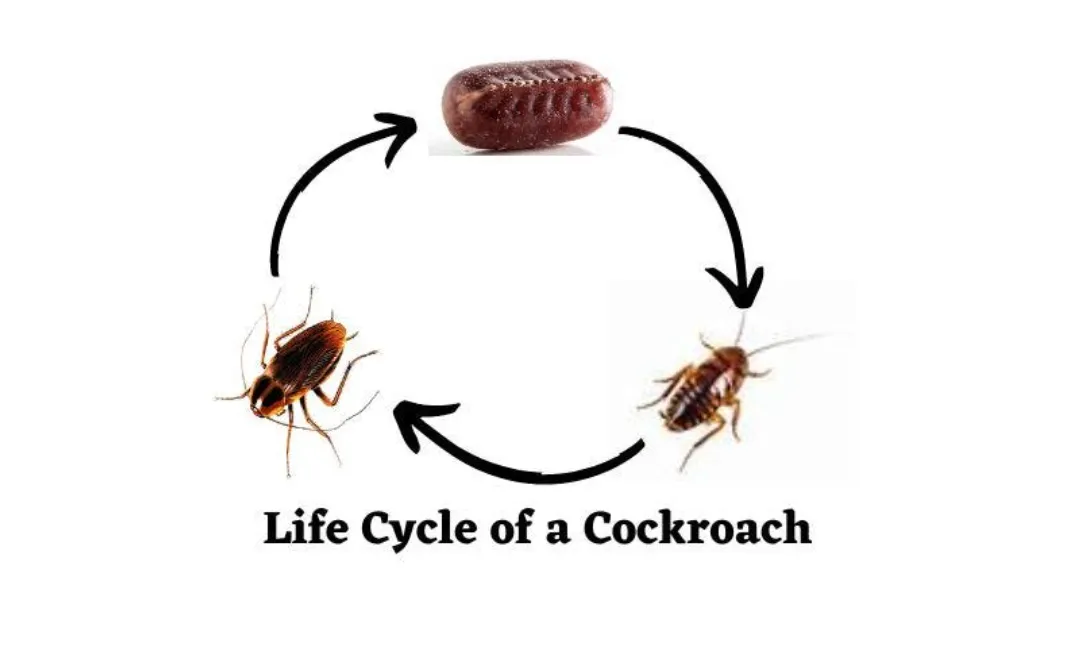
The life cycle of the cockroach is a simple but highly successful biological process that helps this insect survive in homes, forests, drains, kitchens, basements, gardens, and warm urban environments. A cockroach belongs to the insect order Blattodea, the same broader order that also includes termites. Unlike butterflies or beetles, cockroaches do not pass through a pupal stage. Their development is called incomplete metamorphosis, which means they grow through three main biological stages: egg, nymph, and adult.
Most cockroach species lay eggs inside a protective capsule called an ootheca. This capsule may be carried by the female, hidden in cracks, or attached to a safe surface, depending on the species. When the eggs hatch, tiny baby cockroach nymphs come out. These nymphs look like small adults but usually have no wings and are not sexually mature.
Cockroaches are often disliked because household species such as the German cockroach, American cockroach, and oriental cockroach can contaminate food, spread allergens, and leave behind cockroach poop. However, in natural ecosystems, many wild cockroaches help break down dead leaves, wood, and organic waste, making them important decomposers.
Q: What are the main stages in the life cycle of a cockroach?
A: The main stages are egg, nymph, and adult. For easier understanding, the process can also be explained as mating and ootheca formation, egg stage, nymph stage, and adult stage.
Q: How long does a cockroach take to become an adult?
A: It depends on the species, temperature, food, and moisture. Some German cockroaches may mature within a few months, while larger species such as the American cockroach may take longer.
Q: Is a baby cockroach dangerous?
A: A baby cockroach is not dangerous in the way a biting insect is, but its presence is a warning sign. Nymphs indicate active breeding nearby, and they can still contaminate surfaces as they move through food waste, drains, and dirty hiding spots.
Quick Life Cycle Table
| Life Stage | What Happens | Key Signs | Approximate Time |
| Mating & Ootheca Formation | Adult males and females mate; the female produces an egg case called an ootheca | Brown capsule, often hidden in cracks | A few days after mating |
| Egg Stage | Eggs develop safely inside the ootheca | Small bean-shaped egg case | Around weeks, depending on the species |
| Nymph Stage | Baby cockroach hatches and molts several times | Small, wingless, darker after hardening | Several weeks to many months |
| Adult Stage | A fully mature cockroach can reproduce | Larger body, developed wings in many species | Months to over a year, depending on species |

The History of Their Scientific Naming, Evolution, and Origin
Scientific Naming of Cockroaches
The word cockroach is believed to come from the Spanish word cucaracha. Scientifically, cockroaches are placed in the order Blattodea. Well-known pest species include Blattella germanica (German cockroach), Periplaneta americana (American cockroach), and Blatta orientalis (oriental cockroach).
Evolutionary Background
Cockroaches are among the oldest surviving insect groups. Fossil evidence shows that cockroach-like insects existed hundreds of millions of years ago, long before humans and many modern animals appeared. Britannica describes cockroaches as primitive winged insects that have remained surprisingly similar in body design for more than 320 million years.
Origin and Global Spread
Most cockroach species originally thrived in warm, moist, tropical environments. Over time, some species adapted to live close to humans. Food storage, waste, buildings, drains, and heating systems helped pest species spread globally. Today, cockroaches are found on almost every continent, especially where warmth, moisture, and shelter are available.
Their Reproductive Process, Giving Birth, And Rising Their Children
Mating and Chemical Signals
The reproductive process of a cockroach begins when adults become sexually mature. Female cockroaches release chemical signals called pheromones to attract males. Males may respond through movement, antenna contact, and courtship behavior before mating.
After mating, the female stores sperm and begins producing eggs. In many species, a single successful mating can help a female produce several egg cases over time.
Ootheca: The Protective Egg Case
Most cockroaches do not give birth like mammals. Instead, the female produces a protective egg capsule called an ootheca. This capsule protects the eggs from drying, damage, and some environmental threats.
A German cockroach female often carries the ootheca until it is close to hatching. An American cockroach usually deposits the ootheca in a safe, hidden area. The number of eggs inside the capsule varies by species. Extension sources report that cockroach egg cases may contain roughly 12 to 36 eggs, depending on the species.
Baby Cockroach Development
When eggs hatch, tiny baby cockroach nymphs emerge. These nymphs do not receive parental care like birds or mammals. However, they usually stay near food, moisture, and shelter.
Nymphs grow by molting. Each molt allows the body to become larger. At first, a new nymph may look pale or white, but its body soon hardens and darkens. This is sometimes mistaken for an “albino cockroach,” but it is only a temporary stage after hatching or molting.
Raising Their Young
Cockroaches do not truly “raise” their young. Their survival strategy depends on producing many offspring, hiding eggs in safe places, and allowing nymphs to feed independently. This makes cockroach control difficult when egg cases and nymphs are hidden deep inside cracks, cupboards, drains, or wall gaps.
Stages of the Cockroach Life Cycle
Cockroaches undergo incomplete metamorphosis, meaning they do not pass through larval or pupal stages like butterflies. Still, for a clear 4-stage explanation, the life cycle of a cockroach can be described as follows.
1. Mating and Ootheca Formation
The first stage begins when adult cockroaches mate. After mating, the female forms an ootheca, a capsule containing eggs. This is one of the most important stages because it determines how quickly a population can increase.
In homes, a hidden ootheca may be found behind appliances, under sinks, inside cabinets, near warm motors, or in wall cracks.
2. Egg Stage
The egg stage occurs inside the ootheca. The capsule protects the developing eggs from moisture loss and minor physical damage. Depending on the species, temperature, and humidity, eggs may hatch within weeks or over a longer period.
Warm, humid environments usually speed up development. That is why kitchens, bathrooms, drains, restaurants, and food storage areas often become high-risk zones.
3. Nymph Stage
After hatching, the baby cockroach enters the nymph stage. Nymphs look like smaller versions of adults, but they usually lack wings and reproductive organs.
They molt several times before becoming adults. During each molt, the outer body covering is shed. Nymphs are highly active and feed on tiny food particles, grease, starch, organic waste, and crumbs.
4. Adult Stage
The adult stage is the reproductive stage. Adults can mate, produce oothecae, search for food, and expand into new hiding places.
Species such as the German cockroach reproduce quickly indoors, making them one of the most difficult household pests. Larger species, such as the American cockroach, often prefer drains, sewers, basements, and warm, damp spaces.
Important Things That You Need To Know
Understanding common cockroach-related terms helps readers identify problems and respond correctly. The word cockroach refers to a wide group of insects, but not all cockroaches are household pests. Many wild species live outdoors and help nature by recycling dead organic material.
The German cockroach is one of the most common indoor pest species. It is small, fast-breeding, and often found in kitchens, restaurants, apartments, and food-handling areas. Because it reproduces quickly, seeing even one adult or baby cockroach may indicate a hidden infestation.
The American cockroach is larger and reddish-brown. It is commonly linked with warm, damp places such as drains, basements, sewers, and boiler rooms. The oriental cockroach is darker, slower, and often found in cool, damp locations.
Another important sign is cockroach poop. It may look like black pepper, coffee grounds, dark smears, or small cylindrical droppings, depending on the species. Droppings near food storage, cabinets, or appliances suggest active movement.
For household safety, cockroach control should focus on sanitation, sealing entry points, reducing moisture, and targeted treatment. Products such as Advion cockroach gel bait are commonly discussed in pest-control contexts because gel baits attract feeding cockroaches. Still, any pesticide should be used carefully according to the label and local safety rules.

Their main diet, food sources, and collection process are explained
Main Diet of Cockroaches
Cockroaches are omnivorous scavengers. This means they can eat both plant-based and animal-based organic matter. Their diet is extremely flexible, which is one reason they survive in so many environments.
In nature, many cockroaches feed on dead leaves, decaying wood, fungi, fruits, animal remains, and other organic debris. In homes, pest species may eat crumbs, grease, sugar, starch, pet food, cardboard glue, food spills, garbage, soap residue, and even tiny particles trapped behind appliances.
Common Food Sources
Cockroaches are attracted to:
- Leftover food on counters, floors, and sinks
- Grease and oil behind ovens or stoves
- Pet food left overnight
- Garbage bins without tight lids
- Cardboard and paper glue in damp storage areas
- Organic waste in drains and disposal units
- Food crumbs under refrigerators and cabinets
How Cockroaches Collect Food
Cockroaches usually search for food at night. They use long antennae to detect smells, moisture, vibrations, and nearby surfaces. Their flat bodies help them move through cracks, under doors, behind tiles, and inside narrow gaps.
A cockroach does not carry food in the same way ants do. Instead, it feeds directly from the food source and may return repeatedly if the place is safe. This is why cleaning visible areas is not enough. Hidden grease, damp cardboard, and food dust can keep an infestation alive.
How Long Does A Cockroach Live
The lifespan of a cockroach depends on species, temperature, food, water, shelter, and exposure to predators or control methods. There is no single lifespan that applies to all cockroaches.
- German cockroach lifespan: A German cockroach usually has a shorter but faster reproductive cycle. In favorable indoor conditions, it can develop from egg to adult within a few months and reproduce rapidly.
- American cockroach lifespan: The American cockroach generally lives longer than the German cockroach. It may take months to mature and can survive for a long period as an adult when food, water, and shelter are available. Penn State Extension notes that American cockroaches pass through egg, nymph, and adult stages, with eggs laid in dark brown capsules.
- Oriental cockroach lifespan: The oriental cockroach often develops more slowly and prefers cooler, damp environments. Its total life cycle may be longer under cooler conditions.
- Nymph survival: A baby cockroach or nymph can survive if it finds moisture and small food particles. Nymphs are vulnerable after molting because their outer bodies are soft.
- Indoor lifespan: Indoors, cockroaches may live longer because buildings provide warmth, hiding places, water, and a steady supply of food waste.
- Outdoor lifespan: Outdoors, cockroaches face more predators, weather changes, and competition for food.
- Food and water effect: Water is often more important than food. Many cockroaches can survive for a while without food, but in dry conditions, survival is reduced.
- Temperature effect: Warm environments speed up growth and reproduction. Cold conditions slow development and may reduce survival.
- Control pressure: Sanitation, sealing cracks, reducing water, and professional cockroach control can shorten the life cycle by removing food, hiding places, and breeding areas.
In simple terms, cockroaches may live for several months to more than a year, depending on the species and conditions. Some laboratory records indicate that certain cockroach species can survive longer under protected conditions, but household pest lifespans are usually shorter due to control efforts and environmental stress.
Cockroach Lifespan in the Wild vs. in Captivity
Lifespan in the Wild
In the wild, cockroaches live in leaf litter, soil, rotting logs, caves, tree bark, compost, and other organic habitats. Their lifespan is shaped by rainfall, temperature, predators, and food availability.
Wild cockroaches face birds, reptiles, amphibians, spiders, ants, beetles, and small mammals. They may also die from flooding, drought, cold, disease, or lack of shelter. Because of these challenges, many wild cockroaches do not reach their maximum possible lifespan.
Lifespan in Human Buildings
In human buildings, pest cockroaches often find stable warmth, regular food waste, and hidden moisture. A kitchen or restaurant can support many generations if not cleaned and monitored.
The German cockroach is especially successful indoors because it breeds quickly and hides close to food and water. The American cockroach may survive in sewers, drains, basements, and commercial buildings.
Lifespan in Captivity or Laboratory Conditions
In captivity, cockroaches may live longer because they are protected from predators and extreme weather. They receive regular food, moisture, and shelter. However, this does not mean household cockroaches should be protected indoors. In homes, they are considered health-related pests because droppings, shed skins, and allergens may affect indoor hygiene.
Importance of the Cockroach in this Ecosystem
Natural Decomposers
Although pest cockroaches are unpleasant indoors, many wild cockroach species are useful in nature. They help break down dead leaves, decaying wood, fallen fruits, and other organic materials. This supports nutrient cycling, in which nutrients return to the soil and become available to plants.
Food for Other Animals
Cockroaches are also food for many animals. Birds, frogs, lizards, spiders, ants, beetles, and small mammals may eat them. This makes cockroaches part of the food web.
If all wild cockroaches disappeared, some predators would lose a food source, and decomposition in certain habitats could slow down.
Soil and Forest Health
In forests and grasslands, cockroaches help fragment dead plant material. Their feeding and movement mix organic matter into soil layers. This can support microorganisms that continue the decomposition process.
Difference Between Wild and Pest Cockroaches
It is important to separate wild ecosystem cockroaches from indoor pest cockroaches. Wild cockroaches support nature. Indoor pest species can contaminate food, trigger allergies, and require careful cockroach control.
What to do to protect them in nature and save the system for the future
Protect Natural Habitats
- Preserve forests, wetlands, leaf litter, and natural soil layers.
- Avoid unnecessary clearing of dead wood in wild areas.
- Leave natural decomposition zones where insects can recycle organic matter.
Reduce Harmful Chemical Use
- Avoid spraying pesticides in natural outdoor habitats without reason.
- Use targeted pest management only where there is a real human health or hygiene issue.
- Choose safer, limited, and label-following control methods.
Separate Home Control from Nature Protection
- Control German cockroach, American cockroach, and oriental cockroach infestations indoors.
- Do not destroy harmless wild insects outdoors simply because they look similar.
- Learn to identify pest species before taking action.
Improve Waste Management
- Keep urban garbage sealed to reduce pest cockroach breeding.
- Compost responsibly so it supports nature without attracting indoor pests.
- Remove standing water around homes.
Support Biodiversity Education
- Teach people that not every cockroach is a household pest.
- Promote ecological awareness about decomposers.
- Encourage balanced pest control instead of total insect destruction.
Fun & Interesting Facts About Cockroaches
- Cockroaches are ancient insects and have survived major environmental changes for hundreds of millions of years.
- A baby cockroach is called a nymph, not a larva.
- Cockroaches do not have a butterfly-like pupal stage because they develop through incomplete metamorphosis.
- The protective egg capsule is called an ootheca.
- Some cockroaches can flatten their bodies and squeeze into very narrow cracks.
- Cockroaches use their antennae to detect food, moisture, surfaces, and movement.
- The German cockroach is one of the fastest indoor breeders among common pest cockroaches.
- The American cockroach is one of the largest common household-associated species.
- Freshly molted cockroaches may look pale or white, but they are not a separate albino species.
- Cockroach poop, shed skins, and body parts may contribute to indoor allergens.
- Most cockroach species are not major household pests; many live quietly in natural habitats.
- Cockroaches are mostly nocturnal, which means they are most active at night.

Frequently Asked Questions (FAQs)
Q: What is the life cycle of a cockroach?
A: The life cycle of a cockroach includes egg, nymph, and adult stages. For easier understanding, it can be explained as mating, ootheca formation, egg development, nymph growth, and adult reproduction.
Q: How many eggs does a cockroach lay?
A: The number depends on the species. Many cockroach egg cases contain around 12 to 36 eggs, while some species may produce more. The eggs are protected inside an ootheca.
Q: What does a baby cockroach look like?
A: A baby cockroach looks like a small adult cockroach but usually has no wings. It may appear pale just after hatching or molting, then becomes darker as its body hardens.
Q: Is cockroach poop harmful?
A: Cockroach poop can contaminate food, surfaces, and indoor spaces. Droppings, shed skins, and body fragments may also contribute to allergy and asthma problems in sensitive people.
Q: What is the best way for cockroach control?
A: Effective cockroach control includes cleaning food waste, sealing cracks, fixing leaks, removing hiding places, monitoring activity, and using targeted bait or professional pest management when needed.
Conclusion
The life cycle of the cockroach is simple, strong, and highly adaptive. From ootheca to baby cockroach nymph and finally to reproductive adult, each stage helps cockroaches survive in different environments. Household species such as the German cockroach, American cockroach, and oriental cockroach can become serious pests when they find food, warmth, water, and shelter indoors.
At the same time, cockroaches are not only pests. In nature, many species work as decomposers, recycle nutrients, and support the food web. The best approach is balance: protect wild ecosystems while using smart cockroach control inside homes, restaurants, schools, and buildings.
By understanding their life cycles, diets, lifespans, reproduction, and ecological roles, people can manage pest problems more effectively without ignoring the natural importance of these ancient insects.
Also Read: life cycle of a spider
About the Author