The turtle life cycle is one of the most interesting stories in the reptile world. A turtle begins life as a tiny egg buried in soil, sand, leaf litter, or a hidden nest near water. After hatching, it enters a dangerous world where birds, fish, raccoons, snakes, and even humans can become threats. Only a small number of hatchlings survive long enough to become strong adults.
Turtles belong to the reptile order Testudines, a group known for their hard shells, slow growth, long lives, and strong survival skills. Their shell is not just a covering; it is part of their skeleton, made of bone and cartilage, with the upper part called the carapace and the lower part called the plastron. Scientists recognize more than 350 turtle species, including freshwater turtles, sea turtles, tortoises, box turtles, snapping turtles, and the powerful alligator snapping Turtle.
Turtles may look quiet and slow, but their life cycle is full of movement, danger, and adaptation. Some turtles live in ponds and rivers. Some cross beaches to reach the ocean. Others spend most of their lives on land. Each species has its own rhythm, but most follow the same basic stages: egg, hatchling, juvenile, sub-adult, adult, reproduction, and natural aging.
Q: What is the Turtle’s life cycle?
A: The turtle cycle of life includes the stages of egg, hatchling, juvenile, sub-adult, adult, and reproduction.
Q: How long does it take a turtle to become an adult?
A: It depends on the species. Some small freshwater turtles may mature in a few years, while many sea turtles can take decades to reach breeding age.
Q: Do turtles take care of their babies?
A: Most turtles do not raise their babies. The mother lays eggs in a nest and leaves. Hatchlings must survive on their own.
Quick Life Cycle Table
| Stage | What Happens | Survival Challenge |
| Egg | A female turtle lays eggs in a nest, usually in sand, soil, or soft ground. | Eggs may be eaten, fried, crushed, or exposed to extreme heat. |
| Hatchling | Baby turtle breaks the shell using a small egg tooth-like structure. | Predators, dehydration, light pollution, and wrong direction travel. |
| Juvenile | Young turtle feeds, hides, grows, and learns its habitat. | Fish, birds, mammals, pollution, and lack of safe shelter. |
| Sub-adult | Turtles grow larger, but are not always ready to breed. | Habitat loss, road crossing, fishing gear, and human disturbance. |
| Adult | Mature turtles feed, mate, migrate, and reproduce. | Bycatch, illegal collection, climate change, and damage to nesting sites. |
| Reproduction | Adult females return to suitable nesting places and lay eggs. | Nest destruction, beach development, predators, and temperature shifts. |

The History of Their Scientific Naming
The scientific naming of turtles is connected to their place in the reptile family tree. Turtles are placed in the order Testudines, sometimes also called Chelonia in older or broader scientific writing. These names help scientists group turtles, tortoises, and terrapins into a single biological order.
Important naming points:
- Testudines is the main scientific order used for turtles.
- The word “turtle” is often used broadly, especially in North America, to refer to many shelled reptiles.
- A tortoise usually means a land-living turtle with strong legs and a domed shell.
- Terrapin often refers to turtles living in fresh or brackish water, though usage changes by region.
- A box turtle gets its common name because many species can close their shell tightly like a box.
- A snapping turtle is named for its strong bite and defensive behavior.
- The alligator snapping Turtle is named for its rough shell, large head, and powerful jaws.
Scientific names are important because common names can confuse readers. For example, “turtle” can mean a sea turtle, a pond turtle, or a land tortoise, depending on the country. Scientific naming gives each species a clearer identity.
Their Evolution And Their Origin
Turtles are among the oldest living reptile groups on Earth. Their ancestors appeared hundreds of millions of years ago, long before humans, and even before many modern mammals and birds. Fossil evidence shows that early turtle relatives already had body structures that later evolved into the famous turtle shell.
Britannica notes that the earliest known turtles date back to the Late Permian Epoch, and many ancient forms had features different from modern turtles, including teeth in some early species.
The most important evolutionary feature of turtles is the shell. Unlike armor placed on top of the body, the turtle shell is part of the skeleton. The ribs, spine, and outer bony plates work together to protect the animal. This gave turtles a strong defense against predators and helped them survive across many environments.
Over time, turtles spread into different habitats. Some became strong swimmers and moved into rivers, lakes, wetlands, and oceans. Others adapted to dry land and became tortoises. Sea turtles developed flipper-like limbs for long-distance ocean travel. Freshwater turtles have webbed feet for swimming and walking. Land turtles developed stronger legs to move across soil, grass, and forest floors.
This long evolutionary journey explains why turtles are so diverse today. A small box turtle in a forest, a huge sea turtle crossing the ocean, and an alligator snapping Turtle waiting silently in a river all share the same ancient body plan. Yet each one has adapted to a very different life.
Their origin also tells us why turtles need protection. These animals survived natural climate shifts, ancient predators, and geological changes. But modern threats such as plastic pollution, illegal trade, road deaths, bycatch, and habitat loss are occurring too quickly for many species to adapt.
Their main food and its collection process
Turtles eat different foods depending on their species, habitat, age, and body shape. Some turtles are mostly herbivores, some are carnivores, and many are omnivores. Their feeding habits also change as they grow.
Young turtles often need more protein. They may eat insects, worms, small fish, tadpoles, snails, and aquatic larvae. As they grow older, many species add more plants, algae, grasses, fruits, and soft aquatic vegetation.
Main turtle food sources:
- Aquatic plants: Many freshwater turtles eat pond plants, duckweed, algae, and soft leaves.
- Small animals: Young turtles often collect insects, worms, snails, small fish, and larvae.
- Carrion: Some turtles eat dead animals, helping clean the Ecosystem.
- Fruits and berries: Land turtles and some box turtle species may eat fallen fruit.
- Seagrass and algae: Green sea turtles are well known for feeding on seagrass and algae as adults.
- Fish and invertebrates: A snapping turtle may eat fish, frogs, crayfish, and other small animals.
- Ambush prey: The alligator snapping Turtle can sit quietly with its mouth open and use a worm-like tongue tip to attract prey.
Turtles collect food in patient ways. Some walk slowly along the bottom of ponds. Others hide in mud and wait for prey. Sea turtles travel across feeding grounds and nesting beaches during their lives. NOAA explains that sea turtles spend most of their lives in the ocean, moving between feeding areas and nesting beaches.
Food collection is closely tied to habitat health. A polluted pond provides fewer insects and plants for turtles. A damaged reef or seagrass bed gives sea turtles less food. Protecting turtle food sources means protecting the whole habitat around them.
Their life cycle and ability to survive in nature
Egg Stage
The turtle life cycle begins when a female lays eggs. Depending on the species, she may nest in beach sand, riverbanks, forest soil, garden edges, or open sunny ground. The eggs are usually soft-shelled or leathery, not hard like many bird eggs.
Temperature can affect development. In many turtles, nest temperature may influence the sex of hatchlings. Too much heat, flooding, or nest disturbance can reduce survival.
Hatchling Stage
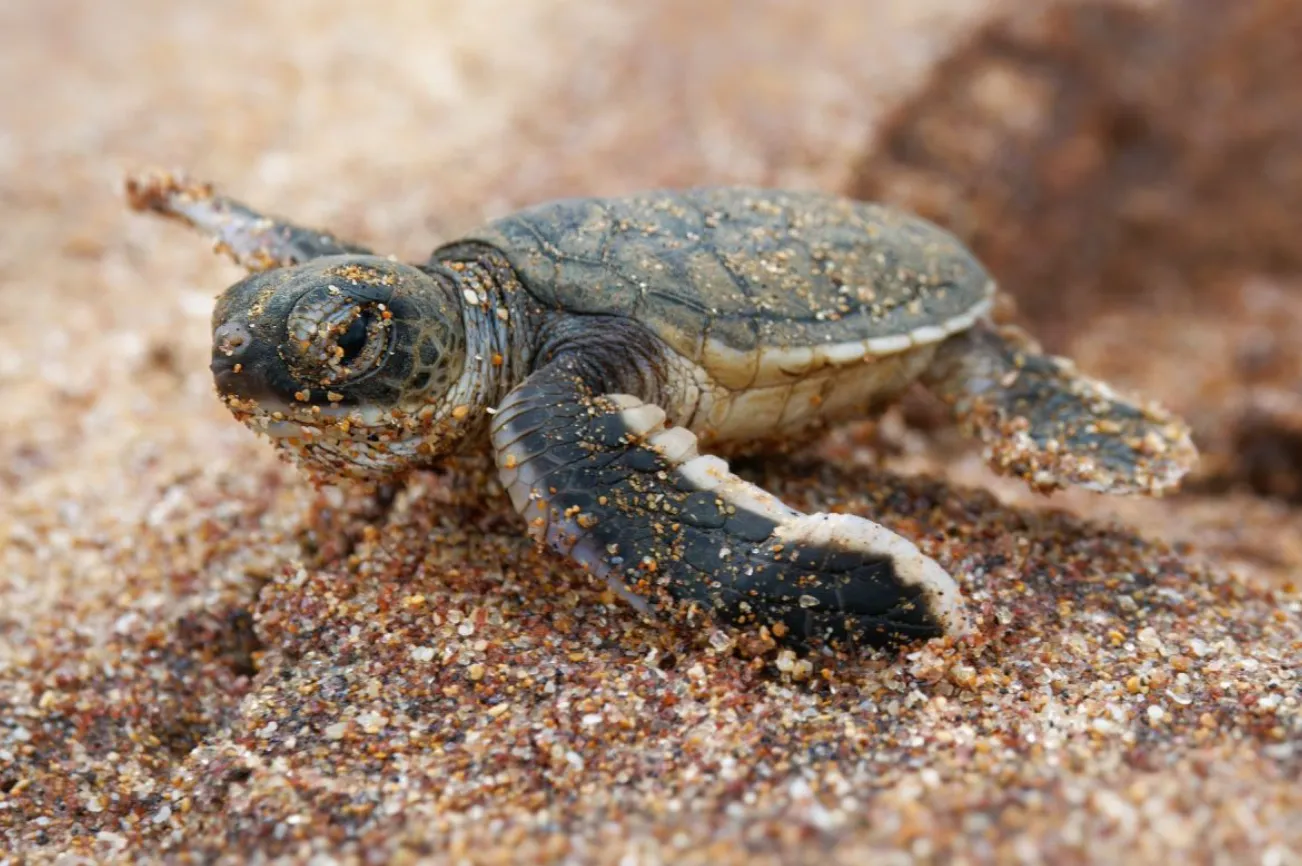
When hatchlings are ready, they break out of the egg. Sea turtle hatchlings often emerge together and rush toward the sea. NOAA notes that baby sea turtles hatch in groups and move toward the ocean together, which can improve their chance of surviving predators.
This stage is dangerous. Hatchlings are tiny, soft, and easy to catch. Birds, crabs, fish, raccoons, snakes, and larger turtles may eat them.
Juvenile Stage
Juvenile turtles spend much of their time hiding, feeding, and growing. They use mud, plants, logs, rocks, and shallow water as shelter. Their shells become stronger with age.
Adult Stage
Adult turtles are stronger and better protected, but they still face danger. Roads, fishing nets, pollution, illegal collection, and habitat loss can kill even large turtles. Sea turtles also face threats from vessel strikes, coastal development, climate change, plastic waste, and bycatch.
Their best survival tools are patience, strong shells, sharp senses, camouflage, long life, and the ability to use stable habitats over many years.

Their Reproductive Process and raising their children
Turtle reproduction is simple in pattern but risky in nature. Adult males and females mate, then the female carries fertilized eggs until she finds a safe nesting area. The nesting place is one of the most important choices in a turtle’s life cycle. cycle
Key points in turtle reproduction:
- Mating: Turtles usually mate in water or near their home range, depending on the species.
- Nest searching: The female looks for soft, safe ground where eggs can develop.
- Digging: She digs a nest chamber using her back legs.
- Egg laying: She lays a clutch of eggs. The number can be small or large depending on the species.
- Covering the nest: She covers the eggs carefully with sand or soil.
- Leaving: Most turtles leave the nest and do not guard the eggs.
- Incubation: The eggs develop using warmth from the environment.
- Hatching: Baby turtles emerge and begin life alone.
Turtles usually do not raise their children. This surprises many people because mammals and birds often protect their young. But turtles follow a different strategy: they lay multiple eggs, choose a hidden nest, and let the hatchlings survive on their own.
Sea turtles are a clear example. A female may travel long distances to reach a nesting beach. After laying eggs, she returns to the ocean. The hatchlings later dig out and crawl toward the water without parental help.
Freshwater turtles and box turtles also lay their eggs. The babies must find shelter, food, and safety on their own. This is why habitat matters so much. A safe wetland, a clean pond, a quiet beach, or a healthy forest edge can make the difference between life and death.
Important Things That You Need To Know
The word “turtle” can refer to many different animals, so it helps to understand the related terms people often search for. A snapping turtle is a freshwater turtle known for its strong bite, heavy body, long tail, and defensive nature. It is not an animal to touch or disturb in the wild.
A box turtle is usually smaller, land-based, and famous for its hinged shell. Many box turtles can pull their heads and legs inside, then close the shell tightly for protection. They often live in forests, grasslands, and moist areas with leaf litter.
The alligator snapping Turtle is one of the most powerful freshwater turtles. It has a rough, ridged shell, a massive head, and a specialized tongue tip that resembles a small worm. This helps it attract fish while waiting quietly underwater.
A turtle drawing is often used in schools to teach children about the Turtle’s life cycle. Drawings help explain the stages from egg to hatchling, juvenile, and adult. They are useful for science lessons, posters, and nature education.
Some search terms are less biological. Turtle Beach may refer to a place or brand, depending on the search. Franklin the Turtle is a children’s character that has helped many kids become familiar with turtles, even though real turtles behave very differently from cartoon characters.
Understanding these words helps readers distinguish real turtle biology from general searches related to turtles. It also makes the topic clearer for parents, students, teachers, and nature lovers.
The importance of them in this Ecosystem
They Help Keep Water Systems Healthy
Turtles play a quiet but useful role in ponds, rivers, lakes, wetlands, and oceans. Some species eat dead animals and decaying matter. This helps clean the environment and recycle nutrients.
Freshwater turtles also feed on insects, snails, plants, and small aquatic animals. By doing this, they help balance food webs.
They Support Plant Growth and Seed Movement
Some land and freshwater turtles eat fruits and plants. After digestion, they may spread seeds through their droppings. This can help plants grow in new areas.
Tortoise and box turtle species can be especially useful for seed dispersal because they move slowly through different parts of their habitats.
They Are Food for Other Animals
Turtle eggs and hatchlings are food for many predators. While this may sound sad, it is part of the natural system. Birds, mammals, reptiles, fish, and crabs depend on turtle nests and hatchlings as seasonal food.
Sea Turtles Protect Ocean Habitats
Sea turtles are important for marine ecosystems. Green turtles graze on seagrass, helping maintain healthy seagrass beds. Healthy seagrass supports fish, shellfish, and coastal life. NOAA lists major threats to sea turtles, including habitat loss, bycatch, pollution, climate change, egg collection, and vessel strikes, showing how closely their survival is tied to ocean health.
They Show Ecosystem Health
Turtles are long-lived animals. When turtle populations decline, it often means something is wrong with the habitat. Pollution, road expansion, illegal trade, and wetland destruction can all contribute to declines in turtle populations.
What to do to protect them in nature and save the system for the future
Protecting turtles is not only about saving one animal. It is about saving wetlands, beaches, rivers, forests, and oceans.
- Protect nesting areas: Do not disturb turtle nests, nesting females, or hatchlings.
- Keep beaches clean: Remove trash, plastic, fishing line, and beach equipment after use.
- Turn off bright beach lights: Artificial light can confuse sea turtle hatchlings and lead them away from the ocean.
- Do not drive on nesting beaches: Vehicles can crush nests, harm females, and create deep tracks that trap hatchlings. NOAA also advises filling holes and removing beach gear to prevent turtles from being blocked or trapped.
- Drive carefully near wetlands: Many turtles die while crossing roads during nesting season.
- Never take wild turtles as pets: Wild collection harms local populations and spreads stress or disease.
- Protect ponds and wetlands: Avoid dumping chemicals, oil, plastic, or waste into water.
- Use turtle-safe fishing habits: Remove old hooks, lines, and nets. Fishing gear can trap and kill turtles.
- Support conservation programs: Community work, hatchery protection, research, and habitat restoration can improve survival.
- Teach children about real turtle behavior: Use a turtle drawing, a nature book, or a school project to show respect for living turtles.
- Report injured turtles: Contact local wildlife rescue groups instead of trying risky handling.
- Avoid buying turtle-shell products: Illegal trade is one reason many turtle species are threatened.
One positive sign is that conservation can work. The green Turtle was recently reported to be improving globally following long-term protection, with sources linked to IUCN-related assessment work reporting a rise in nesting across assessed rookeries. Still, many turtle populations remain under pressure, so protection must continue.

Frequently Asked Questions (FAQs)
Q1: What is the Turtle’s life cycle?
A: The turtle cycle of life includes egg, hatchling, juvenile, sub-adult, adult, and reproduction. The exact timing depends on the species and habitat.
Q2: Where do turtles lay their eggs?
A: Turtles lay eggs in sand, soil, leaf litter, riverbanks, beaches, or soft ground. Sea turtles nest on beaches, while freshwater and land turtles often nest near ponds, forests, or wetlands.
Q3: Do turtles stay with their babies?
A: No, most turtles do not raise their young. The mother lays eggs, covers the nest, and leaves. Hatchlings must find food and shelter on their own.
Q4: How long do turtles live?
A: Many turtles live for decades. Some species can live 50 years or more, and some tortoises can live much longer under safe conditions.
Q5: What do baby turtles eat?
A: Baby turtles often eat insects, worms, small aquatic animals, larvae, and soft plant matter. Their diet changes as they grow.
Q6: Is a snapping turtle dangerous?
A: A snapping turtle can bite strongly if handled or threatened. It should be watched from a safe distance and left alone in nature.
Q7: What is special about a box turtle?
A: A box turtle has a hinged shell that can close tightly. This gives it strong protection against many predators.
Q8: Why are turtles important to nature?
A: Turtles help clean water systems, spread seeds, control small animal populations, support predators, and show the health of wetlands, beaches, rivers, and oceans.
Conclusion
The Turtle’s life cycle is a slow, careful, and powerful journey. It begins with a hidden egg and continues through the risky hatchling stage, the growing juvenile stage, and finally adulthood. Each stage depends on clean water, safe nesting areas, healthy food sources, and balanced ecosystems.
Turtles have survived for millions of years thanks to their strong shells, patience, and adaptability. But today, many turtles face threats that are caused by people: plastic pollution, road deaths, illegal trade, habitat loss, fishing gear, and climate change.
From the tiny box turtle in forest leaves to the strong alligator snapping Turtle in muddy rivers, every Turtle has a place in nature. Protecting them means protecting the systems that also support birds, fish, plants, and humans.
When we keep beaches clean, protect wetlands, drive carefully, and leave wild turtles alone, we help this ancient life cycle continue.
Also Read: toxoplasma gondii life cycle
About the Author