Penguins are among the most fascinating and resilient birds on Earth. Known for their upright posture, tuxedo-like appearance, and exceptional swimming skills, these flightless birds have captured global attention for decades. Found mainly in the Southern Hemisphere, penguins thrive in some of the harshest environments, from the icy landscapes of Antarctica to temperate coasts in South America and Africa.
Understanding the life cycle of Penguins is essential for appreciating how these animals adapt, survive, and reproduce in extreme conditions. From the moment a penguin egg is laid to the time a chick becomes an independent adult, every stage is shaped by environmental challenges, predators, and climate change.
In 2026, penguins are also at the center of conservation discussions due to shifting sea ice patterns and ocean temperatures. Scientists, including those studying AP Bio penguins, are closely monitoring their populations to understand ecosystem health.
This article explores the complete journey of penguins—from their origins and evolution to their reproductive behavior, survival strategies, and ecological importance. Whether you’re curious about what penguins eat, the different types of penguins, or how they raise their young, this comprehensive guide provides a clear, engaging, and SEO-optimized overview tailored for modern readers.
Their Evolution And Their Origin
Penguins have a rich evolutionary history that dates back millions of years. Contrary to popular belief, they were not always confined to icy environments. Fossil evidence suggests that penguins originated shortly after the extinction of dinosaurs, around 60–65 million years ago.
Early Origins
The earliest known penguin ancestors lived in warmer climates, particularly in regions that are now New Zealand and Antarctica. These ancient penguins were larger and had different physical traits compared to modern species.
Over time, penguins adapted to marine life, developing strong flippers instead of wings. This transformation allowed them to become highly efficient swimmers, capable of diving deep into the ocean in search of food.
Adaptation to Cold Environments
As Earth’s climate cooled, especially during the formation of Antarctic ice sheets, penguins gradually adapted to colder habitats. Their dense feathers, thick fat layers, and unique circulatory systems helped them survive freezing temperatures.
These adaptations include:
- Counter-current heat exchange systems in their flippers and legs
- Waterproof feathers for insulation
- Streamlined bodies for fast swimming
Evolutionary Diversity
Today, there are over 18 recognized penguin species, ranging from the tiny Little Blue Penguin to the massive Emperor Penguin. Each species has evolved to fit its specific environment, resulting in a wide variety of behaviors and characteristics.
Modern Scientific Insights (2026)
Recent studies in 2026 have shown that penguins are highly sensitive to climate change. Genetic research reveals that some species are rapidly evolving to cope with shifting food sources and ocean conditions.
Interestingly, penguins serve as bio-indicators, meaning their health reflects the overall state of marine ecosystems. This is why ongoing penguin news often highlights their role in environmental monitoring.

The History of Their Scientific Naming
The scientific naming of penguins has evolved alongside advancements in biology and taxonomy. Below are key points that explain their classification history:
- Origin of the Name “Penguin”
- The term “penguin” is believed to have originated from the Welsh words “pen” (head) and “gwyn” (white), referring to the bird’s appearance.
- Scientific Classification
- Penguins belong to the family Spheniscidae. Their order is Sphenisciformes, which is unique to penguins alone.
- Early Misclassification
- Early explorers confused penguins with other flightless birds, such as the now-extinct Great Auk. Over time, scientists identified penguins as a distinct group.
- Carl Linnaeus Contribution
- In the 18th century, Carl Linnaeus formally classified penguins, laying the foundation for modern taxonomy.
- Species Identification
- Each species has a unique scientific name, such as Aptenodytes forsteri (Emperor Penguin) and Pygoscelis adeliae (Adélie Penguin).
- Modern Genetic Classification (2026)
- DNA analysis has refined penguin classification, helping scientists understand evolutionary relationships between species.
- Importance in Biology Studies
- Penguins are widely studied in biology, especially in AP Bio, due to their unique adaptations.
This scientific naming system helps researchers communicate clearly about penguin species and track their conservation status.
Their life cycle and ability to survive in nature
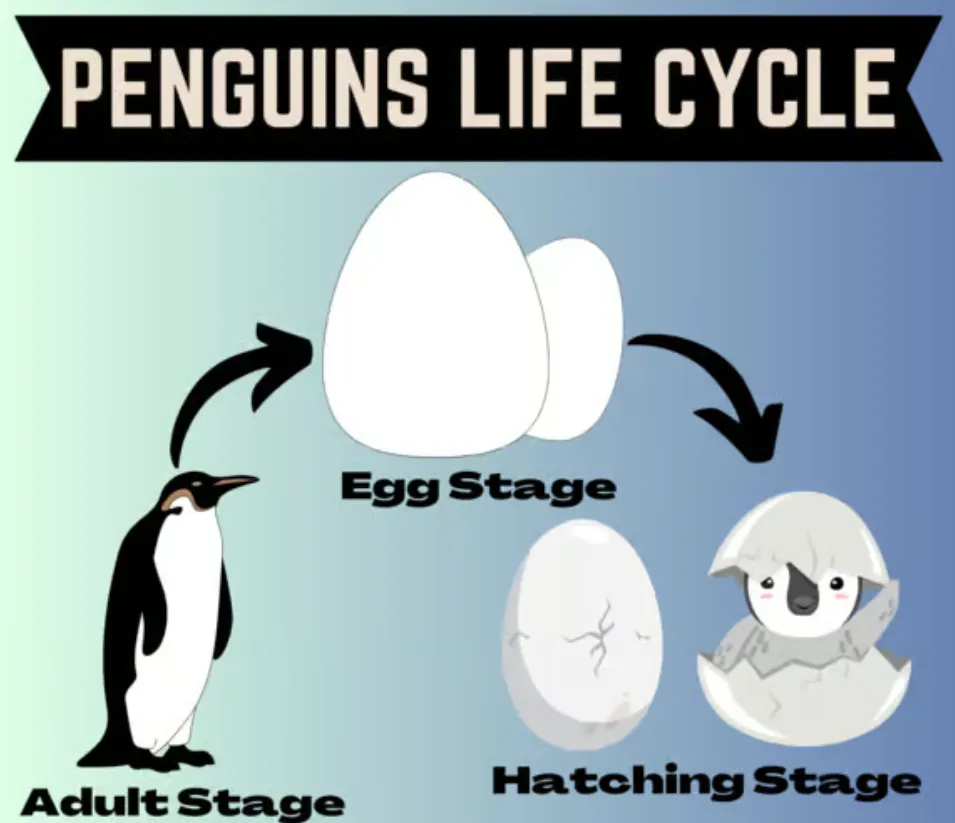
The life cycle of penguins is a remarkable journey that showcases resilience and adaptability.
Key Stages of the Life Cycle
- Egg Stage
- Penguins begin life as eggs, carefully incubated by parents in harsh conditions.
- Chick Stage
- Once hatched, chicks depend entirely on their parents for warmth and food.
- Juvenile Stage
- Young penguins develop waterproof feathers and begin learning survival skills.
- Adult Stage
- Mature penguins become independent hunters and eventually reproduce.
Survival Abilities
- Swimming Expertise
- Penguins can swim at speeds of up to 15 km/h, making them excellent predators.
- Diving Skills
- Some species can dive to depths of over 500 meters to find food.
- Thermal Regulation
- Their bodies are designed to retain heat in freezing environments.
- Group Behavior
- Penguins huddle together to conserve warmth during extreme cold.
Despite these abilities, modern threats such as climate change and food scarcity challenge their survival. Still, penguins continue to adapt, demonstrating incredible resilience.

Their Reproductive Process and raising their children
Penguin reproduction is one of the most fascinating aspects of their life cycle.
Reproductive Process
- Mating Season
- Penguins gather in large colonies during the breeding season.
- Courtship Rituals
- Males often perform displays or offer stones to attract females.
- Egg Laying
- Most species lay one or two eggs per season.
Raising Their Young
- Shared Parenting
- Both parents take turns incubating eggs and feeding chicks.
- Feeding Method
- Parents regurgitate food for their young.
- Protection from Cold
- Chicks are kept warm under the parents’ bodies or in groups.
- Crèche Formation
- In some species, chicks form groups for safety while parents hunt.
This cooperative parenting increases penguin chick survival rates, even in harsh environments.
The importance of them in the Ecosystem
Penguins play a vital role in maintaining ecological balance.
Key Contributions
- Indicator Species
- Penguins reflect the health of marine ecosystems.
- Food Chain Role
- They help regulate populations of fish and krill.
- Nutrient Cycling
- Penguin droppings enrich soil and support plant growth.
- Support for Marine Biodiversity
- Their presence influences predator-prey relationships.
- Scientific Research Value
- Penguins provide insights into the effects of climate change.
Protecting penguins means preserving the entire Ecosystem they inhabit.
Important Things That You Need To Know
Penguins are widely discussed across different contexts, from wildlife biology to sports and media. Here are some essential insights:
The term ‘penguins‘ is used not only in zoology but also in popular culture. For example, the Pittsburgh Penguins schedule is followed by millions of hockey fans worldwide, showing how the name has global recognition.
In wildlife research, penguin news often highlights conservation updates, such as declining populations or successful breeding programs. These updates are crucial for raising awareness.
Tracking the penguins’ score in sports differs completely from studying real penguins, yet both contribute to public engagement with the term.
There are many types of penguins, including Emperor, King, Adélie, and Gentoo. Each species has unique traits and habitats.
A common question is what penguins eat. Their diet mainly includes fish, squid, and krill, depending on their location.
In educational contexts like AP Bio penguins, students learn about adaptation, evolution, and ecological roles.
Understanding these different perspectives helps broaden awareness and appreciation for penguins in both scientific and cultural contexts.
What to do to protect them in nature and save the system for the future
- Reduce carbon emissions to slow climate change
- Protect marine habitats and reduce overfishing
- Support wildlife conservation organizations
- Limit plastic pollution in oceans
- Promote eco-friendly tourism practices
- Encourage research and monitoring programs
- Educate communities about penguin conservation
- Advocate for stronger environmental policies

Frequently Asked Questions (FAQs)
What is the life cycle of penguins?
It includes egg, chick, juvenile, and adult stages.
Where do penguins live?
Mostly in the Southern Hemisphere, especially Antarctica.
What do penguins eat?
Fish, squid, and krill.
How long do penguins live?
Typically 15–20 years, depending on the species.
How do penguins stay warm?
Through thick feathers, fat layers, and huddling behavior.
Are penguins endangered?
Some species are threatened due to climate change and habitat loss.
How do penguins reproduce?
They lay eggs and share parental responsibilities.
Why are penguins important?
They maintain ecological balance and indicate environmental health.
Conclusion
The life cycle of penguins is a powerful example of adaptation, resilience, and survival in extreme conditions. From their ancient origins millions of years ago to their modern-day challenges, penguins have evolved into one of the most unique bird species on Earth.
Each stage of their life—from egg to adulthood—is shaped by environmental factors, parental care, and survival instincts. Their ability to swim efficiently, withstand freezing temperatures, and raise their young cooperatively highlights their remarkable biological design.
In 2026, penguins face increasing threats from climate change, overfishing, and habitat destruction. However, ongoing research, conservation efforts, and global awareness are helping protect these incredible creatures.
Beyond their ecological importance, penguins also hold cultural and educational significance. Whether through scientific studies like AP Bio, wildlife documentaries, or even references in sports like the Pittsburgh Penguins, they remain deeply embedded in human society.
Protecting penguins is not just about saving a species—it’s about preserving the delicate balance of marine ecosystems. By taking action today, we can ensure that future generations will continue to witness the beauty and resilience of penguins in the wild.
Also Read About: life cycle of the panda
About the Author