The monarch butterfly is one of the most recognized butterflies in the world, famous for its bright orange wings, black veins, white-spotted borders, and extraordinary migration. Scientifically known as Danaus plexippus, the monarch belongs to the milkweed butterfly group and depends strongly on milkweed plants during its early life.
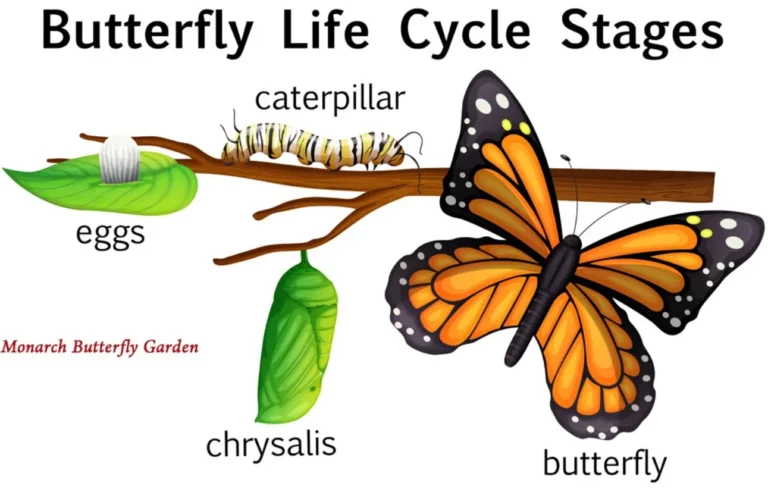
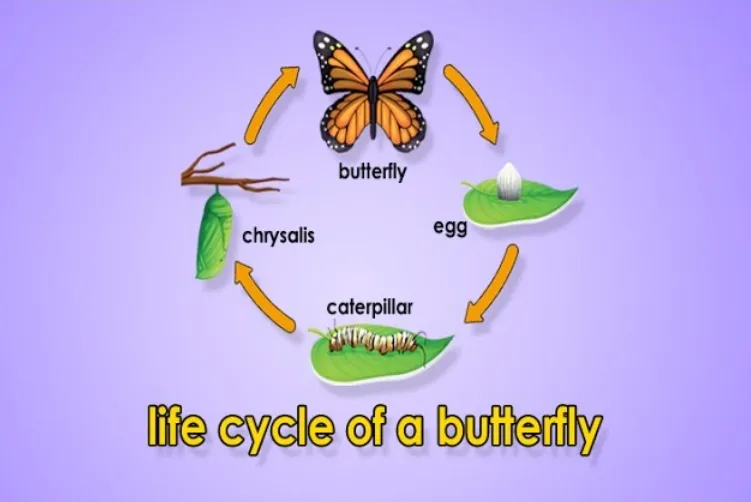
The life cycle of a monarch follows complete metamorphosis, meaning it passes through four distinct stages: egg, monarch caterpillar, chrysalis, and adult butterfly. This transformation usually takes about a month in warm conditions, but timing can shift with temperature, season, food quality, and location.
Monarchs are also important pollinators and symbols of migration. The eastern North American population travels between breeding areas in the United States and Canada and overwintering forests in central Mexico. In the 2025–2026 winter count, eastern monarchs occupied 2.93 hectares of forest, a 64% increase from the previous season, though still not a guarantee of long-term recovery.
As of the latest U.S. Fish & Wildlife Service guidance, monarchs have been proposed for listing as threatened under the U.S. Endangered Species Act, but federal protections are not yet active until a final rule takes effect.
Quick Answers: Most Common Questions
Q: What are the four stages in the life cycle of a monarch?
A: The four stages are egg, larva or monarch caterpillar, pupa or chrysalis, and adult monarch butterfly.
Q: What does a monarch caterpillar eat?
A: A monarch caterpillar eats only milkweed and closely related host plants. Adult monarchs drink nectar from many kinds of flowers.
Q: How long does a monarch butterfly live?
A: Summer adults usually live 2–5 weeks, while the migratory generation can live up to 8 or 9 months.
Quick Life Cycle Table
| Stage | What Happens | Usual Time | Main Need |
| Egg | A female lays one tiny egg on milkweed | 3–5 days | Safe milkweed leaf |
| Monarch Caterpillar | Eats milkweed, grows fast, molts 5 times | 10–14 days | Fresh milkweed |
| Chrysalis | The body transforms into a green pupa | 8–15 days | Safe hanging place |
| Adult Butterfly | Flies, feeds, mates, migrates, and lays eggs | 2–5 weeks or 8–9 months | Nectar flowers |
This table is simplified for quick reading. In real life, monarch life cycles change with weather, plant quality, disease pressure, predators, and whether the butterfly is part of the normal summer generation or the long-lived migratory generation.

Important Things That You Need To Know
Many people search for the word monarch, but not every search means the same thing. In this article, monarch refers to the monarch butterfly, not a king, queen, brand, furniture product, or travel destination.
The phrase monarch meaning can refer to royalty, leadership, or the butterfly’s name. In butterfly biology, the word “monarch” usually points to Danaus plexippus, the orange-and-black migratory species. The name fits because this butterfly is large, visible, and widely known across North America.
The term monarch caterpillar is directly related to the life cycle. It describes the larval stage that feeds on milkweed before forming the chrysalis. This stage is especially important because caterpillars cannot survive without suitable host plants.
Other LSI keywords, such as Monarch Mountain, Nike Monarch, and Monarch Murphy beds, are not biologically connected to the butterfly. Monarch Mountain is commonly associated with a place name, Nike Monarch is a shoe-related search term, and Monarch Murphy Beds refers to furniture. They may appear in search data because the word “monarch” has many meanings.
For SEO clarity, the best approach is not to stuff these terms into every sentence. Instead, a helpful article should clearly state that the main topic is the monarch butterfly‘s life cycle. This improves user experience because readers looking for nature, insects, gardening, classrooms, or conservation get the exact information they need.
The History Of Their Scientific Naming, Evolution, and Their Origin
Scientific Naming of Danaus plexippus
The monarch butterfly’s accepted scientific name is Danaus plexippus. Taxonomic records trace the species to Carl Linnaeus, who described it in 1758 under the earlier name Papilio plexippus. Modern classification places it in the family Nymphalidae, subfamily Danainae.
Evolution with Milkweed
Monarch evolution is closely linked to milkweed plants. Milkweed contains defensive chemicals called cardenolides, which are toxic or unpleasant to many animals. Monarch caterpillars evolved the ability to feed on milkweed and store some of these compounds, making adults less attractive to predators.
Origin and Natural Range
The monarch butterfly is mainly associated with the Americas, particularly North, Central, and South America. It also appears in places such as Hawaii, Australia, and other regions where host plants and climate allow survival.
Why the Name Matters
The name “monarch” is not just beautiful; it helps people recognize one of the world’s most iconic migratory insects. Today, the name connects science, education, gardening, migration tracking, and conservation.
Their Reproductive Process, Giving Birth And Rising Their Children
Monarchs Do Not Give Birth Like Mammals
A monarch butterfly does not give live birth. Instead, the female lays eggs. Each egg contains a developing larva that later hatches into a tiny monarch caterpillar.
The female usually lays eggs one at a time on milkweed leaves, often on the underside of the leaf or near the top of the plant. This placement gives the newly hatched caterpillar immediate access to food.
Mating Process
Adult monarchs mate after reaching sexual maturity. In summer generations, adults often begin mating within a few days after emerging. Mating can last for many hours, and both males and females may mate more than once during their lives.
Egg Laying
A female monarch may lay hundreds of eggs during her lifetime. The U.S. Forest Service notes that female monarchs commonly lay 100 to 300 eggs, while Monarch Joint Venture reports typical ranges of 300–500 eggs over a female’s egg-laying period under suitable conditions.
Raising Their Young
Monarchs do not raise their young after eggs are laid. There is no feeding, guarding, teaching, or nest care. The “parental care” happens mainly through smart host-plant selection.
By choosing milkweed, the female gives the caterpillar the only food it can eat. After hatching, the caterpillar must survive on its own, facing predators, weather, parasites, and food shortages.
Stages of the Monarch Butterfly Life Cycle
1. Egg Stage
The egg stage begins when a female monarch lays a tiny cream, yellowish, or off-white egg on milkweed. The egg is about the size of a pinhead and has fine ridges.
Inside the egg, the larva develops quickly. In warm conditions, hatching often happens in 3–5 days. The tiny caterpillar may eat part of its eggshell before moving on to the milkweed leaf.
2. Monarch Caterpillar Stage
The monarch caterpillar stage is the main growth stage. The caterpillar eats milkweed almost constantly and grows rapidly.
It passes through five instars, which are growth periods between molts. During this stage, the caterpillar can increase its body mass dramatically. Monarch Joint Venture notes that monarch larvae can grow to nearly 2,000 times their original mass.
3. Chrysalis Stage
When fully grown, the caterpillar usually leaves the milkweed plant to find a safe place. It spins a silk pad, hangs in a “J” shape, and sheds its outer skin, revealing the green chrysalis.
Inside the chrysalis, the insect reorganizes into a butterfly. Wings, legs, antennae, eyes, and adult organs form during this hidden transformation.
4. Adult Monarch Butterfly Stage
The adult butterfly emerges from the chrysalis in a process called eclosion. At first, its wings are soft and folded. It hangs quietly while pumping fluid into the wings and allowing them to dry.
After several hours, the adult can fly. In summer, adults focus on feeding, mating, and egg-laying. The late-season migratory generation focuses on storing energy, traveling long distances, overwintering, and reproducing later in the season.
Their Main Diet, Food Sources, And Collection Process Explained
Food of the Monarch Caterpillar
The monarch caterpillar has a very strict diet. It feeds on milkweed and closely related host plants. Without milkweed, the caterpillar cannot complete its life cycle.
Common host plants include different species of Asclepias, such as common milkweed, swamp milkweed, butterfly milkweed, and showy milkweed, depending on the region. Native milkweed is generally recommended because it supports local ecosystems better than non-native options.
Food of the Adult Monarch
Adult monarchs drink nectar from flowers. Nectar provides sugar-rich energy for flying, mating, migration, and survival.
Unlike the caterpillar, the adult is not limited to milkweed. It may visit many flowering plants, especially those that bloom during spring breeding, summer reproduction, and fall migration.
How They Collect Food
A monarch butterfly collects nectar with a long, tube-like mouthpart called a proboscis. When not feeding, the proboscis stays coiled. When the butterfly lands on a flower, it uncoils the proboscis and drinks liquid nectar.
Monarchs also use their senses to find food. Their vision helps locate flowers, and taste receptors on their feet help them evaluate plant surfaces and nectar sources.
Why Diet Matters
Milkweed supports the early stage, while nectar supports the adult stage. A healthy monarch habitat needs both. A garden with only nectar flowers may feed adults, but cannot produce caterpillars. A garden with only milkweed may support eggs and larvae, but may not provide enough energy for adult migration.

How Long Does A Monarch Butterfly Live
The lifespan of a monarch butterfly depends on season, generation, environment, predators, disease, and migration behavior. There is no single lifespan that applies to every monarch.
- Egg stage: The egg usually lasts about 3–5 days before hatching. Warmer temperatures can speed development, while cooler temperatures may slow it.
- Caterpillar stage: The monarch caterpillar usually feeds and grows for around 10–14 days. During this time, it molts five times and becomes much larger.
- Chrysalis stage: The chrysalis stage often lasts 8–15 days under normal warm conditions. Before emergence, the orange and black wing pattern becomes visible through the chrysalis covering.
- Summer adult lifespan: Most summer adult monarchs live about 2–5 weeks. These generations focus on mating and laying eggs quickly.
- Migratory adult lifespan: The late-summer or fall generation lives much longer. These monarchs enter a delayed reproductive state, migrate, overwinter, and may live 8–9 months.
- Full life cycle time: From egg to adult, development often takes about 30 days, but this can vary by temperature and region.
- Predator pressure: Many monarchs do not reach adulthood. Insects, spiders, birds, and other predators eat eggs and caterpillars. Parasites and diseases also reduce survival.
- Weather impact: Heat waves, storms, drought, freezing conditions, and lack of nectar can shorten lifespan. Climate instability is one reason monarch conservation is difficult.
- Migration cost: Long-distance migration requires strong wings, fat reserves, safe roosting sites, and nectar along the route. A monarch may survive for months, but only if it can find enough energy and avoid extreme weather.
- Captivity impact: A monarch may live briefly in captivity, but large-scale captive rearing is not recommended as a conservation solution because it can increase disease risk, reduce natural fitness, and confuse population monitoring.
Monarch Butterfly Lifespan in the Wild vs. in Captivity
Lifespan in the Wild
In the wild, monarch lifespan is shaped by natural selection. Summer adults usually live for a few weeks, while migratory adults can live for many months. Wild monarchs face predators, storms, parasites, pesticides, habitat loss, and food shortages.
However, wild monarchs also develop in natural light, at natural temperatures, and in response to natural seasonal cues. These cues matter for migration, reproduction, and timing.
Lifespan in Captivity
In captivity, some individuals may avoid predators, but captivity does not automatically mean a healthier or longer life. Poor sanitation, crowding, improper food, wrong humidity, and disease can harm monarchs.
Large-scale captive breeding can also spread pathogens and produce butterflies less suited for wild migration. Conservation groups warn that mass rearing and release may do more harm than good.
Best View
Small educational rearing may help people learn, but the best long-term support is outdoor habitat: native milkweed, native nectar plants, clean planting practices, and reduced pesticide use.
Importance of the Monarch Butterfly In This Ecosystem
Pollination Support
Adult monarchs visit flowers for nectar and can move pollen from flower to flower. They are not the only pollinators, but they are part of a larger pollinator community that includes bees, moths, flies, beetles, and other butterflies.
Food Web Role
Monarch eggs, caterpillars, chrysalises, and adults become food for other organisms. Even though milkweed chemicals make monarchs distasteful to many predators, they are still part of the food chain.
Indicator of Habitat Health
The monarch butterfly is often used as a symbol of the health of grassland, meadow, roadside, and pollinator habitats. When milkweed and nectar plants disappear, monarch numbers can fall.
Connection Across Countries
Monarch migration connects Canada, the United States, and Mexico. Conservation depends on habitat protection across breeding areas, migration routes, and overwintering forests.
Educational Value
The life cycle of a monarch is one of the easiest natural transformations for students and families to observe. It teaches complete metamorphosis, plant-insect relationships, migration, the impact of climate change, and conservation responsibility.
Current Conservation Importance
Recent data show mixed signals. Eastern monarchs increased during the 2025–2026 winter count. Still, the western population remains near historic lows, with Xerces reporting about 12,260 monarchs in the late 2025 peak count and 6,464 in the later winter survey.
What To Do To Protect Them In Nature And Save The System For The Future
1. Plant Native Milkweed
- Plant native milkweed species suited to your region.
- Milkweed is essential because monarch caterpillars depend on it.
- Avoid planting random non-native milkweed without checking local guidance.
2. Grow Nectar Flowers from Spring to Fall
- Adult monarchs need nectar during breeding and migration.
- Choose flowers that bloom at different times.
- Native asters, goldenrods, blazing stars, coneflowers, and milkweed flowers can help in many regions.
3. Avoid Pesticides and Herbicides
- Insecticides can kill caterpillars and adult butterflies.
- Herbicides can remove milkweed and wildflowers.
- Even “pollinator plants” can be harmed by systemic pesticides.
4. Be Careful with Tropical Milkweed
- Tropical milkweed can remain green in warm climates, potentially increasing disease risk.
- U.S. Fish & Wildlife Service and Xerces recommend native milkweed over tropical milkweed.
- In areas where tropical milkweed persists through winter, replacing it with native species is safer.
5. Protect Larger Habitat
- Support meadow restoration, roadside habitat, prairie protection, and overwintering forest conservation.
- Monarchs need connected habitat, not just isolated gardens.
- Schools, farms, parks, homes, and cities can all help.

Fun & Interesting Facts About Monarch Butterfly
- Monarchs undergo a complete metamorphosis, changing from egg to caterpillar to chrysalis to an adult butterfly.
- The monarch caterpillar eats only milkweed, making milkweed the foundation of the entire life cycle.
- A monarch egg is tiny, but the caterpillar grows rapidly and molts several times.
- The chrysalis is not a cocoon. A cocoon is usually a silk covering made by moths, while a monarch forms a chrysalis.
- The orange-and-black wing pattern is a warning signal to predators.
- Some predators learn to avoid monarchs because milkweed chemicals can make them taste bad or make them sick.
- Male monarchs have black scent-scale spots on their hind wings. Females do not have these same spots.
- Adult monarchs do not grow larger after emerging. All major growth happens during the caterpillar stage.
- The migratory generation can live many months longer than the summer generations.
- Many monarchs migrate to places their parents and grandparents never visited, guided by inherited biological cues.
- The eastern monarch population is usually measured by the area of forest covered in Mexico, not by counting every individual butterfly.
- A strong monarch garden needs both milkweed for caterpillars and nectar flowers for adults.
Frequently Asked Questions (FAQs)
Q: What is the complete life cycle of a monarch butterfly?
A: The complete life cycle of a monarch butterfly has four stages: egg, monarch caterpillar, chrysalis, and adult butterfly. This process is called complete metamorphosis.
Q: How long does it take for a monarch caterpillar to become a butterfly?
A: In warm conditions, the process from egg to adult often takes about 30 days. The caterpillar stage usually lasts around 10–14 days, followed by the chrysalis stage.
Q: Why does a monarch caterpillar need milkweed?
A: A monarch caterpillar needs milkweed because it is the larval host plant. The caterpillar cannot survive on ordinary garden leaves. Milkweed provides both food and chemical defense.
Q: Do monarch butterflies raise their babies?
A: No. Monarch butterflies do not raise their young. The female lays eggs on milkweed, and the caterpillar survives independently after hatching.
Q: Are monarch butterflies endangered?
A: Monarch conservation status depends on the system used. In the United States, the U.S. Fish & Wildlife Service has proposed listing the monarch as threatened, but federal protections do not take effect until a final rule is issued. Populations remain vulnerable due to habitat loss, pesticide exposure, climate stress, and threats to overwintering habitat.
Final Word
The life cycle of a monarch butterfly is one of nature’s most powerful examples of transformation. From a tiny egg on milkweed to a striped monarch caterpillar, then a green chrysalis, and finally an orange-and-black adult, every stage has a clear purpose.
Monarchs are beautiful, but they are also fragile. Their survival depends on healthy milkweed, nectar flowers, safe migration routes, and protected overwintering habitats. Recent population increases in eastern monarchs offer hope, but western monarch numbers and long-term habitat loss indicate that conservation remains urgent.
The best way to help is simple and practical: plant native milkweed, grow pesticide-free nectar flowers, protect wild habitat, and teach others why monarchs matter. When people protect monarchs, they also protect pollinators, native plants, and the wider ecosystem that supports life around us.
Also Read: house fly life cycle
About the Author