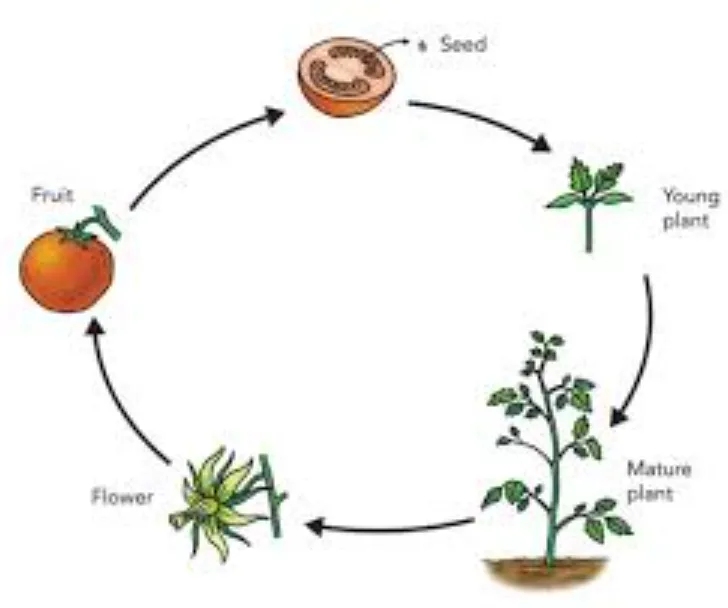
The life cycles in plants describe how plants begin, grow, reproduce, spread, and renew their generations. A plant may start from a seed, spore, cutting, bulb, tuber, or tiny offshoot, depending on the type of plant. In most familiar flowering plants, the cycle begins when a seed absorbs water, germinates, grows roots and shoots, becomes a mature plant, produces flowers or cones, forms seeds, and finally spreads those seeds into new places.
Plants differ from animals because many can reproduce in more than one way. Some reproduce sexually through pollination, fertilization, and seed formation. Others can reproduce asexually through runners, bulbs, rhizomes, leaf cuttings, or offsets. This is why many house plants, succulent plants, and air plants can be multiplied at home without seeds.
Understanding plant life cycles helps gardeners, farmers, students, and plant lovers know when to water, fertilize, prune, repot, or collect seeds. It also explains why plants are so important for oxygen, food, soil protection, pollinators, and the balance of nature.
Q: What are the main stages of the life cycles in plants?
A: The main stages are seed or spore, germination, growth, reproduction, and seed or spore dispersal.
Q: Do all plants grow from seeds?
A: No. Many plants grow from seeds, but mosses and ferns grow from spores. Some plants also grow from bulbs, tubers, runners, cuttings, or offsets.
Q: Why are plant life cycles important?
A: They explain how plants survive, reproduce, feed ecosystems, support pollinators, and renew forests, farms, gardens, and natural habitats.
Quick Life Cycle Table
| Stage | What Happens | Simple Example |
| Seed or Spore | The plant’s new life begins in a protected form. | Bean seed, fern spore |
| Germination | Water, oxygen, and warmth trigger growth. | Root comes out first |
| Seedling Stage | Young leaves and stems begin to develop. | Small tomato plant |
| Vegetative Growth | Roots, stems, and leaves grow stronger. | Bigger house plant |
| Reproductive Stage | Flowers, cones, spores, or offsets form. | Flowering plant blooms |
| Pollination/Fertilization | Pollen reaches the female part of the flower. | Fruit begins forming |
| Seed/Fruit Formation | Seeds mature inside fruits, pods, or cones. | Apple, pea pod, pine cone |
| Dispersal | Seeds or spores spread to new places. | Wind, water, animals |
The History Of Their Scientific Naming, Evolution, and Origin
Scientific Naming of Plants
Plants are named using binomial nomenclature, a two-part naming system that uses the genus and species. For example, the sunflower is called Helianthus annuus. This system helps scientists identify plants accurately across countries and languages.
Evolution of Plant Life Cycles
Early plants evolved from green algae-like ancestors. Over time, plants developed roots, stems, leaves, spores, seeds, flowers, and fruits. One of the most important features of plant evolution is alternation of generations, in which plants alternate between a gametophyte phase and a sporophyte phase.
Origin of Land Plants
Land plants likely originated from ancient freshwater green algae. As they adapted to land, they developed waxy coatings, vascular tissues, stronger stems, and reproductive structures that helped them survive outside water.
Rise of Seed Plants and Flowering Plants
Seed plants became successful because seeds protect the embryo and store food. Later, flowering plants evolved fruits and flowers, which improved pollination and seed dispersal. This made them the most diverse plant group on Earth today.

Their Reproductive Process, Giving Birth, And Rising Their Children
Plants Do Not Give Birth Like Animals
Plants do not “give birth” in the animal sense. Instead, they create new plants through seeds, spores, or vegetative parts. A seed contains a tiny embryo, stored food, and a protective seed coat.
Sexual Reproduction in Flowering Plants
In flowering plants, reproduction usually begins with pollination. Pollen moves from the male part of the flower, called the anther, to the female part, called the stigma. This can happen by wind, water, insects, birds, bats, or self-pollination.
After pollination, fertilization occurs. The ovule becomes a seed, and in flowering plants, the ovary often develops into a fruit.
Asexual Reproduction in Plants
Many plants reproduce without seeds. Succulent plants often grow new plants from leaves or offsets. House plants may grow from stem cuttings. Strawberries use runners; potatoes use tubers; onions use bulbs; and ginger uses rhizomes.
How Plants “Raise” Their Young
Plants support young growth by storing nutrients in seeds, protecting embryos with seed coats, and placing seeds in fruits or cones. After germination, the young plant depends on sunlight, water, minerals, and air to make its own food.
Stages Of Life Cycles in Plant Life Cycles
1. Seed or Spore Stage
The first stage of a plant’s life cyclethe cycle begins with a seed or spore. A seed is a protected structure that contains an embryo and stored food. Spores are simpler reproductive units found in plants like mosses and ferns.
Seeds may stay dormant until conditions are right. This dormancy helps plants survive drought, cold, fire, or seasonal changes.
2. Germination Stage
Germination begins when a seed absorbs water. The seed coat softens, the embryo becomes active, and the first root begins to grow downward. Then the shoot grows upward toward the light.
For successful germination, most plants need water, oxygen, suitable temperature, and sometimes light or darkness.
3. Growth and Maturity Stage
After germination, the plant becomes a seedling. It grows leaves, stems, and roots. Through photosynthesis, leaves use sunlight, carbon dioxide, and water to make food.
As the plant matures, its root system expands, stems become stronger, and leaves collect more sunlight. This stage is very important for indoor plants, crops, trees, and garden plants.
4. Reproduction and Dispersal Stage
When mature, the plant enters the reproductive stage. Flowering plants produce flowers, non-flowering seed plants produce cones, and spore-producing plants release spores.
After fertilization, seeds develop and spread through wind, water, animals, gravity, or bursting seed pods. This final stage restarts the cycle.
Their Main Diet, Food Sources, And Collection Process Explained
Plants do not eat food like animals. Instead, most plants make their own food through photosynthesis. This process happens mainly in the leaves, where chlorophyll captures sunlight.
The main “food sources” for plants are sunlight, carbon dioxide, water, and minerals. Roots collect water and dissolved nutrients from the soil. Leaves take in carbon dioxide from the air through small openings called stomata.
Plants also need minerals such as nitrogen, phosphorus, potassium, calcium, magnesium, and iron. These nutrients support leaf growth, root strength, flowering, fruiting, and overall health.
For home gardening, knowing how to apply fertilizer is important. Too little fertilizer can cause weak growth, pale leaves, and poor flowering. Too much fertilizer can burn roots, damage leaves, and build up soil salts.
Indoor plants usually need lighter feeding than outdoor crops. Succulent plants need very low fertilizer because they grow slowly. Air plants absorb moisture and nutrients through their leaves, so they need special diluted fertilizer, not heavy soil feeding.
Important Things That You Need To Know
The phrase life cycles in plants covers many types of plants, from giant trees to tiny mosses. Some plants complete their life cycle in a few weeks, while others live for hundreds or even thousands of years.
For indoor plants, the life cycle is strongly affected by light, pot size, watering, humidity, and fertilizer. A healthy indoor plant may not flower every year, but it can still grow new leaves, roots, and shoots.
Succulent plants store water in their leaves, stems, or roots. Because of this, their growth cycle is slower, and they usually need dry soil between watering. Overwatering can shorten their lifespan.
House plants often reproduce through cuttings, division, or offsets. This makes them easy to multiply without waiting for flowers or seeds to form.
Air plants are different because they do not need soil. Their roots mainly help them attach to trees or surfaces, while their leaves absorb water and nutrients.
The term ” Plants vs. Zombies ” is not related to real botany. It is a game phrase, but real plants do have amazing defense systems. Some make thorns, bitter chemicals, sticky sap, or strong smells to protect themselves from pests.

How long do life cycles in Plants Live
The lifespan of plants varies widely because different plant groups have different growth habits, environments, and survival strategies.
- Annual plants complete their life cycle in one growing season. They germinate, grow, flower, produce seeds, and die within months. Examples include many grains, vegetables, and garden flowers.
- Biennial plants usually live for two years. In the first year, they grow leaves and roots. In the second year, they flower, make seeds, and die. Carrots and some foxgloves follow this pattern.
- Perennial plants live for more than two years. Many return season after season from roots, stems, bulbs, or woody trunks. Trees, shrubs, grasses, and many house plants are perennials.
- Short-lived indoor plants may live only 1 to 3 years if they are seasonal, poorly cared for, or grown mainly for their flowers.
- Long-lived house plants can live for decades with proper light, watering, pruning, and repotting.
- Succulent plants often live for many years because they store water and grow slowly. Some may live for decades in good conditions.
- Air plants often live for several years. After flowering, many produce pups, which continue the plant’s line even when the parent plant declines.
- Trees can live from a few decades to hundreds of years. Some species are extremely long-lived because they grow slowly and repair damage over time.
- Plant lifespan depends on care. Light, water, temperature, pests, soil quality, and human disturbance all affect how long plants survive.
Life Cycles in Plants: Lifespan in the Wild vs. in Captivity
Lifespan in the Wild
In the wild, plants face drought, floods, fire, storms, grazing animals, pests, disease, and competition for sunlight. Many seeds never germinate, and many seedlings die before maturity.
However, wild plants are adapted to their natural habitats. Native plants often survive well because their life cycle matches local seasons, soil, rainfall, and pollinators.
Lifespan in Captivity or Cultivation
In gardens, farms, greenhouses, and homes, plants often receive regular watering, fertilizer, pruning, pest control, and protection from harsh weather. This can increase survival and improve growth.
But captivity can also create problems. Indoor plants may suffer from low light, dry air, overwatering, poor drainage, root crowding, and incorrect fertilizer use.
Key Difference
Wild plants depend on the natural balance. Captivated or cultivated plants depend more on human care. A houseplant may live longer indoors than outdoors if its needs are met, but it can also die quickly if the environment is unsuitable.
Importance of Life Cycles in Plants In This Ecosystem
Plants Produce Oxygen and Food
Through photosynthesis, plants release oxygen and create organic food. This supports animals, insects, birds, humans, fungi, and microorganisms.
Plants Support Pollinators
Flowering plants provide nectar and pollen for bees, butterflies, birds, bats, and other pollinators. In return, pollinators help many plants produce seeds and fruits.
Plants Protect Soil
Roots hold soil together and reduce erosion. Plant cover slows rainwater runoff and helps water enter the ground.
Plants Build Habitats
Forests, grasslands, wetlands, gardens, and farms all depend on plant life cycles. Plants provide shelter, nesting sites, shade, and food for food chains.
Plants Store Carbon
Plants absorb carbon dioxide and store carbon in leaves, stems, roots, fruits, and soil. This helps regulate the climate and supports healthier ecosystems.
What To Do To Protect Them In Nature And Save The System For The Future
Protect Native Plant Habitats
- Avoid destroying forests, wetlands, grasslands, and natural gardens.
- Support local planting projects using native species.
- Reduce unnecessary land clearing.
Use Water Wisely
- Water plants deeply but not wastefully.
- Use mulch to hold soil moisture.
- Choose drought-tolerant plants for areas with limited water.
Reduce Chemical Overuse
- Avoid heavy pesticide use.
- Use organic compost and balanced fertilizer.
- Protect bees, butterflies, and soil organisms.
Grow More Pollinator-Friendly Plants
- Plant flowers that bloom in different seasons.
- Keep some natural areas for insects and birds.
- Avoid spraying chemicals during flowering.
Care for Indoor and House Plants Responsibly
- Learn the correct watering and light needs.
- Do not overfertilize.
- Propagate healthy plants instead of letting them go to waste.

Fun & Interesting Facts About Life Cycles in Plants
- Some seeds can stay dormant for years before germinating.
- Bamboo can grow extremely fast under ideal conditions.
- Ferns do not make seeds; they reproduce through spores.
- Many succulent plants can grow from a single leaf.
- Air plants can live without soil because they absorb moisture through their leaves.
- Some plants need fire, cold, or animal digestion to help their seeds germinate.
- A flower is not just a decoration; it is a reproductive structure.
- Fruits help protect and spread seeds.
- Some plants can clone themselves naturally through runners, bulbs, or rhizomes.
- Indoor plants may grow slowly in winter because light levels are lower.
Frequently Asked Questions (FAQs)
Q: What is the meaning of life cycles in plants?
A: It means the full process by which plants begin life, grow, reproduce, spread seeds or spores, and start a new generation.
Q: What are the four main stages of the plant life cycle?
A: The four common stages are seed, germination, growth, and reproduction.
Q: Do indoor plants follow the same life cycle?
A: Yes, but indoor conditions can change the speed of growth, flowering, reproduction, and lifespan.
Q: How do succulent plants reproduce?
A: Many succulents reproduce through seeds, leaves, stem cuttings, or offsets called pups.
Q: How should I dose fertilizer for plants?
A: Use a diluted, balanced fertilizer during active growth. Feed less in winter and avoid overfertilizing, as it can damage roots.
Final Word
The life cycles in plants show how deeply connected plants are with nature, food, oxygen, soil, climate, and human life. From a tiny seed to a mature tree, every stage has a purpose. Germination begins the journey, growth builds strength, reproduction creates the next generation, and dispersal spreads life into new places.
Whether you care for indoor plants, grow vegetables, collect succulent plants, or enjoy air plants, understanding the plant life cycle helps you make better decisions. You can water more wisely, fertilize correctly, protect pollinators, and support healthier ecosystems.
Plants may look silent, but their life cycles are active, complex, and essential. By protecting plants and their habitats, we protect the future of food, biodiversity, clean air, and natural balance.
Also Read: life cycle of a monarch
About the Author