Ferns are fascinating plants that have been around for millions of years. Known for their elegant fronds, they belong to the group of plants called Pteridophytes, which reproduce via spores rather than seeds. The life cycle of ferns follows a unique pattern that involves both sexual and asexual reproduction. Understanding their life cycle can help gardeners, researchers, and nature enthusiasts appreciate these plants more.
Quick Answers to Common Questions About Fern Life Cycle
- How do ferns reproduce?
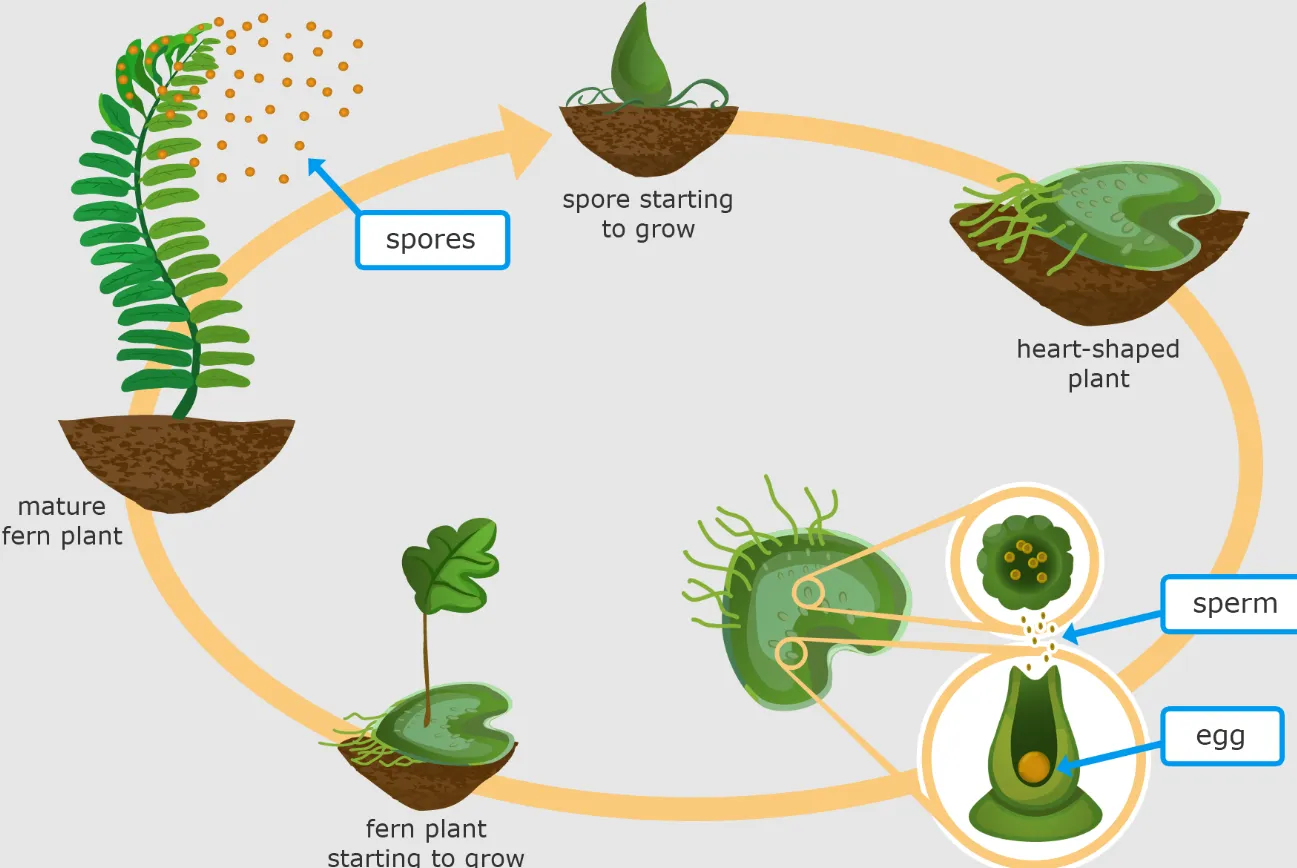
- Ferns reproduce through spores, which are released from the underside of their fronds. These spores germinate to form a small, heart-shaped structure called a gametophyte, where fertilization occurs.
- What is the role of the gametophyte in fern reproduction?
- The gametophyte is a crucial stage in the fern life cycle, during which fertilization occurs. Once fertilization occurs, it develops into the sporophyte, the familiar fern plant that we see.
- How long does the fern’s life cycle take?
- The complete cycle can take several months to a few years, depending on the species and environmental conditions. The cycle includes spore release, gametophyte development, fertilization, and sporophyte growth.
Quick Life Cycle Table of Ferns
| Stage | Description |
| Spore Release | Ferns produce spores in the sporangia, which are located on the undersides of their fronds. |
| Germination | Spores germinate into a small, heart-shaped gametophyte that grows on the ground. |
| Fertilization | Sperm cells from the gametophyte swim through water to reach the egg cells, resulting in fertilization. |
| Sporophyte Formation | After fertilization, the sporophyte develops and becomes the mature fern plant. |
| Spore Production | The mature fern produces spores in sporangia, completing the cycle. |

The History of Their Scientific Naming
The scientific name of ferns comes from the family Pteridaceae, derived from the Greek word pteron, meaning “wing,” due to the wing-like structure of their fronds. The term “fern” itself comes from Old English, with roots in the word fearn. Early botanists classified ferns in various ways, but as our understanding of plant biology evolved, they were categorized under the class Pteridophyta, which includes all vascular plants that reproduce via spores. Today, over 10,000 species of ferns are recognized, with a wide distribution across the globe, from tropical regions to temperate zones.
Their Evolution and Their Origin
Ferns have a long evolutionary history, tracing back more than 300 million years. They are one of the oldest plant groups, originating in the late Devonian period. These plants evolved from ancient spore-producing plants among the first to colonize land. Over time, ferns diversified, adapting to a range of environments, from dense tropical rainforests to temperate woodlands.
Early ferns were similar to modern-day mosses but evolved a more complex vascular system, which allowed them to grow larger and more robust. Fossil records show that ferns once dominated Earth’s flora, particularly during the Carboniferous period, when they were much larger and formed vast swamp forests. The adaptations of ferns, including their ability to produce spores and survive in diverse climates, made them successful survivors through the ages.
Ferns still hold ecological importance today, contributing to the stability of ecosystems worldwide. Their ability to thrive in low-light conditions and their role in the nitrogen cycle have made them integral to both natural and cultivated environments.
Their Main Food and Its Collection Process
Ferns, like other plants, make their food through photosynthesis. They take in carbon dioxide from the air and water from the soil through their roots. Using sunlight, chlorophyll in the fronds converts carbon dioxide and water into glucose, which is used as energy for growth. Ferns also absorb minerals and nutrients from the soil through their roots, supporting their development.
Unlike flowering plants, ferns do not have flowers or fruits. Instead, they have specialized cells in their fronds that allow them to absorb light and perform photosynthesis efficiently. Ferns also have a unique ability to grow in the shade, which allows them to thrive in environments where other plants might not.
Their Life Cycle and Ability to Survive in Nature
The fern life cycle is a beautiful example of plant evolution. Ferns start as microscopic spores that germinate in favorable conditions, such as moist, shaded areas. Once the spores germinate, they form a gametophyte. This small, heart-shaped plant is crucial for the reproduction of ferns. The gametophyte produces both male and female reproductive organs.
Fertilization occurs when water allows sperm from the male organs to swim to the female organs. Once fertilization occurs, the new sporophyte (the fern plant) begins to grow from the gametophyte. The mature fern plant releases spores, starting the cycle anew. This ability to produce spores and survive through different stages allows ferns to adapt to a variety of habitats, making them incredibly resilient in nature.
Their Reproductive Process and Raising Their Children
Ferns’ reproductive strategy is unique due to their alternation of generations. The adult fern plant, or sporophyte, produces spores in specialized sporangia. The wind disperses these spores and, upon landing in suitable environments, they germinate into gametophytes. This gametophyte is the “parent” of the next generation, playing a crucial role in ensuring the survival of the species.
The gametophyte produces sperm and eggs, leading to fertilization and the formation of a new sporophyte, completing the life cycle. Unlike some plants that rely heavily on external factors for seed dispersal, ferns are more adaptable, thriving in a wide variety of habitats. The process of asexual reproduction via spores also contributes to their ability to multiply quickly in favorable conditions, such as after a disturbance.
Importance of Them in This Ecosystem
Ferns play a vital role in ecosystems worldwide. As primitive plants, they are among the first colonizers of disturbed environments. They help prevent soil erosion by stabilizing the ground with their dense root systems. Additionally, ferns contribute to the nitrogen cycle by enriching the soil, making it more fertile for other plant species.
Ferns also provide habitat and food for various species of animals, including insects, birds, and small mammals. Their ability to grow in low-light conditions makes them essential for understory ecosystems in forests. Moreover, ferns contribute to the aesthetic beauty of forests and gardens, enriching human life by being part of natural landscapes and ornamental plantings.

What to Do to Protect Them in Nature and Save the System for the Future
To protect ferns and their ecosystems, here are several key actions:
- Conserve Natural Habitats: Protect forests, wetlands, and other natural habitats where ferns thrive.
- Reduce Pollution: Minimize water pollution, as it can harm fern populations.
- Plant Native Fern Species: Support the planting of native fern species in local gardens and landscapes.
- Promote Awareness: Educate the public about the importance of ferns and their ecological contributions.
- Support Research: Encourage scientific studies to understand better fern biology and how to preserve them.
Frequently Asked Questions (FAQs)
- What are ferns?
- Ferns are non-flowering, vascular plants that reproduce through spores. They have unique life cycles, alternating between a gametophyte and a sporophyte stage.
- How do ferns reproduce?
- Ferns reproduce via spores released from sporangia on the underside of their fronds. These spores germinate into gametophytes, where fertilization occurs.
- Are all ferns the same?
- No, there are thousands of species of ferns, each adapted to different environments. Ferns vary in size, shape, and habitat preferences.
- Can ferns be toxic to pets?
- Some ferns, like the Boston fern, are safe for pets, while others may be mildly toxic. It’s important to check specific species for pet safety.
- How long does it take for a fern to grow?
- The growth of a fern depends on the species and environmental conditions. The complete life cycle can take anywhere from several months to a few years.
- Where do ferns grow best?
- Ferns thrive in moist, shaded areas. They are commonly found in rainforests, woodlands, and wetlands.
- How can I propagate ferns?
- Ferns can be propagated through spores or by dividing the rhizomes of mature plants.
- Do ferns need a lot of sunlight?
- Most ferns prefer indirect light and are well-suited to shaded or partially shaded areas. Direct sunlight can scorch their fronds.
Conclusion
Ferns are more than just decorative plants; they are crucial to the health of ecosystems worldwide. With their unique life cycles, ability to thrive in diverse environments, and role in ecological processes, they remain among nature’s most fascinating plants. By protecting ferns and their habitats, we can ensure these ancient plants continue to flourish and contribute to the environment for generations to come.
Also Read: polar bear life cycle
About the Author