The polar bear life cycle is one of the most fascinating survival journeys in the animal kingdom. Living in the harsh Arctic environment, polar bears go through several critical stages—from tiny cubs to powerful apex predators—while adapting to extreme cold, scarce food, and melting ice.
Polar bears (Ursus maritimus) are uniquely built for life on sea ice. Their life cycle is closely linked to climate patterns, hunting success, and reproductive timing. Understanding their life cycle helps us appreciate how fragile their existence is in today’s changing world.
Quick Answers (Most Common Questions)
1. How long do polar bears live?
Polar bears typically live 15–25 years in the wild, though some can survive longer in protected environments.
2. How many babies does a polar bear have?
A female usually gives birth to 1–2 cubs, rarely 3, every 2–3 years.
3. What is the biggest threat to their life cycle?
The greatest threat is climate change, which reduces sea ice needed for hunting and survival.
Quick Life Cycle Table
| Stage | Age Range | Key Characteristics |
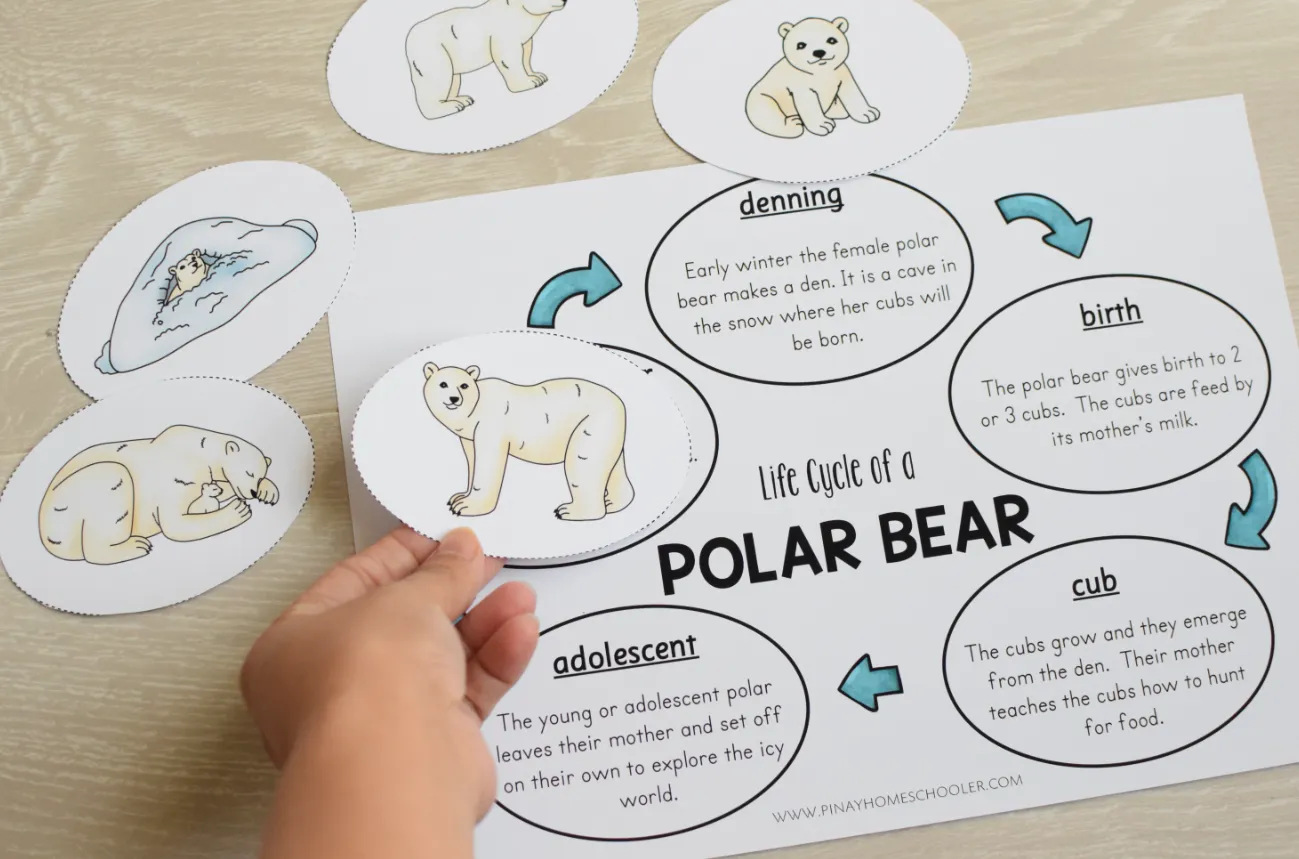
| Birth (Cub Stage) | 0–2 years | Born blind, depend entirely on mother |
| Juvenile | 2–5 years | Learning survival skills and hunting |
| Subadult | 5–8 years | Growing strength, independent hunting |
| Adult | 8–20+ years | Reproduction and peak survival |
| Senior | 20+ years | Declining strength and hunting ability |

The History Of Their Scientific Naming
The scientific name of the polar bear is Ursus maritimus, meaning “sea bear.” This name reflects their strong relationship with marine environments.
- The name was first introduced in 1774 by Constantine John Phipps, a British explorer.
- “Ursus” comes from Latin, meaning bear, while “maritimus” means of the sea.
- Unlike other bears, polar bears are classified as marine mammals because they depend heavily on ocean-based food.
- Early scientists debated whether polar bears were a separate species or a subspecies of brown bears.
- Genetic studies later confirmed that polar bears are a distinct species, though closely related to grizzly bears.
This classification highlights their unique adaptations, such as webbed paws, thick fat layers, and white fur, which allow them to thrive in icy conditions.
Their Evolution And Their Origin
Polar bears evolved from brown bear ancestors approximately 400,000 to 600,000 years ago. This evolution occurred during the Ice Age, when some brown bear populations adapted to colder climates.
As glaciers expanded, these bears gradually moved northward. Over time, natural selection favored traits that helped survival in icy environments.
Key evolutionary adaptations include:
- White fur for camouflage in snow and ice
- Thick blubber layer for insulation
- Large paws for swimming and walking on ice
- Enhanced sense of smell to detect prey miles away
Genetic studies show that polar bears and brown bears still share traits, which explains the existence of rare hybrid species like the “pizzly bear.”
Their evolution is a perfect example of how animals adapt to environmental changes. However, today’s rapid climate change is happening too fast for natural adaptation, threatening their survival.
Their main food and its collection process
Polar bears are carnivores and rely heavily on marine animals for survival.
Main Food Sources
- Seals (especially ringed and bearded seals)
- Fish and small marine mammals
- Occasionally, birds and eggs
- Carcasses of whales or walruses
Food Collection Process
- Still-hunting technique:
- Polar bears wait silently near seal breathing holes in the ice.
- Ambush hunting:
- They use stealth and patience to catch seals resting on ice.
- Swimming hunts:
- Excellent swimmers; they can chase prey underwater.
- Scavenging:
- When food is scarce, they feed on dead animals.
Polar bears need high-fat diets, especially seal blubber, to maintain energy and body heat in freezing conditions.
Their life cycle and ability to survive in nature
Birth and Early Development
Polar bear cubs are born in winter dens. They are tiny, blind, and completely dependent on their mother.
Growth and Learning Stage
Cubs stay with their mother for about 2 years, learning hunting and survival skills.
Independence
After separation, young bears must hunt alone and avoid predators, including adult males.
Adult Life
Adults focus on hunting, mating, and maintaining territory. Their survival depends on the availability of sea ice.
Adaptation Skills
- Thick fur and fat layers
- Strong swimming ability
- Energy conservation during food scarcity
These abilities help polar bears survive extreme Arctic conditions, but environmental changes are disrupting this cycle.

Their Reproductive Process and raising their children
Polar bear reproduction is closely tied to seasonal cycles.
- Mating Season: April to June
- Delayed implantation: The fertilized egg develops later
- Denning: Pregnant females build snow dens
Raising Cubs
- Cubs are born between November and January
- Mothers provide milk rich in fat
- Cubs stay in dens for warmth and safety
Parental Care
- Mothers teach hunting skills
- Cubs rely on maternal protection
- Survival rate depends on food availability
This long maternal care ensures cubs are prepared for harsh Arctic life.
The importance of them in this Ecosystem
Top Predator Role
Polar bears maintain balance by controlling seal populations.
Indicator Species
Their health reflects the overall condition of the Arctic ecosystem.
Nutrient Distribution
Through feeding and movement, they help distribute nutrients across habitats.
Ecological Balance
Without polar bears, marine ecosystems could become unstable.
Important Things That You Need To Know
The following key insights help understand broader aspects related to the polar bear life cycle:
The polar bear is the largest land carnivore, with males weighing up to 700 kg. Their massive polar bear size plays a crucial role in hunting and survival.
A baby polar bear (cub) weighs less than 1 kg at birth, underscoring their vulnerability early in life.
In comparisons like polar bear vs. grizzly bear, polar bears are better adapted to cold environments, while grizzlies are better adapted to forests.
Interestingly, a polar bear without fur actually has black skin beneath its fur, which helps absorb heat from the sun.
Even creative topics like polar bear drawing often highlight their iconic white coat and powerful build, symbolizing Arctic wildlife.
What to do to protect them in nature and save the system for the future
- Reduce carbon emissions to slow climate change
- Support conservation organizations
- Protect Arctic habitats from industrial activities
- Promote sustainable tourism
- Raise awareness about polar bear conservation
- Reduce plastic pollution in oceans
- Support policies that protect wildlife
- Encourage scientific research and monitoring

Frequently Asked Questions (FAQs)
1. What is the life cycle of a polar bear?
It includes cub, juvenile, subadult, adult, and senior stages.
2. How long do cubs stay with their mother?
Around 2 to 2.5 years.
3. What do polar bears eat most?
Primarily seals.
4. Can polar bears survive without ice?
No, they rely on sea ice for hunting.
5. How big can a polar bear grow?
Up to 700 kg and 3 meters long.
6. Are polar bears endangered?
They are classified as vulnerable.
7. How fast can they swim?
They can swim for hours at a time.
8. Do polar bears hibernate?
Only pregnant females den; others remain active.
Conclusion
The polar bear life cycle is a remarkable journey shaped by extreme Arctic conditions. From fragile cubs to dominant predators, each stage reflects incredible adaptation and resilience.
However, this life cycle is now under serious threat due to climate change and habitat loss. As sea ice melts, polar bears struggle to find food, reproduce, and survive.
Protecting them is not just about saving a species—it’s about preserving the entire Arctic ecosystem. By taking collective action, raising awareness, and supporting conservation efforts, we can help ensure that polar bears continue to thrive for generations to come.
Also Read: luna moth life cycle1
About the Author