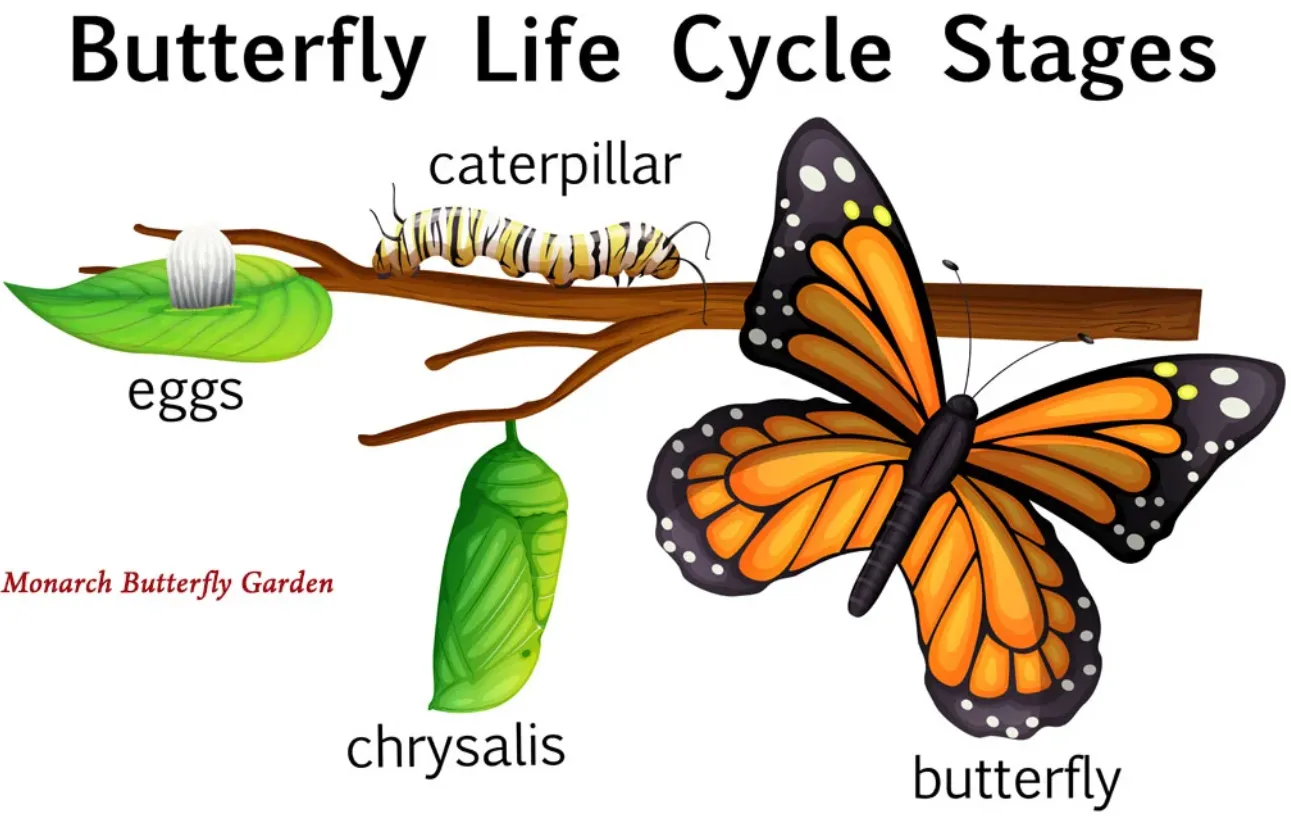
The life cycle of the monarch butterfly is one of the most beautiful examples of complete metamorphosis in nature. A monarch butterfly begins life as a tiny egg, becomes a striped monarch butterfly caterpillar, changes into a green chrysalis, and finally emerges as an adult orange-and-black butterfly.
Scientifically known as Danaus plexippus, the monarch is famous not only for its life cycle but also for its long-distance monarch butterfly migration. In North America, some monarchs travel thousands of miles between breeding grounds and overwintering forests.
The most important plant in this life cycle is milkweed. Female monarchs lay eggs only on milkweed because their caterpillars depend on it as their main food. Adult monarchs, however, drink nectar from many flowering plants.
This life cycle usually moves quickly in warm weather. Eggs hatch within a few days, caterpillars feed for about two weeks, the chrysalis stage lasts around one to two weeks, and adults continue the cycle by mating and laying eggs.
Q: How many stages are in the monarch butterfly life cycle?
A: There are four stages: egg, caterpillar, chrysalis, and adult butterfly.
Q: What does a monarch butterfly caterpillar eat?
A: It eats milkweed leaves only.
Q: Why is monarch butterfly migration special?
A: It is special because several generations complete the journey, while the final migratory generation can live much longer than normal adults.
Quick Life Cycle Table
| Stage | What Happens | Time Needed | Main Food |
| Egg | Female lays eggs on milkweed leaves | 2–5 days | No feeding |
| Caterpillar | Larva eats milkweed and grows fast | About 2 weeks | Milkweed leaves |
| Chrysalis | The body transforms into a green pupa | 1–2 weeks | No feeding |
| Adult Butterfly | Flies, mates, migrates, and lays eggs | 2–5 weeks, or 6–9 months for migratory generation | Flower nectar |
The History Of Their Scientific Naming, Evolution, and Origin
Scientific Naming of Monarch Butterfly
The monarch butterfly is scientifically named Danaus plexippus. The genus name Danaus comes from classical mythology, while Plexippus is also linked to old Greek naming traditions. This scientific name helps researchers identify the species accurately across different countries.
Evolutionary Background
Monarchs belong to the family Nymphalidae, a large butterfly family known for colorful wings and reduced front legs. Their evolution is closely linked to milkweed plants. Over time, monarch caterpillars developed the ability to feed on milkweed, a plant that contains bitter chemical compounds.
Origin and Natural Range
Monarch butterflies are best known in North America, but related populations also occur in other regions. Their most famous population migrates between the United States, Canada, and Mexico. This origin story makes the monarch a symbol of seasonal movement, survival, and natural navigation.

Their Reproductive Process, Giving Birth, And Rising Their Children
Mating Process
Adult monarch butterflies reproduce by mating after they reach sexual maturity. During the breeding season, males search for females, and after mating, the female stores sperm to fertilize her eggs.
Egg Laying on Milkweed
Female monarchs do not give birth like mammals. Instead, they lay tiny eggs, usually one at a time, on the underside of milkweed leaves. This choice is very important because the newly hatched caterpillar must start eating soon after birth.
No Parental Care
Monarch butterflies do not raise their young. After laying eggs, the female leaves. The survival of the baby caterpillar depends on the quality of the milkweed plant, weather, and protection from predators.
Caterpillar Growth
The young monarch butterfly caterpillar eats its eggshell first and then begins feeding on milkweed leaves. It grows quickly and sheds its skin several times. These growth phases are called instars.
Survival Challenge
Many eggs and caterpillars do not survive because of predators, parasites, disease, pesticides, and weather. This is why a female monarch lays many eggs during her lifetime.
Stages of the Monarch Butterfly Life Cycle
Egg Stage
The life cycle begins when a female monarch lays a pale, tiny egg on a milkweed plant. The egg is usually placed under a leaf, where it is somewhat hidden from direct sunlight and predators.
This stage is short. In warm conditions, the egg may hatch in only a few days. Inside the egg, the first larval body forms.
Caterpillar Stage
The next stage is the monarch butterfly caterpillar. It has black, white, and yellow stripes and feeds heavily on milkweed leaves. This is the main growth stage of the life cycle.
The caterpillar passes through five instars, meaning it sheds its skin five times as it grows. During this stage, it stores energy for the next transformation.
Chrysalis Stage
After the caterpillar is fully grown, it hangs in a J-shape and forms a green chrysalis. This is not just a resting stage; a big internal change happens here.
Inside the chrysalis, the caterpillar’s body reorganizes into an adult butterfly. Wings, legs, antennae, and other adult structures develop.
Adult Butterfly Stage
The adult monarch emerges with soft, folded wings. It pumps fluid into the wings, waits for them to dry, and then begins flying.
Adult monarchs feed on nectar, search for mates, migrate when seasonal conditions require it, and continue the life cycle by laying eggs on milkweed.
Important Things That You Need To Know
The monarch butterfly is more than a beautiful insect. It is a highly studied species because of its unique life cycle, plant dependence, and long-distance travel. The most important thing to understand is that monarchs cannot complete their life cycle without milkweed. This is why milkweed loss directly affects monarch survival.
The phrase monarch butterfly migration refers to one of the most famous insect migrations in the world. Eastern North American monarchs travel toward Mexico for winter, while western monarchs often overwinter along coastal California. This journey is not completed by one ordinary short-lived generation. Instead, several generations move north, while the late-season migratory generation travels south and lives much longer.
The monarch butterfly caterpillar is also very important because it is the only stage that eats milkweed leaves. Adult butterflies drink nectar from different flowers, but caterpillars are milkweed specialists.
Many people search for monarch butterfly drawings because its orange wings, black veins, and white spots make it easy to recognize and popular in art, education, and nature study.
The monarch butterfly symbolizes transformation, hope, endurance, seasonal change, and natural beauty. Its life cycle symbolizes growth, patience, and renewal.

Their Main Diet, Food Sources, And Collection Process Explained
Caterpillar Diet
The monarch butterfly caterpillar eats only milkweed leaves. Milkweed provides food and also gives the caterpillar chemical protection because some milkweed compounds make monarchs less tasty to many predators.
Adult Butterfly Food
Adult monarchs drink nectar from flowers. They use a long tube-like mouthpart called a proboscis to sip liquid nectar.
Main Nectar Sources
Adult monarchs may visit many wildflowers, garden flowers, and native flowering plants. Good nectar plants are especially important during migration because butterflies need energy for a long flight.
Food Collection Process
Caterpillars collect food by chewing leaves directly. Adults collect food by landing on flowers and inserting their proboscis into the flower to drink nectar.
Why Native Plants Matter
Native milkweed and native nectar plants are usually better for local ecosystems. They support monarchs, bees, other butterflies, and many other pollinators.
How Long Does A Monarch Butterfly Live
The lifespan of a monarch butterfly depends strongly on season, generation, temperature, food availability, and migration behavior.
- Egg stage: The egg usually lasts around 2–5 days before hatching.
- Caterpillar stage: The larval stage usually lasts about two weeks, depending on temperature and food quality.
- Chrysalis stage: The chrysalis stage usually lasts around 1–2 weeks.
- Normal adult lifespan: Most adult monarchs born in spring or summer live about 2–5 weeks.
- Migratory adult lifespan: The late-season migratory generation can live for 6–9 months because it delays reproduction, conserving energy for migration and overwintering.
- Why migratory monarchs live longer: These butterflies enter a special condition called reproductive delay or diapause. Instead of mating immediately, they focus on travel and survival.
- Weather effects: Cold, storms, drought, and extreme heat can reduce survival.
- Food effect: Adults need nectar for energy. Caterpillars need healthy milkweed. Without these food sources, their lifespan becomes shorter.
- Predator effect: Birds, wasps, spiders, ants, parasites, and disease can reduce survival at different stages.
- Human impact: Pesticide use, habitat loss, and removal of milkweed can reduce the number of monarchs that survive to adulthood.
In simple words, a monarch’s life may be very short or surprisingly long. A summer monarch may live only a few weeks, while a migratory monarch may survive most of a year.
Monarch Butterfly Lifespan in the Wild vs. in Captivity
Lifespan in the Wild
In the wild, monarchs face many natural risks. Eggs and caterpillars may be eaten by predators or affected by parasites. Adults may die due to storms, a lack of nectar, pesticide exposure, or habitat loss.
Wild monarchs also play their full ecological role. They pollinate flowers, feed other animals, and take part in natural migration.
Lifespan in Captivity
In captivity, monarchs may be protected from some predators and the weather. However, captivity can also pose problems if conditions are unclean, unnatural, or poorly managed.
Crowding, poor hygiene, weak food plants, and disease spread can harm captive monarchs. Raising monarchs indoors should be done responsibly, primarily for education or conservation awareness.
Which Is Better?
Wild survival is harder, but it is more natural. The best long-term solution is not keeping monarchs in captivity. It is protecting wild milkweed, nectar plants, and safe migration habitats.
Importance of the Monarch Butterfly In This Ecosystem
Pollination Support
Adult monarch butterflies visit flowers for nectar. While feeding, they can move pollen from one flower to another. They are not the only pollinators, but they are part of a larger pollination network.
Food Web Role
Monarch eggs, caterpillars, and adults can become food for different animals. Even though monarchs have chemical protection from milkweed, some predators and parasites still interact with them.
Indicator of Environmental Health
A healthy monarch population often shows that an area has good native plants, fewer harmful chemicals, and better habitat connectivity.
Support for Biodiversity
Protecting monarchs also protects many other insects, birds, and plants. A garden or field designed for monarchs often benefits bees, moths, native butterflies, and other small wildlife.
Cultural and Educational Value
The monarch butterfly’s meaning is powerful in many communities. It represents transformation, migration, beauty, and resilience. Schools also use the monarch life cycle to teach biology and ecology.
What To Do To Protect Them In Nature And Save The System For The Future
Plant Native Milkweed
- Grow native milkweed suitable for your region.
- Avoid planting invasive or unsuitable milkweed species.
- Keep milkweed available during breeding season.
Grow Nectar Flowers
- Plant flowers that bloom across different seasons.
- Include native wildflowers where possible.
- Nectar helps adult monarchs during breeding and migration.
Avoid Harmful Pesticides
- Reduce pesticide use in gardens, farms, and roadsides.
- Avoid spraying when butterflies, bees, or caterpillars are active.
- Use safer pest-control methods when needed.
Protect Migration Habitats
- Save natural fields, forest edges, grasslands, and overwintering sites.
- Support habitat corridors so monarchs can travel safely.
- Avoid destroying wildflower-rich areas.
Educate Others
- Teach children and communities about the monarch butterfly‘s life cycle.
- Share the importance of milkweed.
- Encourage schools, gardens, and parks to create monarch-friendly spaces.

Fun & Interesting Facts About Monarch Butterfly
- Monarch butterflies are famous for their bright orange wings, black veins, and white spots.
- The monarch butterfly caterpillar has bold black, white, and yellow stripes.
- Monarchs go through a complete metamorphosis, meaning their body form changes completely.
- A female monarch lays eggs only on milkweed because caterpillars need it to survive.
- Some migratory monarchs can travel thousands of miles.
- The migratory generation lives much longer than ordinary summer adults.
- Monarchs use sunlight, body clocks, and environmental signals to help guide migration.
- The monarch butterfly migration is completed over generations, not by a single ordinary butterfly family line.
- Monarchs are popular in art, school projects, and monarch butterfly drawing activities.
- The monarch butterfly’s meaning often includes change, hope, endurance, and natural wonder.
Frequently Asked Questions (FAQs)
Q: What is the life cycle of the monarch butterfly?
A: The life cycle of the monarch butterfly has four stages: egg, caterpillar, chrysalis, and adult butterfly.
Q: How long does a monarch butterfly live?
A: Most adults live 2–5 weeks, but migratory monarchs can live 6–9 months.
Q: What does a monarch butterfly caterpillar eat?
A: A monarch butterfly caterpillar eats milkweed leaves only.
Q: Why is monarch butterfly migration important?
A: Monarch butterfly migration connects breeding, feeding, and overwintering habitats across a large region. It is one of the most remarkable insect migrations in nature.
Q: What does the monarch butterfly mean?
A: The monarch butterfly’s meaning is often linked with transformation, hope, renewal, endurance, and seasonal change.
Final Word
The monarch butterfly‘s life cycle is a powerful story of growth, change, survival, and migration. From a tiny egg on a milkweed leaf to a striped caterpillar, from a green chrysalis to a bright adult butterfly, every stage has a clear purpose.
Monarchs remind us that small creatures can have a large ecological role. They support pollination, connect habitats, inspire education, and show the importance of native plants. But their future depends on healthy milkweed, nectar flowers, safe migration routes, and reduced chemical pressure.
Protecting monarch butterflies is not difficult when people understand their needs. Planting native milkweed, growing nectar-rich flowers, avoiding harmful pesticides, and protecting natural spaces can make a real difference. If we protect the monarch’s life cycle today, we also protect a living symbol of nature’s beauty for the future.
Also Read: life cycle of head lice
About the Author