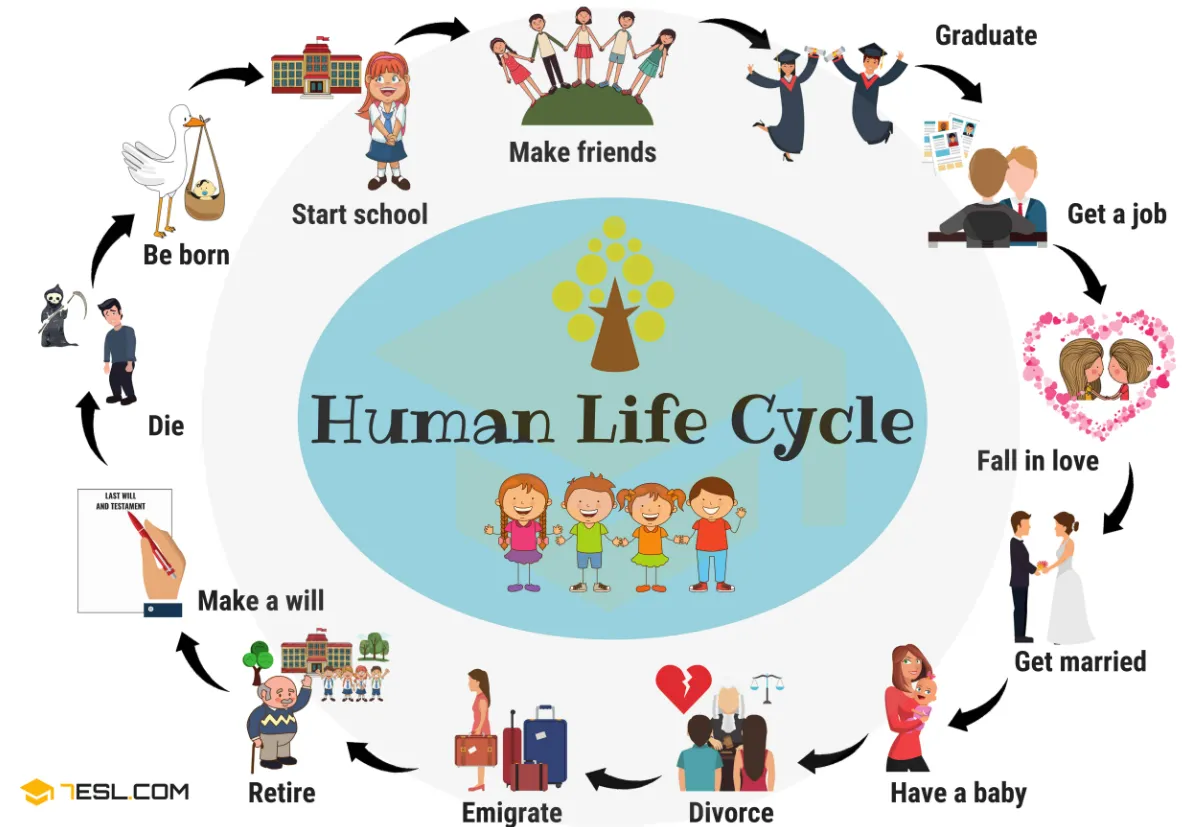
The human life cycle is one of the most fascinating biological processes on Earth. From birth to adulthood and eventually old age, every human goes through a series of developmental stages that shape physical growth, emotional maturity, and social identity.
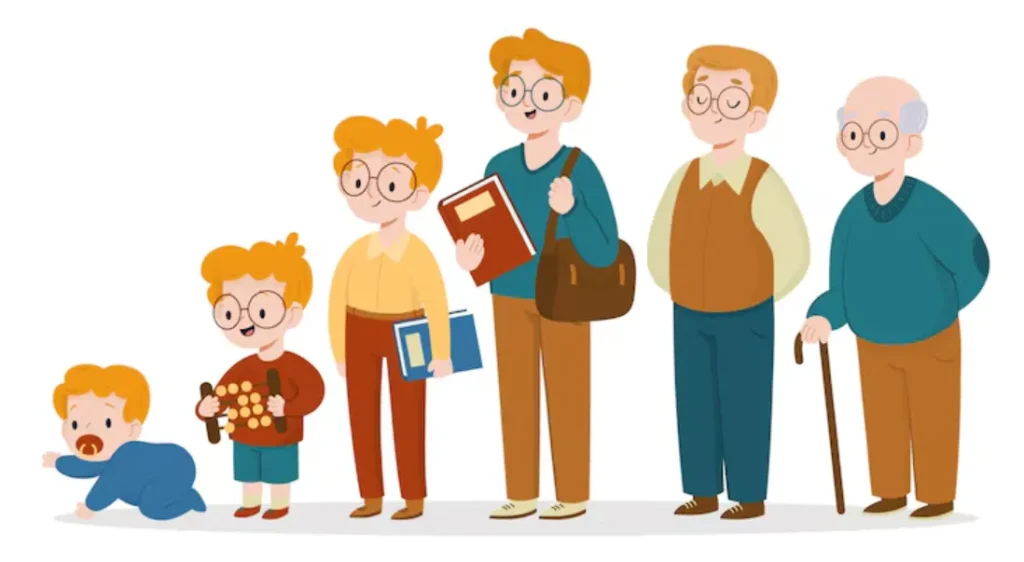
In biology, the human life cycle is the sequence of stages a human passes through throughout their lifetime. These stages include infancy, childhood, adolescence, adulthood, and aging. Each phase involves unique physiological changes, psychological development, and environmental interactions.
Humans are among the most complex organisms in nature. Unlike many animals, humans possess advanced cognitive abilities, language, culture, and social systems. These characteristics influence not only individual survival but also the survival of the species.
Understanding the life cycle of humans helps scientists, doctors, and researchers improve healthcare, study human development, and better understand diseases such as human papillomavirus infection and other health conditions that affect humans throughout their lives.
In modern scientific research through 2026, studies of the human skeleton, genetics, evolution, and developmental biology continue to reveal new insights into how humans grow and adapt to their environment.
Humans also compare life cycles with other species to understand aging. For example, people often compare cat years to human years to understand the differences
in aging between species.
By exploring human life cycles from scientific, evolutionary, and ecological perspectives, we gain a deeper understanding of how humans survive, reproduce, and shape the natural world.
Their Evolution And Their Origin
The story of human life began millions of years ago through biological evolution. Modern humans belong to the species Homo sapiens, which evolved through a long line of hominin ancestors.
Early Human Ancestors
Scientists believe that human ancestors first appeared in Africa about 6–7 million years ago. Early hominins gradually evolved traits that distinguished them from other primates.
Some of the most important ancestors include:
- Australopithecus afarensis (around 3.9 million years ago)
- Homo habilis (around 2.4 million years ago)
- Homo erectus (around 1.9 million years ago)
These early species began developing larger brains, upright walking, and basic tool use.
Evolution of Homo Sapiens
Modern humans, Homo sapiens, evolved approximately 300,000 years ago in Africa. Fossil evidence discovered in Morocco and Ethiopia confirms this timeline.
Key evolutionary characteristics of humans include:
- Advanced brain development
- Complex language and communication
- Social cooperation and culture
- Tool creation and technology
These traits allowed humans to dominate ecosystems worldwide.
Migration Across the Planet
One of the most remarkable chapters in human evolution was the Out of Africa migration.
About 60,000–70,000 years ago, early humans began spreading out of Africa into other continents. They eventually settled in Asia, Europe, Australia, and the Americas.
As humans migrated, they adapted to different climates and environments. This led to variations in skin color, physical traits, and genetic diversity.
Role of the Human Skeleton in Evolution
The human skeleton provides important clues about evolutionary changes.
Key skeletal features that distinguish humans from other primates include:
- Upright spine and pelvis for bipedal walking
- Larger skull for brain expansion
- Flexible hands for tool use
These skeletal adaptations allowed humans to hunt, build shelters, and create civilizations.
Modern Evolution
Even today, human evolution continues in subtle ways.
Scientists studying genetics in 2026 have discovered that humans are still evolving due to:
- Environmental pressures
- Disease resistance
- Lifestyle changes
- Technological influences
Understanding human origins helps us better understand our biological limitations and potential future development.
The History Of Their Scientific Naming
The scientific naming of humans follows the binomial nomenclature system, introduced by the Swedish scientist Carl Linnaeus in the 18th century.
This system gives every organism a two-part scientific name consisting of a genus and species.
Key Points About Human Scientific Naming
- Homo sapiens is the scientific name for modern humans.
- The name was first formally classified by Carl Linnaeus in 1758.
- “Homo” means human or man in Latin.
- “Sapiens” means wise or intelligent.
Together, the name means “wise human.”
Evolution of Scientific Classification
Over time, scientists have discovered many extinct human relatives.
Examples include:
- Homo neanderthalensis (Neanderthals)
- Homo floresiensis
- Homo naledi
These discoveries help researchers understand the diversity of human ancestors.
Importance of Scientific Naming
Scientific naming is essential because:
- It provides a universal language for scientists worldwide
- Prevents confusion caused by different regional names
- Helps organize biological classification
Through taxonomy, humans are classified within the following hierarchy:
- Kingdom: Animalia
- Phylum: Chordata
- Class: Mammalia
- Order: Primates
- Family: Hominidae
- Genus: Homo
- Species: Homo sapiens
This classification shows that humans are closely related to other primates such as chimpanzees and gorillas.
Important Things That You Need To Know
Understanding related topics helps explain more about humans and their biological and cultural contexts. Below are some important concepts related to the human life cycle.
Human Papillomavirus Infection
Human papillomavirus infection (HPV) is one of the most common viral infections in humans. It spreads mainly through skin-to-skin contact and can affect both men and women.
Modern vaccines and early screening programs have significantly reduced HPV-related diseases worldwide.
Human Skeleton
The human skeleton is the internal framework that supports the body. It consists of 206 bones in adults and performs several vital functions:
- Protecting organs like the brain and heart
- Supporting body structure
- Producing blood cells in bone marrow
The skeleton changes throughout the human life cycle as bones grow, strengthen, and gradually weaken with age.
Cat Years to Human Years
Many people compare cat years to human years to understand the differences in aging between species.
A general guideline is:
- 1 cat year ≈ = 15 human years (first year)
- 2 cat years ≈ = 24 human years
- After that, each cat year equals about 4 human years
This comparison highlights how different animals age at different biological rates.
Once Human and No Longer Human
The phrases “once human” and “no longer human” are often used in science fiction and philosophy.
They explore questions such as:
- What defines humanity?
- Can technology transform human identity?
- Could humans evolve beyond biology?
These discussions are increasingly relevant in an age of artificial intelligence, genetic engineering, and cybernetic technologies.
Ultra Human Ring
The term “ultra-human ring” appears in some technological and entertainment contexts, referring to futuristic devices or fictional tools that enhance human abilities.
Although fictional in most cases, modern wearable technologies and bioengineering research are slowly bringing such concepts closer to reality.
These topics illustrate how biological science, technology, and culture intersect in the study of human life.
Their Life Cycle and Ability to Survive in Nature
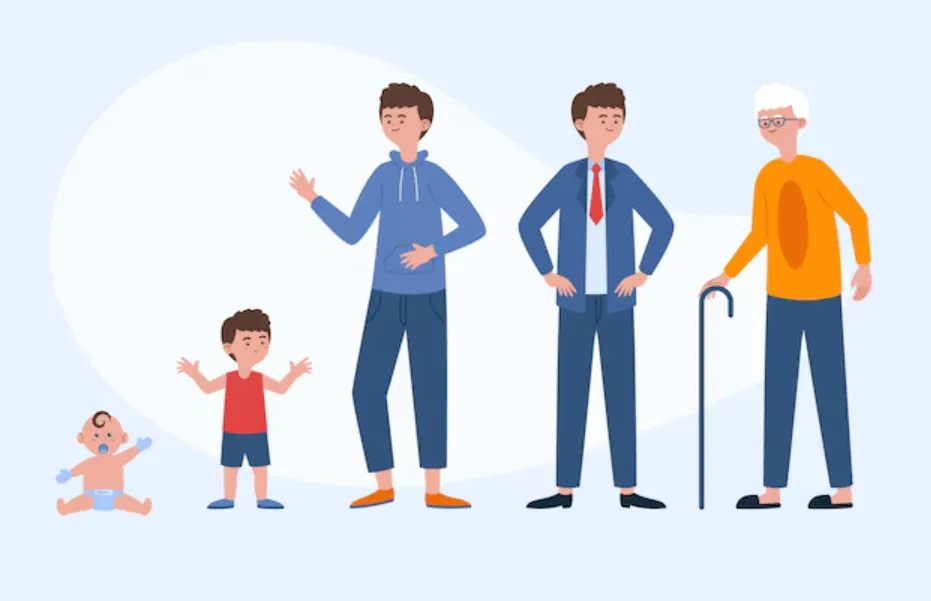
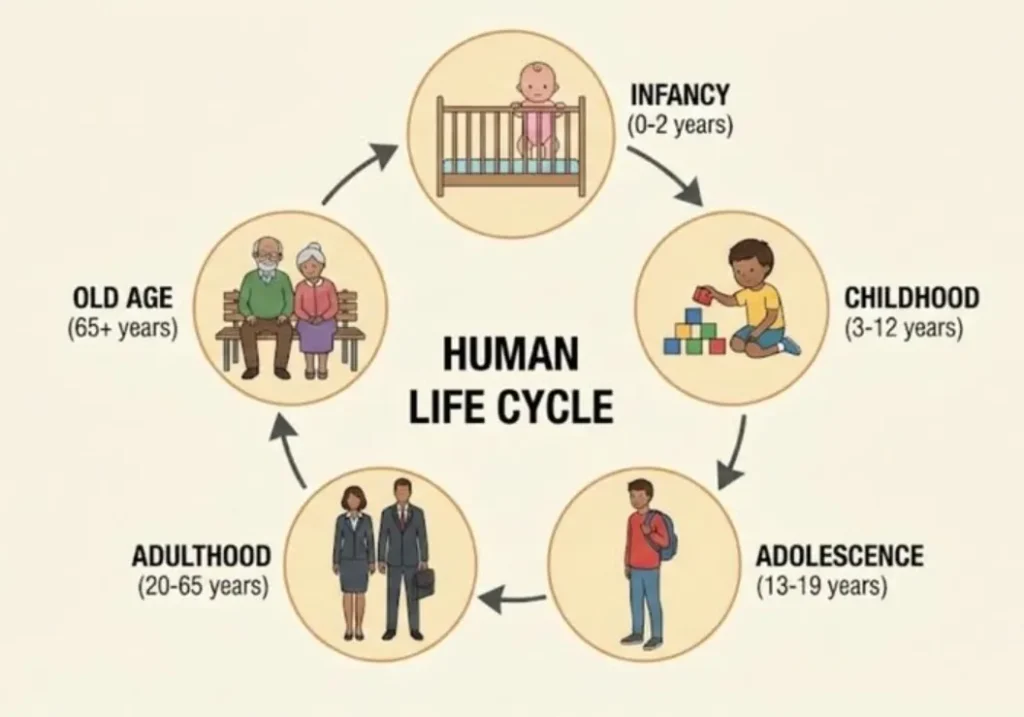
Humans pass through several stages throughout their lives, each contributing to survival and development.
1. Infancy (0–2 Years)
This stage begins at birth.
Key characteristics include:
- Rapid brain development
- Learning basic motor skills
- Dependence on caregivers
Infants rely heavily on parental protection for survival.
2. Childhood (3–12 Years)
Children experience rapid physical and cognitive growth.
During this stage:
- Language skills develop
- Social behavior forms
- Learning ability expands
Education plays a critical role in shaping future development.
3. Adolescence (13–19 Years)
Adolescence marks the transition to adulthood.
Important changes include:
- Hormonal development
- Emotional maturity
- Identity formation
Puberty enables reproductive capability.
4. Adulthood (20–60 Years)
Adults typically reach peak physical and mental performance.
During this stage, humans:
- Build families
- Work and contribute to society
- Raise children
5. Aging (60+ Years)
Aging involves a gradual physical decline but increased wisdom and experience.
Older adults play important roles in passing knowledge to younger generations.
Human Survival Strategies
Humans survive in nature through:
- Intelligence and technology
- Social cooperation
- Cultural knowledge
- Adaptability to environments
These survival traits make humans one of the most successful species on Earth.
Their Reproductive Process and Raising Their Children
Human reproduction is essential for the continuation of the species.
1. Human Reproductive Process
Human reproduction occurs through sexual reproduction.
Key stages include:
- Fertilization of an egg by sperm
- Development of the embryo in the uterus
- Pregnancy lasts approximately 9 months
After birth, the baby enters the infancy stage.
2. Pregnancy and Development
During pregnancy:
- The fetus develops organs and body systems
- The brain grows rapidly
- Nutrients from the mother support development
Medical care during pregnancy greatly improves survival rates.
3. Raising Children
Humans invest significant time and resources in raising offspring.
Parents provide:
- Nutrition and healthcare
- Education and social learning
- Emotional support
This long parental care period helps children develop complex skills.
4. Social Structure and Parenting
Human societies create systems to support child development.
Examples include:
- Schools and educational institutions
- Community support networks
- Healthcare systems
These systems increase the survival and success of future generations.
Importance of Them in the Ecosystem
Although humans dominate the planet, they are also part of the global ecosystem.
Key Roles Humans Play
- Environmental management – Humans can protect forests, oceans, and wildlife.
- Scientific research – Humans study biodiversity and climate systems.
- Agriculture and food production – Humans grow crops and raise livestock to sustain populations.
- Conservation efforts – Humans create national parks and wildlife reserves.
Positive Contributions
Humans contribute positively by:
- Developing renewable energy
- Restoring damaged ecosystems
- Protecting endangered species
Environmental Challenges
However, human activity can also harm ecosystems through:
- Pollution
- Deforestation
- Climate change
Balancing human development with environmental protection is essential for long-term sustainability.
What to do to protect them in nature and save the system for the future
Protecting humans and the planet requires responsible environmental practices.
- Promote sustainable living
- Encourage eco-friendly lifestyles that reduce waste and conserve resources.
- Reduce pollution
- Limit plastic use, industrial emissions, and the use of harmful chemicals.
- Support global healthcare systems
- Prevent diseases and improve human life expectancy.
- Invest in environmental education
- Teach future generations about conservation and sustainability.
- Protect natural ecosystems
- Preserve forests, oceans, and wildlife habitats.
- Promote renewable energy
- Shift from fossil fuels to solar, wind, and clean energy sources.
- Encourage scientific research
- Support innovation in medicine, ecology, and technology.
- Strengthen global cooperation
- Nations must work together to address climate change and environmental challenges.
These actions help ensure the survival of humans and the stability of Earth’s ecosystems.
Frequently Asked Questions (FAQs)
1. What are the main stages of the human life cycle?
The main stages are infancy, childhood, adolescence, adulthood, and aging.
2. What is the scientific name of humans?
The scientific name of modern humans is Homo sapiens.
3. How long is the average human life cycle?
The average human lifespan globally is around 72–75 years, although many people live longer.
4. Why is human evolution important?
Human evolution helps scientists understand how humans developed intelligence, culture, and survival abilities.
5. What role does the human skeleton play?
The human skeleton provides structural support, protects organs, and enables movement.
6. What diseases affect humans throughout their life cycle?
Many diseases can affect humans, including infections such as human papillomavirus (HPV) and other viral, bacterial, or genetic conditions.
7. How do humans survive in different environments?
Humans adapt through technology, clothing, housing, and social cooperation.
8. Why do humans raise their children for many years?
Human children require long development periods to learn complex skills, language, and social behaviors.
Conclusion
The human life cycle represents a remarkable journey of growth, development, and adaptation. From infancy to old age, humans undergo biological, emotional, and social transformations that shape individual identity and influence society.
Humans are unique among living species because of their intelligence, culture, and ability to modify environments. Through evolution, the species Homo sapiens developed advanced brains, language, and cooperative social systems, enabling them to thrive in nearly every ecosystem on Earth.
Understanding the stages of the human life cycle helps scientists improve medicine, education, and public health. Research into genetics, diseases such as human papillomavirus infection, and skeletal biology continues to expand our knowledge of human health and longevity.
At the same time, humans must recognize their responsibility within the global ecosystem. While technological progress has brought many benefits, human activities have also created environmental challenges, including climate change, habitat loss, and pollution.
The future of humanity depends on maintaining a balance between development and sustainability. Protecting natural resources, advancing medical science, and fostering global cooperation are essential steps toward a healthier planet and longer human lifespans.
Ultimately, studying the human life cycle reminds us that humans are both products of nature and stewards of the Earth. By understanding our origins, development, and responsibilities, we can build a future that supports both humanity and the ecosystems we depend on.
About the Author