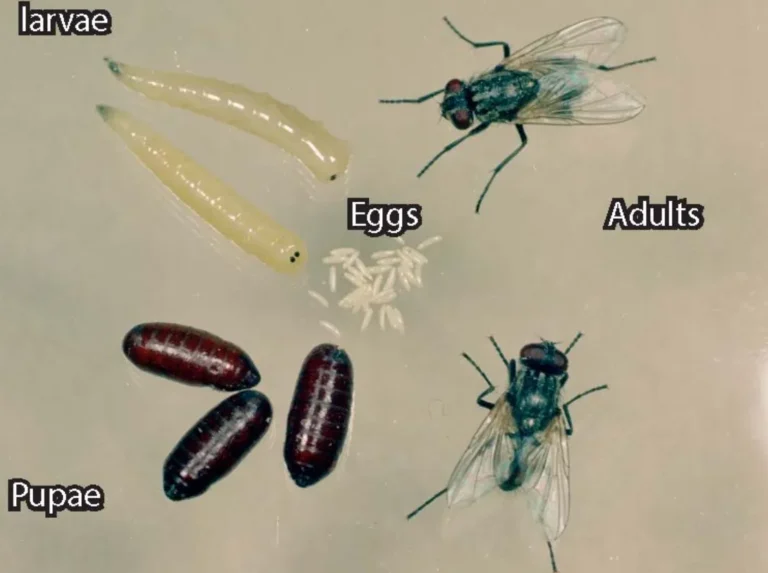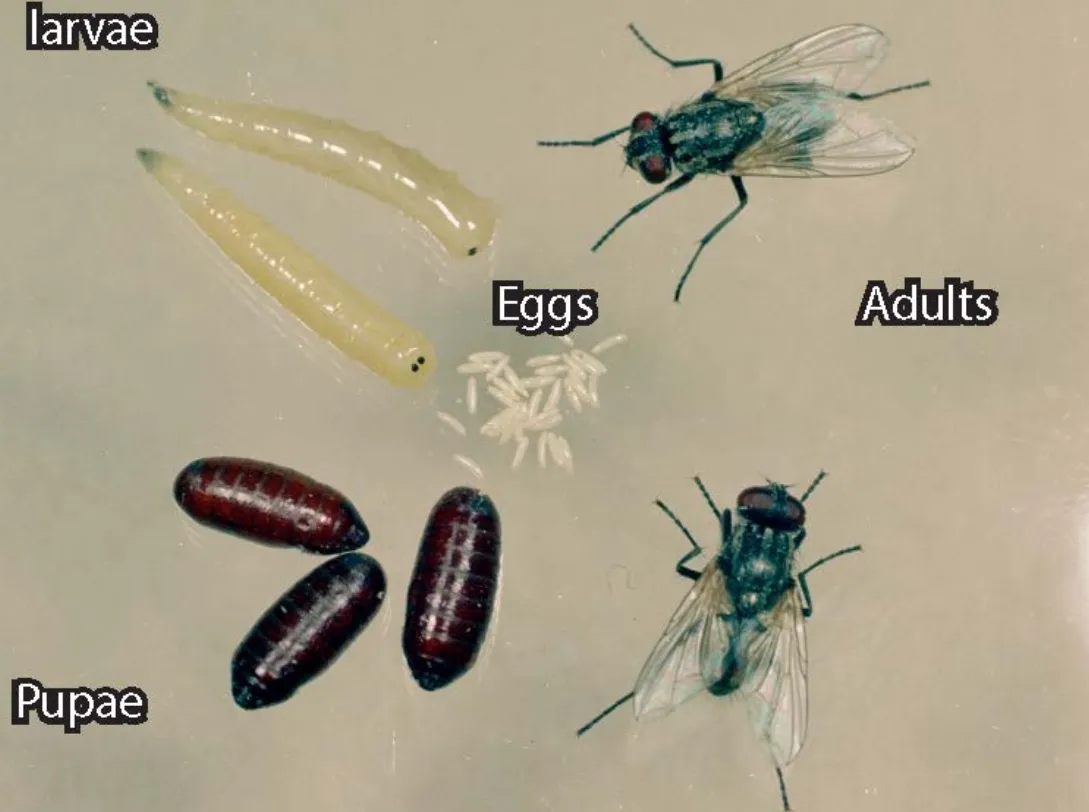
The maggot life cycle is one of nature’s most efficient biological processes, playing a crucial role in decomposition and nutrient recycling. Maggots are the larval stage of flies, primarily belonging to species like houseflies and blowflies. Although often seen as unpleasant, these tiny organisms are essential for maintaining ecological balance.
Maggots develop rapidly, feeding on organic matter and breaking it down into simpler nutrients. This process not only cleans the environment but also supports soil fertility and food chains. Understanding their life cycle helps us appreciate their ecological importance and even their use in medicine and forensic science.
Quick Answers (Most Common Questions)
1. What is a maggot?
A maggot is the larval stage of a fly, typically soft-bodied, legless, and specialised for feeding on decaying organic material.
2. How long does the maggot life cycle take?
The full life cycle usually takes 7 to 14 days, depending on temperature and environmental conditions.
3. Where do maggots come from?
Maggots hatch from eggs laid by adult flies, often on decaying food, animal carcasses, or waste.
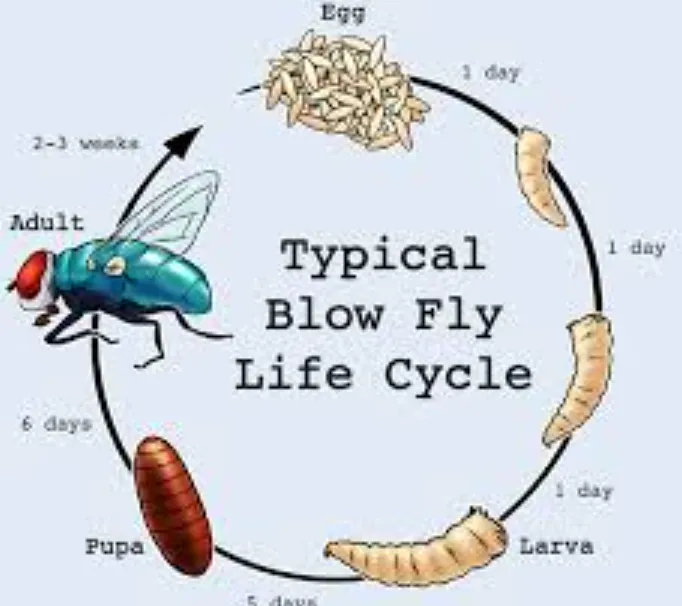
Quick Life Cycle Table
| Stage | Description | Duration |
| Egg | Tiny white eggs laid by flies on organic matter | 8–24 hours |
| Larva (Maggot) | Feeding stage: rapid growth and moulting | 3–5 days |
| Pupa | Transformation into an adult fly | 3–6 days |
| Adult Fly | Reproductive stage: lays eggs again | 2–4 weeks |
The History Of Their Scientific Naming
The scientific classification of maggots is closely tied to the taxonomy of flies (order Diptera). Over time, scientists have refined their naming based on morphology and genetic studies.
- The term “maggot” is not a scientific name; it refers to the larval stage of flies.
- Early naturalists grouped flies under Diptera because of their two-winged structure.
- Species like Musca domestica (housefly) and Lucilia sericata (green bottle fly) are common sources of maggots.
- Carl Linnaeus, the father of taxonomy, contributed to the classification of many fly species in the 18th century.
- Modern classification uses DNA analysis to distinguish species more accurately.
Today, maggots are studied in fields like entomology, forensic science, and medicine. Their classification helps researchers identify species based on larval characteristics, which is especially important in forensic investigations.
Their Evolution And Their Origin
Maggots evolved within the insect order Diptera, which appeared around 250 million years ago during the Permian period. Flies adapted to diverse ecological niches, and their larval stage—maggots—became specialised for feeding on organic matter.
Unlike many insect larvae, maggots lack legs and have a simplified body structure. This evolutionary adaptation allows them to move efficiently through soft, decaying material. Their mouthparts are designed for consuming decomposing tissue, making them highly effective decomposers.
Over millions of years, maggots evolved to survive in extreme conditions. Some species can tolerate low oxygen levels, while others thrive in moist, nutrient-rich environments. This adaptability has enabled them to colonise nearly every ecosystem on Earth.
Their evolutionary success is also linked to their rapid reproduction cycle. By developing quickly and producing large numbers of offspring, flies ensure the survival of their species even in unpredictable environments.
Important Things That You Need To Know
The world of maggots is more diverse than most people realise. Here are some fascinating facts about related concepts and species:
Maggot: The general term for fly larvae, commonly found in decomposing organic matter.
Maggot cheese: A traditional Sardinian delicacy known as Casu Marzu, which contains live maggots that help ferment the cheese.
Rat-tailed maggot: A unique larva of hoverflies with a long tail-like breathing tube, allowing it to survive in polluted water.
Maggot eggs: Tiny, white, oval-shaped eggs laid in clusters by flies, often invisible to the naked eye at first.
Maggot brain: Though simple, maggots possess a basic nervous system that enables them to respond to light, heat, and chemical signals.
These variations highlight how adaptable and biologically diverse maggots are. Each type plays a specific role in different environments, from waste decomposition to the functioning of aquatic ecosystems.
Their Main Food And Its Collection Process
Maggots are primarily scavengers, feeding on a wide range of organic materials. Their diet is essential for breaking down waste and recycling nutrients.
Key Food Sources
- Decaying animal tissue (carcasses)
- Rotting fruits and vegetables
- Organic waste and garbage
- Fecal matter
- Dead plant material
How They Collect and Consume Food
- Chemical Detection: Maggots use chemoreceptors to detect food sources.
- Rapid Movement: They move toward food using muscular contractions.
- External Digestion: They secrete enzymes to break down food before it is ingested.
- Continuous Feeding: Maggots feed almost constantly to support rapid growth.
Their feeding process is highly efficient. By consuming decomposing material, they accelerate decomposition and prevent waste accumulation.
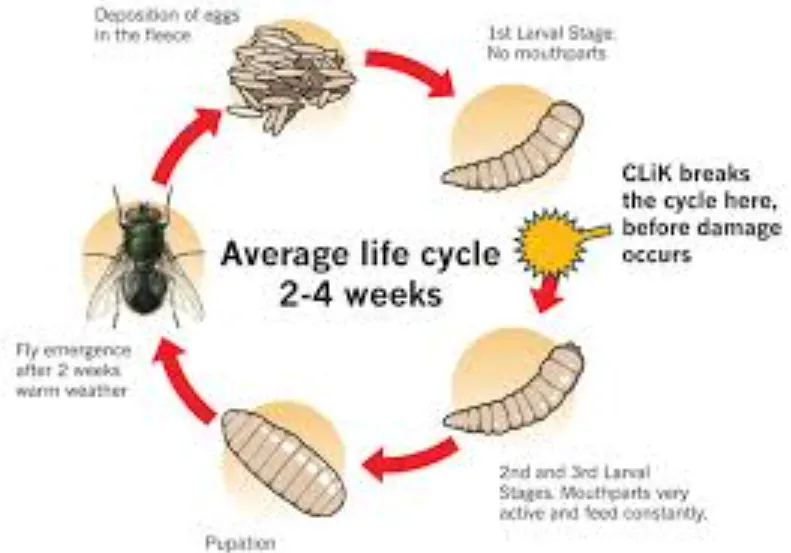
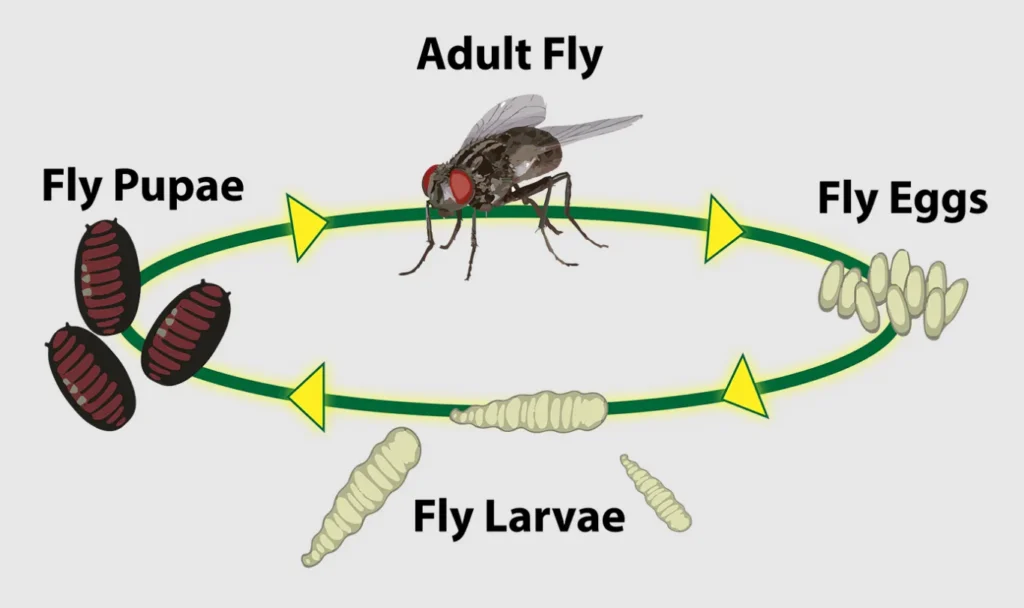
Their Life Cycle And Ability To Survive In Nature
🪰 Egg Stage
Female flies lay hundreds of eggs at once, ensuring high survival rates. Eggs hatch quickly, often within a day.
🐛 Larval Stage (Maggot)
This is the most active phase. Maggots grow rapidly, moulting several times as they grow.
🟤 Pupal Stage
The maggot forms a protective casing called a puparium. Inside, it transforms into an adult fly.
🪶 Adult Stage
The adult fly emerges, mates, and lays eggs, continuing the cycle.
Maggots survive in harsh environments due to their adaptability. They can thrive in low oxygen conditions and tolerate high levels of bacteria. Their rapid growth and ability to consume almost any organic material make them highly resilient.
Their Reproductive Process And Raising Their Children
Maggots themselves do not reproduce; reproduction occurs in the adult fly stage.
Key Points
- Female flies lay 100–300 eggs at a time.
- Eggs are placed in nutrient-rich environments to ensure survival.
- No parental care is provided after egg-laying.
- Rapid development reduces vulnerability to predators.
- High reproduction rates compensate for high mortality.
This reproductive strategy ensures that at least some offspring survive, even in challenging conditions.
Importance Of Them In This Ecosystem
🌱 Nutrient Recycling
Maggots break down organic matter into simpler compounds, enriching the soil.
🐾 Food Chain Support
They serve as food for birds, reptiles, and other insects.
🧪 Medical Uses
Certain maggots are used in maggot therapy to clean wounds.
🔬 Forensic Science
Maggots help estimate the time of death in criminal investigations.
🌍 Waste Management
They reduce organic waste, preventing environmental pollution.
Their role in ecosystems is indispensable, making them one of nature’s most efficient recyclers.
What To Do To Protect Them In Nature And Save The System For The Future
- Preserve natural habitats and ecosystems
- Reduce excessive pesticide use
- Promote organic waste recycling
- Support biodiversity conservation
- Educate people about their ecological role
- Maintain balanced waste management systems
- Encourage sustainable farming practices
- Avoid unnecessary extermination
Protecting maggots means protecting the entire decomposition process, which is vital for life on Earth.
Frequently Asked Questions (FAQs)
1. How fast do maggots grow?
They can grow from egg to larva within 24 hours and reach full size in 3–5 days.
2. Are maggots harmful to humans?
Generally, no, but they can cause issues if found in food or wounds.
3. Can maggots survive without food?
No, they require constant feeding to survive and grow.
4. What attracts maggots?
Decaying organic matter, garbage, and spoiled food attract flies that lay eggs.
5. Do maggots feel pain?
They have a simple nervous system, so their response to pain is minimal and not fully understood.
6. Can maggots live in water?
Some species, like rat-tailed maggots, can survive in water.
7. How do maggots help in medicine?
They clean dead tissue from wounds, promoting faster healing.
8. What kills maggots instantly?
Salt, vinegar, or boiling water can kill maggots quickly.
Conclusion
The maggot life cycle is a fascinating example of nature’s efficiency and adaptability. From tiny eggs to fully developed flies, each stage plays a crucial role in maintaining ecological balance.
Despite their unpleasant reputation, maggots are essential for decomposition, nutrient recycling, and supporting the food chain. Their ability to thrive in harsh conditions and rapidly process organic waste makes them indispensable to the environment.
Understanding their life cycle not only changes our perception but also highlights the importance of protecting even the smallest organisms. By preserving natural ecosystems and reducing harmful practices, we can ensure that maggots continue to play their vital role in sustaining life on Earth.
Also Read: life of butterfly cycle
About the Author