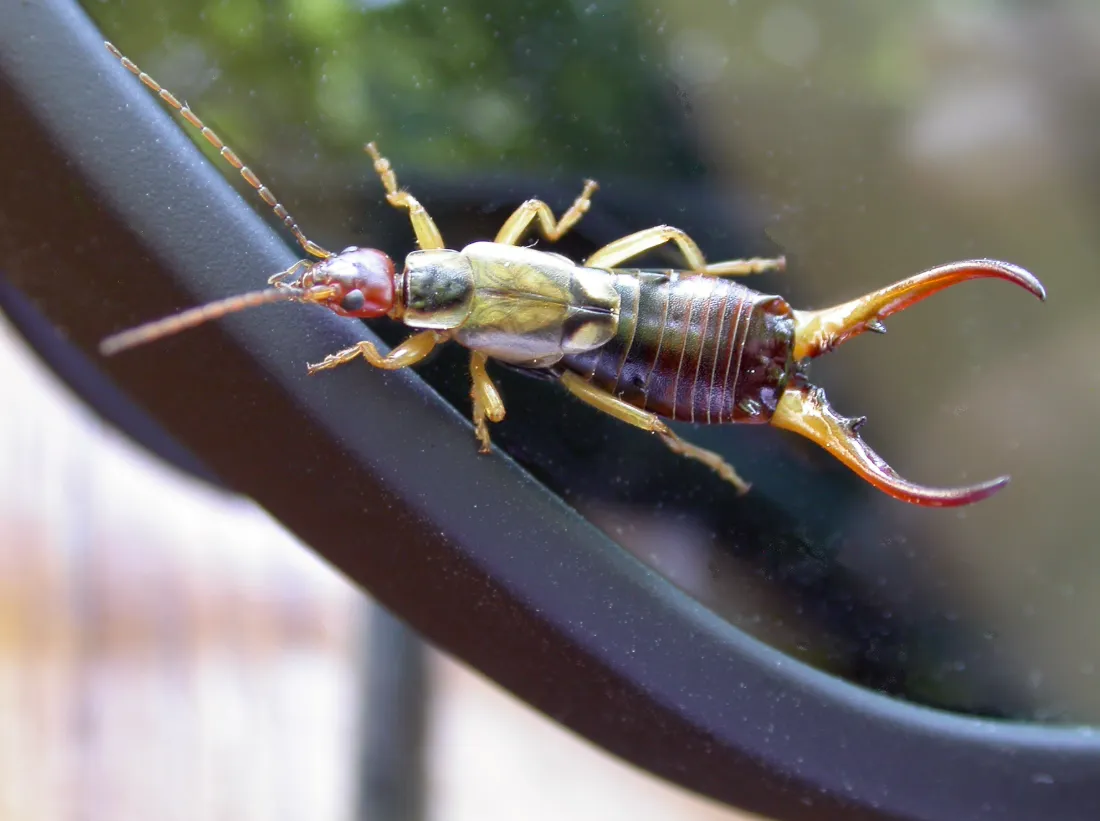
Earwings are fascinating insects that often spark curiosity and sometimes fear. Many people encounter them in gardens, under stones, or near damp areas and immediately wonder: what is an earwig or what is an earwig insect? Despite common myths, these small creatures are actually beneficial members of many ecosystems.
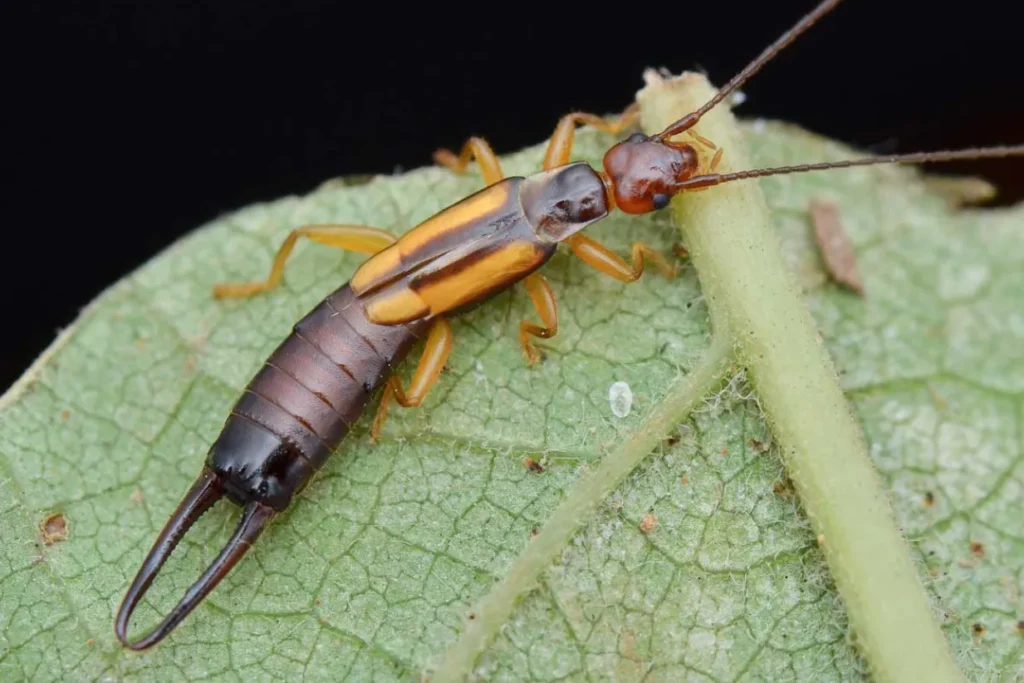
The earwing insect belongs to the order Dermaptera, a group known for its distinctive forceps-like appendages at the end of the abdomen. These pincers, called cerci, give them their unique appearance and play a role in defense, mating, and capturing prey. While some people worry about earwigs, these insects are generally harmless to humans and rarely cause injury.
Another reason earwings attract attention is their behavior and adaptability. Earwigs are mostly nocturnal and prefer dark, moist environments, such as garden soil, leaf litter, and under logs. They come out at night to feed on a variety of materials, including plant matter, fungi, and small insects.
Interestingly, earwing bugs are not just simple garden insects. They have a complex life cycle, unusual parenting habits, and an evolutionary history that dates back millions of years. Scientists have studied them for decades to understand how they survived dramatic changes in Earth’s climate and ecosystems.
Today, researchers recognize earwings as important contributors to natural pest control and soil health. By feeding on harmful insects like aphids, they help maintain balance in many agricultural and natural environments.
In this article, we will explore the life cycle of earwigs, their origin and evolution, scientific classification, reproductive behavior, ecological importance, and ways we can protect them for the future.
Their Evolution And Their Origin
The evolutionary history of earwings is both ancient and fascinating. Fossil records indicate that the ancestors of modern earwing insects appeared during the late Jurassic period, approximately 150 million years ago. These early relatives looked somewhat different from the earwings we see today, but they already had the basic body structure characteristic of the group.
Early earwings belonged to primitive suborders that later evolved into modern forms. Fossil discoveries in Europe and Asia have revealed specimens preserved in amber, providing scientists with valuable insights into their evolution over millions of years.
One of the most significant evolutionary changes in earwing bugs was the development of their cerci—the forceps-like appendages at the rear of their bodies. In ancient species, these structures were straight and segmented, but over time, they evolved into curved pincers that are stronger and more specialized.
Scientists believe these pincers evolved for several reasons:
- Defense against predators
- Competition during mating
- Handling prey or food sources
- Protection of eggs and offspring
Another fascinating aspect of earwing evolution is their wings. While many species possess wings folded neatly under short wing covers, they rarely fly. Their wings are uniquely folded like a fan, allowing them to pack large wings into a small space.
Climate changes during the Cretaceous and early Cenozoic periods also influenced earwing evolution. As forests expanded and ecosystems diversified, earwings adapted to a range of habitats, including forests, grasslands, and agricultural areas.
Modern earwing bugs are found on nearly every continent except Antarctica. There are more than 2,000 species worldwide, each adapted to its local environment.
Their ability to survive through major evolutionary shifts demonstrates their resilience. From ancient forests to modern gardens, earwings have remained remarkably successful insects.
The History of Their Scientific Naming
The scientific classification of earwings has evolved over the centuries as scientists have gained a better understanding of insect anatomy and genetics. Their current scientific order is Dermaptera, a name derived from Greek words meaning “skin wings.”
Here are key milestones in the history of their scientific naming:
- Early Observations (1700s)
- Early naturalists documented earwings and grouped them with other insects based on visible features, such as body shape and wing patterns.
- Introduction of the Order Dermaptera
- The scientific order Dermaptera was formally established to classify earwings separately from other insects due to their unique cerci and wing structure.
- Classification into Families
- Scientists later divided earwings into several families based on body shape, wing structure, and reproductive behavior.
- Use of Modern Taxonomy
- With advances in genetics, researchers began analyzing DNA to understand relationships among different earwing species better.
- Global Species Identification
- Today, scientists recognize more than 2,000 species of earwing insects worldwide.
- Key Species Example
- One of the most well-known species is Forficula auricularia, commonly known as the European earwig.
The scientific naming process continues to evolve as researchers discover new species and study their genetic relationships. Modern entomology tools have helped clarify the classification of many previously misunderstood species.
Important Things That You Need To Know
Understanding earwings helps eliminate many myths and misconceptions. Below are some important facts related to earwing, earwing bug, earwing bugs, what is an earwing, and earwing bite.
First, the term “earwing” is often a misspelling of “earwig,” but it is widely searched for online. Many people looking for information about these insects use this spelling when learning about them.
Second, the earwing bug is not dangerous to humans. Despite myths that they crawl into people’s ears, there is no scientific evidence supporting this claim. The name likely originated from old folklore rather than real behavior.
Another common concern is the earwig bite. In reality, earwings rarely bite humans. Their pincers are primarily used for defense or mating. If handled roughly, they may pinch lightly, but it is usually harmless.
There are also many species of earwing bugs, each with slightly different habits and habitats. Some prefer gardens, while others live in forests or tropical environments.
Here are some important facts to remember:
- Earwings are mostly nocturnal insects.
- They help control harmful pests, such as aphids.
- Their pincers are not venomous.
- They rarely damage healthy plants.
- They are important members of natural ecosystems.
Learning these facts helps people appreciate earwings rather than fear them. These insects play valuable roles in maintaining ecological balance.
Their life cycle and ability to survive in nature
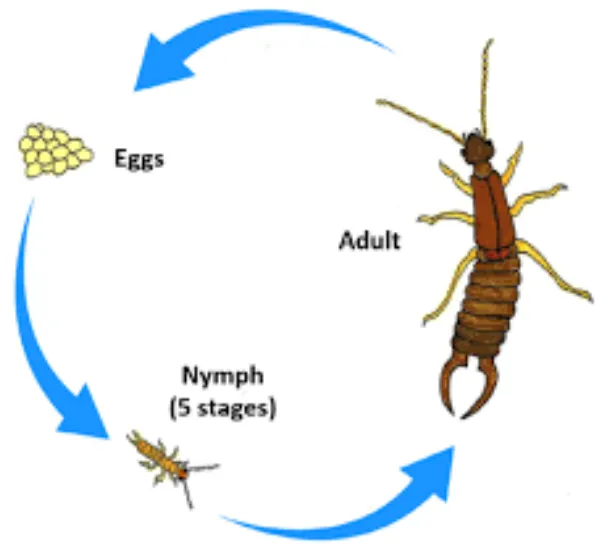
The life-cycle earwig is relatively simple but highly effective at surviving in diverse environments. Earwings undergo incomplete metamorphosis, meaning they develop through gradual stages rather than a dramatic transformation like butterflies.
The main stages of their life cycle include:
- Egg Stage
- Female earwings lay clusters of eggs in underground chambers or hidden spaces in soil and leaf litter.
- Nymph Stage
- When the eggs hatch, young earwings called nymphs emerge, they resemble miniature adults but lack fully developed wings.
- Multiple Molting Phases
- Nymphs pass through several molting stages, shedding their exoskeletons as they grow.
- Adult Stage
- After several molts, the insects reach adulthood and develop fully functional reproductive organs.
Earwings have several survival advantages in nature:
- Nocturnal behavior protects them from predators.
- A flexible diet allows them to eat plants, fungi, and insects.
- Shelter-seeking habits help them survive harsh weather.
- High adaptability allows them to live in many environments.
These traits help earwings survive in forests, gardens, agricultural fields, and even urban areas.
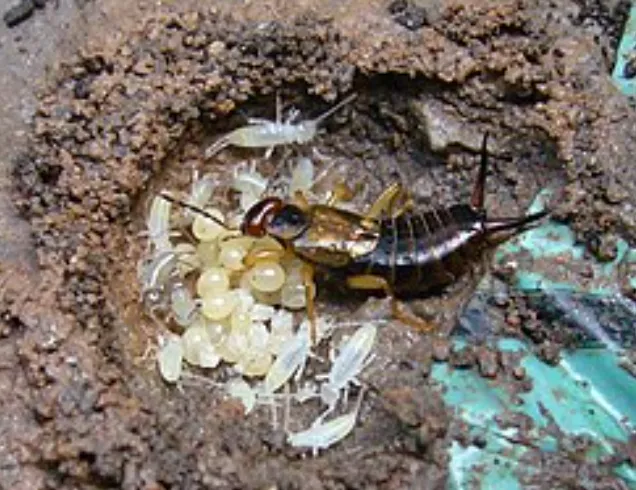
Their Reproductive Process and raising their children
Earwings have one of the most interesting reproductive behaviors among insects. Unlike many insects that abandon their eggs after laying them, female earwings provide parental care.
The reproductive process typically includes the following stages:
- Courtship Behavior
- Male earwings use their pincers to compete with other males and attract females.
- Mating Process
- After successful courtship, mating occurs, usually during warm seasons.
- Egg Laying
- Females lay eggs in underground chambers where they remain protected.
- Egg Protection
- The female earwig stays with the eggs, guarding them from predators and cleaning them to prevent fungal infections.
- Hatching and Care
- Once the nymphs hatch, the mother continues to care for them by providing protection and sometimes food.
- Gradual Independence
- As the young earwings grow, they gradually leave the nest and begin living independently.
This level of maternal care is relatively rare among insects and highlights the complex behavior of earwings.
The importance of them in the ecosystem
Earwings play an essential role in maintaining ecological balance. Despite their somewhat frightening appearance, they are valuable contributors to natural ecosystems.
Key ecological benefits include:
- Natural Pest Control
- Earwings feed on harmful insects such as aphids, mites, and small larvae.
- Decomposition Support
- They help break down organic matter such as decaying leaves and plant material.
- Soil Health Improvement
- Their movement through soil helps improve aeration and nutrient cycling.
- Food Source for Other Animals
- Many birds, reptiles, and small mammals feed on earwings.
- Biodiversity Contribution
- Earwings increase species diversity within ecosystems.
Because of these benefits, many gardeners consider earwings helpful insects rather than pests.
What to do to protect them in nature and save the system for the future
Protecting earwings and other beneficial insects is important for maintaining healthy ecosystems.
Here are some ways to support them:
- Reduce pesticide use in gardens and farms.
- Maintain natural habitats such as leaf litter and logs.
- Encourage biodiversity by planting diverse vegetation.
- Protect soil health through organic gardening practices.
- Create insect shelters such as wood piles or mulch beds.
- Avoid unnecessary chemical treatments in soil.
- Promote ecological awareness about beneficial insects.
- Support sustainable agriculture that protects insect populations.
By protecting earwings, we also help maintain natural pest control and ecosystem stability.
Frequently Asked Questions (FAQs)
1. What is an earwing insect?
An earwing insect, commonly known as an earwig, is a small insect belonging to the order Dermaptera with distinctive pincers on its abdomen.
2. Are earwing bugs harmful to humans?
No, earwigs are generally harmless and rarely cause injury.
3. Do earwings bite people?
An earwing bite is extremely rare. They may pinch lightly if threatened, but it is usually harmless.
4. Where do earwings live?
Earwings prefer dark and moist places such as under rocks, logs, leaf litter, and garden soil.
5. What do earwing bugs eat?
They eat a variety of foods, including plants, fungi, insects, and organic debris.
6. Why do earwings have pincers?
Their pincers help with defense, mating competition, and handling prey.
7. How long do earwings live?
Most earwings live for about one year, depending on environmental conditions.
8. Are earwings beneficial for gardens?
Yes, they help control pests such as aphids and mites, making them useful insects in gardens.
Conclusion
Earwings are often misunderstood insects, but a closer look reveals that they are remarkable survivors with an important role in nature. From their ancient evolutionary origins to their unique parenting behavior, these insects demonstrate fascinating biological adaptations.
The life cycle of the earwig shows how efficiently these insects develop and adapt to different environments. Through stages of eggs, nymphs, and adults, earwings continue their cycle while contributing to ecological balance.
One of the most surprising aspects of earwing behavior is their parental care. Female earwings actively guard and protect their eggs and young, a rare trait among insects. This behavior improves survival rates and helps maintain healthy populations.
Ecologically, earwings serve as natural pest controllers. By feeding on harmful insects, they help farmers and gardeners maintain healthier plants without relying heavily on pesticides. Their role in decomposition also contributes to soil fertility and nutrient recycling.
Unfortunately, modern environmental challenges such as pesticide use, habitat loss, and climate change can threaten many insect populations, including earwings. Protecting these insects means preserving the natural systems that support agriculture and biodiversity.
By learning about earwings and understanding their ecological importance, people can shift their perspective from fear to appreciation. Encouraging natural habitats, reducing chemical use, and supporting biodiversity will help ensure that these remarkable insects continue to thrive.
In the end, earwings are not pests to fear but valuable allies in maintaining the delicate balance of nature.
Also Read About: The Life Cycle of Human Life
About the Author